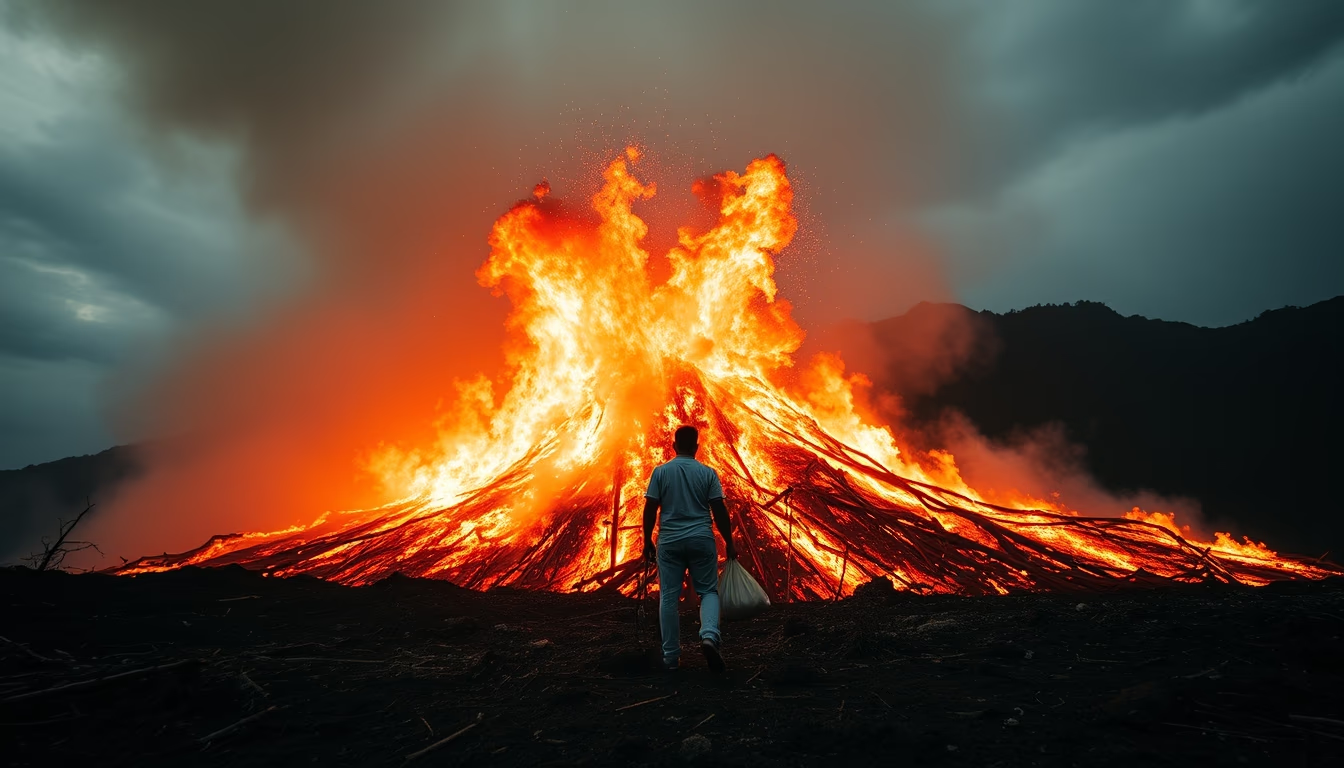
Fuego guatemala explosion
1344×768 · AVIF · CC BY 4.0
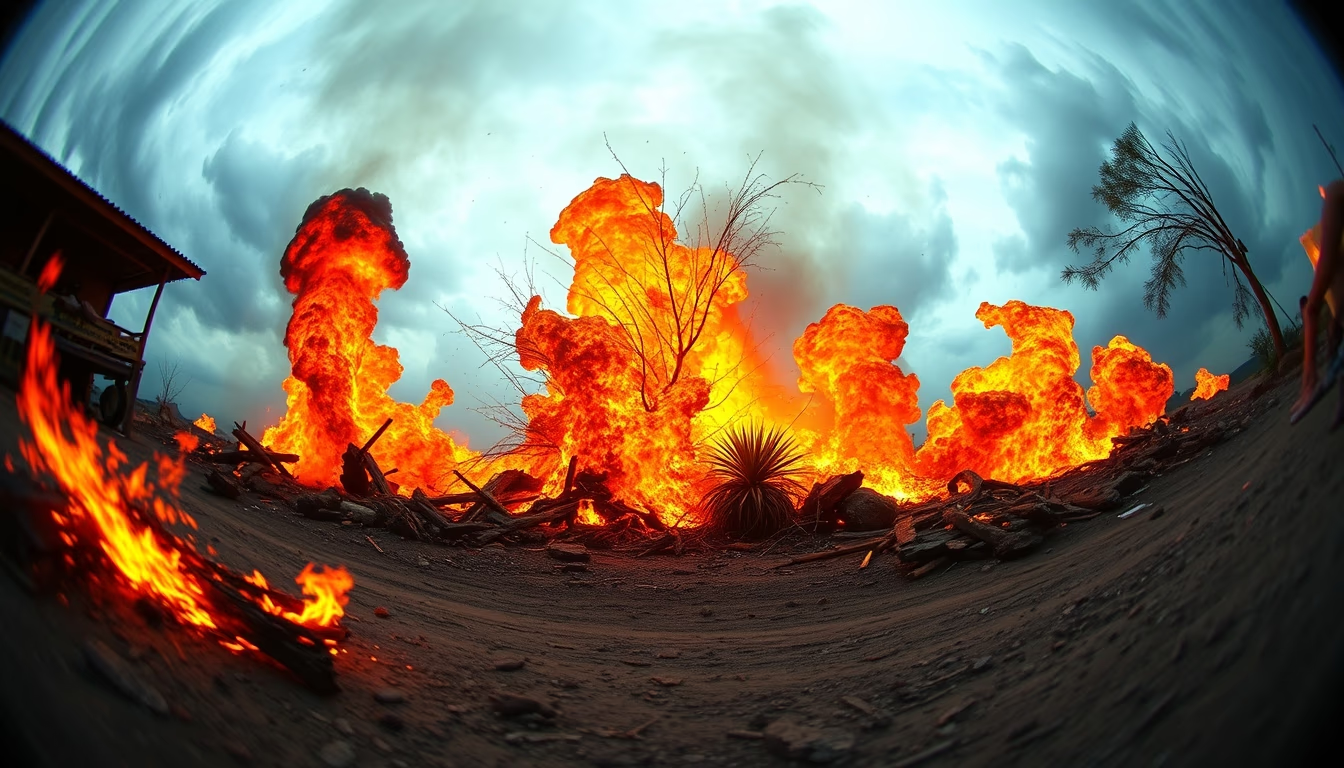
Volcán de Fuego in Guatemala is one of the most active volcanoes globally, with frequent explosive eruptions that shape the landscape and local culture.
About this subject
Volcán de Fuego, Spanish for "Fire Volcano," is a stratovolcano in southern Guatemala, approximately 50 km west of Guatemala City. Standing 3,763 meters tall, it is part of the Central American Volcanic Arc, formed by the subduction of the Cocos Plate beneath the Caribbean Plate. Its activity is characterized by Strombolian and Vulcanian eruptions, often accompanied by explosions that eject ash and rock fragments hundreds of meters into the air.
Fuego is notorious for its historical eruptions, including the devastating event of June 3, 2018, which killed around 200 people and buried entire communities under pyroclastic flows. This eruption was one of the deadliest volcanic disasters in Latin America in the 21st century. Due to its proximity to densely populated areas and the tourist hub of Antigua Guatemala (a UNESCO World Heritage site), the volcano is constantly monitored by the National Institute of Seismology, Volcanology, Meteorology and Hydrology (INSIVUMEH).
Culturally, Fuego holds a significant place in Maya mythology, associated with the god of fire and war. Today, it is a popular destination for adventurers who climb its steep slopes to view active craters. Despite the risks, volcanic activity enriches the surrounding soils, benefiting agriculture such as coffee and sugarcane. The image captured with a fisheye lens emphasizes the breadth of the explosion and the surrounding landscape, but the focus is on the natural phenomenon itself, not the photograph.
An interesting fact: Fuego is one of the world's most active volcanoes, with recorded eruptions since 1524. Its continuous activity serves as a natural laboratory for scientists to study volcanic processes and risk mitigation. The area also hosts Acatenango Volcano, often climbed alongside Fuego, offering spectacular views of nighttime eruptions.
Frequently Asked Questions
What causes the explosive eruptions of Volcán de Fuego?
Fuego's explosive eruptions are caused by the subduction of the Cocos Plate under the Caribbean Plate, generating gas-rich magma. When internal pressure builds, violent explosions eject ash, volcanic bombs, and pyroclastic flows.
What was the deadliest eruption of Volcán de Fuego?
The deadliest eruption occurred on June 3, 2018, when pyroclastic flows devastated communities like San Miguel Los Lotes. About 200 people died and thousands were evacuated.
Is it safe to visit Volcán de Fuego?
Visits are possible but require experienced guides and authorization from the national park. The volcano is constantly active, and areas near the crater can be dangerous due to explosions and toxic gases.
Direct URL
https://pub-c7d6a6ea828543ac903a74a341ccb2e1.r2.dev/imagens/fuego-guatemala-explosion-fish-eye-wide-angle-fresh5.avifHow to credit
Include a visible link back to UtilizAí. Copy one of the snippets below:
<a href="https://xn--utiliza-eza.com/en/midia/imagens/fuego-guatemala-explosion-fish-eye-wide-angle-fresh5">Fuego guatemala explosion</a> by <a href="https://xn--utiliza-eza.com">UtilizAí</a>, licensed under <a href="https://creativecommons.org/licenses/by/4.0/">CC BY 4.0</a>.
[Fuego guatemala explosion](https://xn--utiliza-eza.com/en/midia/imagens/fuego-guatemala-explosion-fish-eye-wide-angle-fresh5) by [UtilizAí](https://xn--utiliza-eza.com), CC BY 4.0
License: CC-BY-4.0