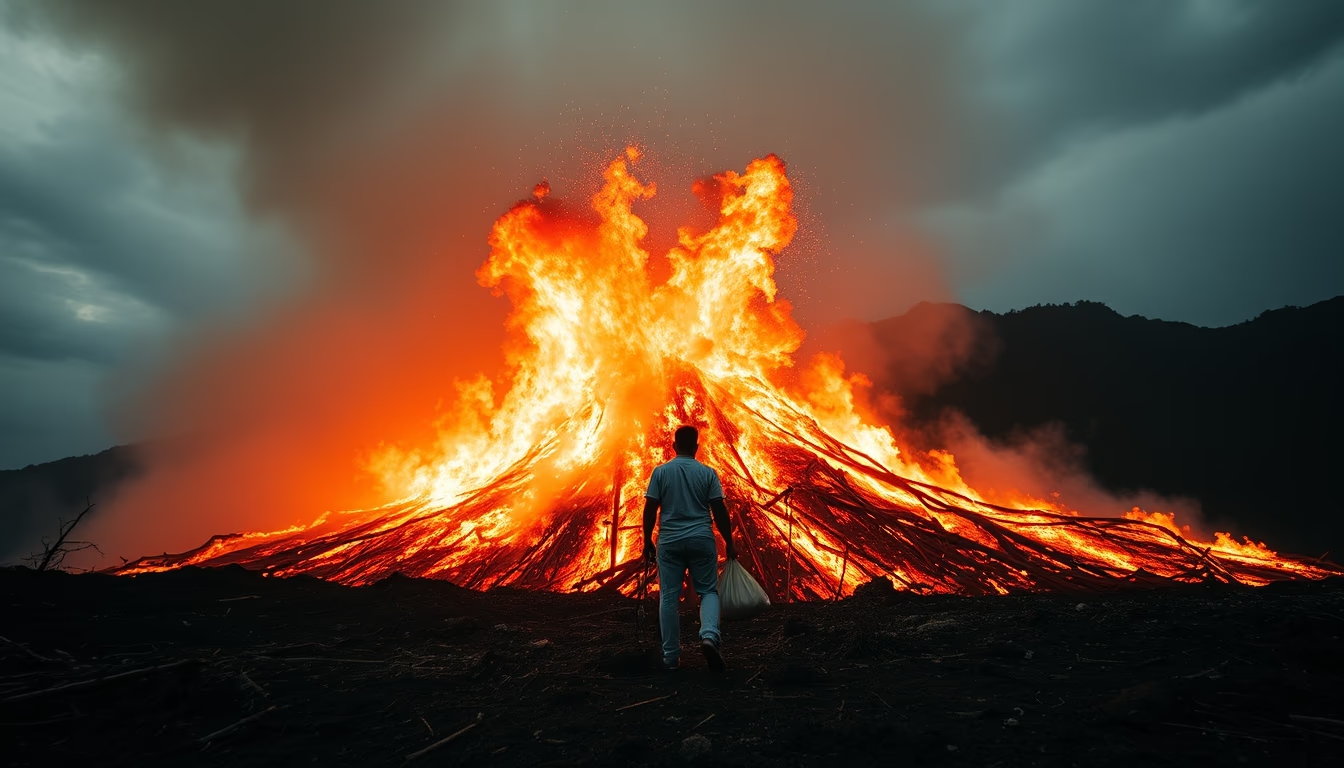
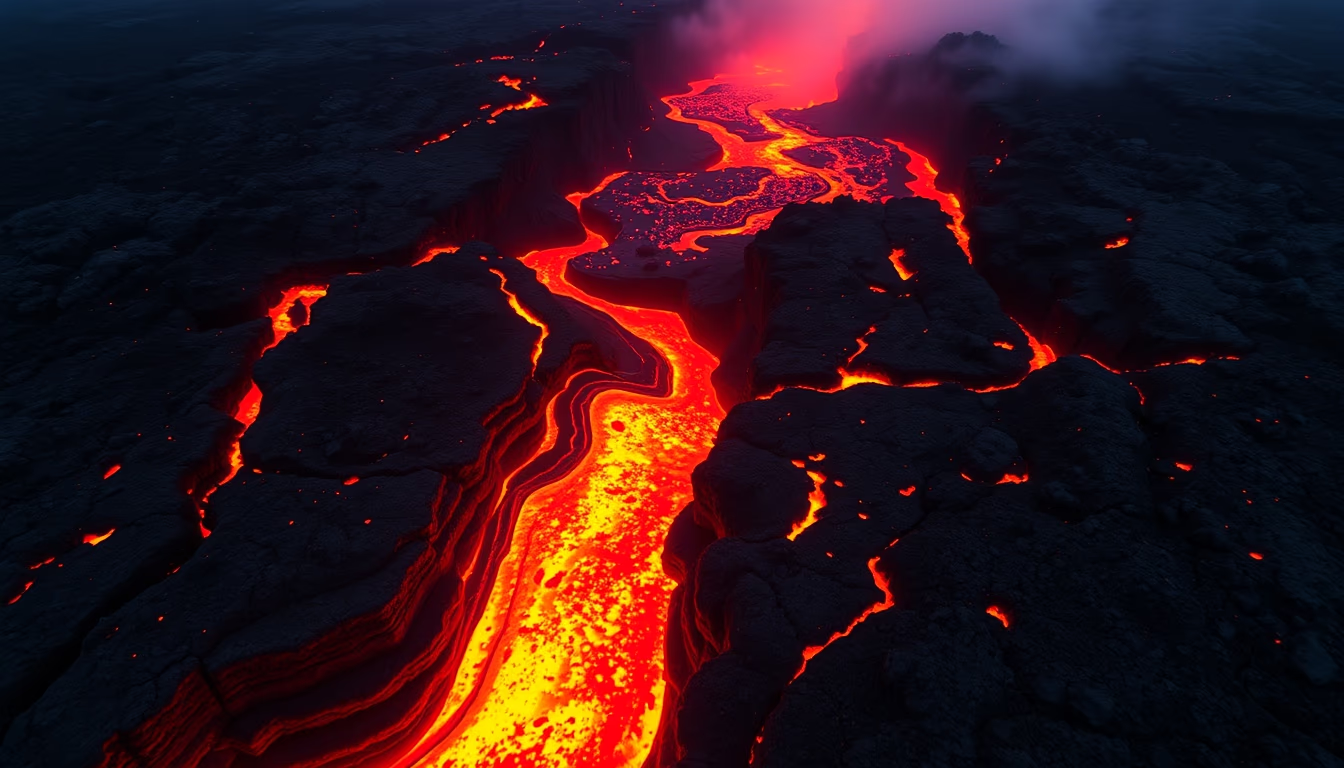
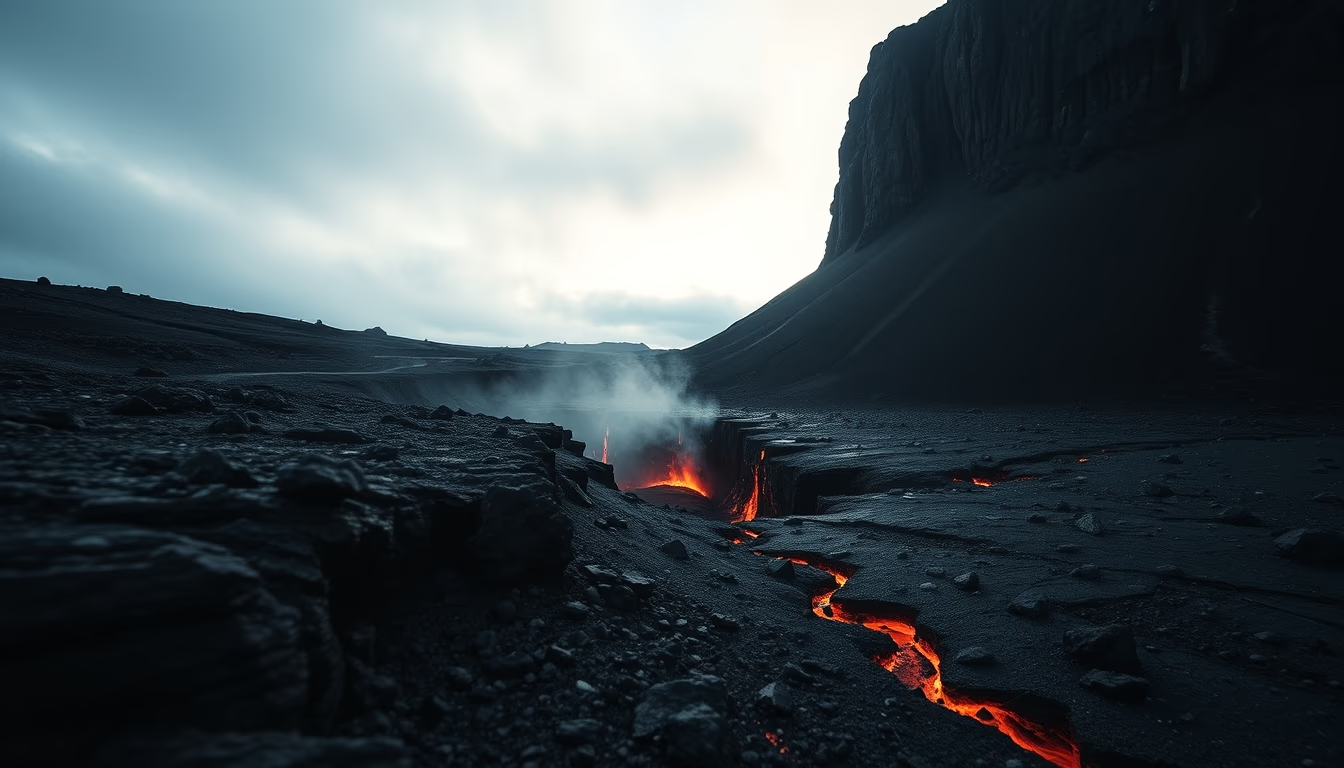
Fuego guatemala explosion
1344×768 · AVIF · CC BY 4.0
Volcán de Fuego in Guatemala is one of the most active volcanoes in Central America, with frequent explosive eruptions that shape the landscape and local culture.
About this subject
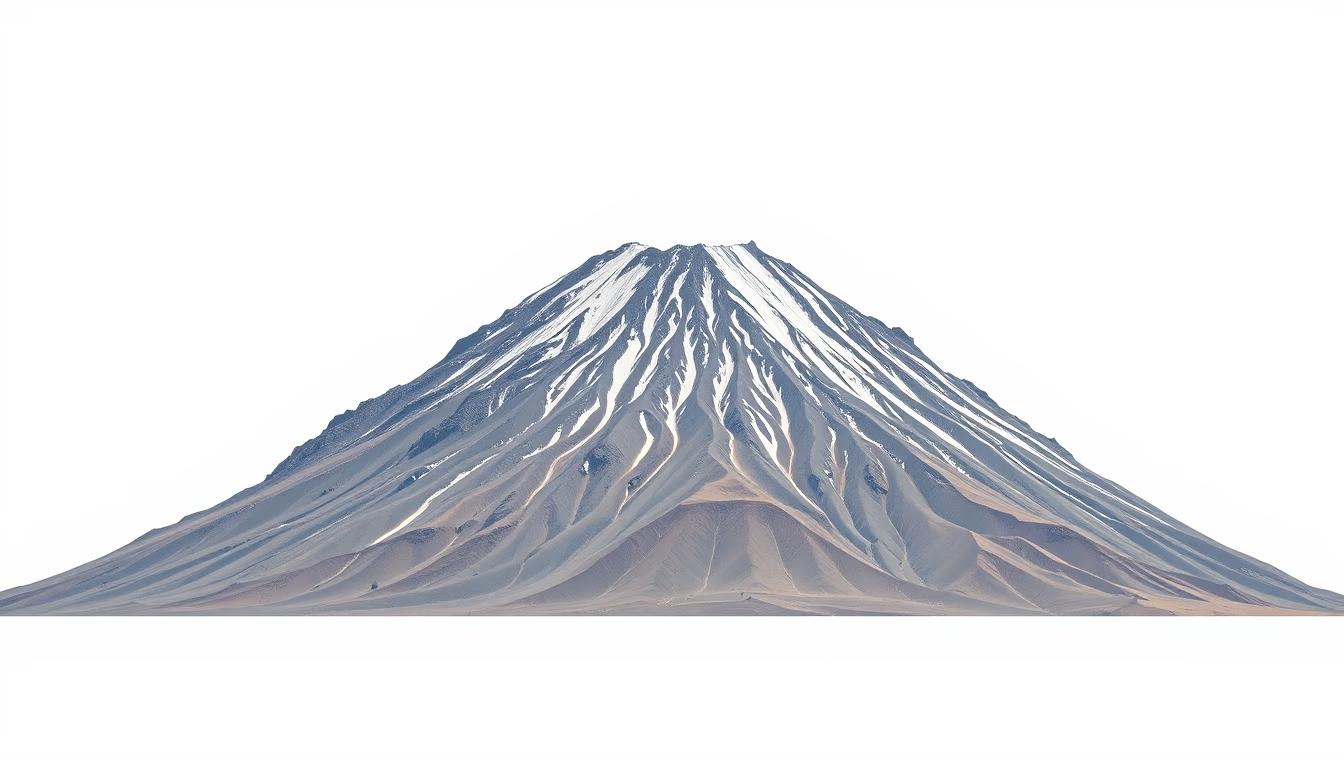
Volcán de Fuego, known locally as Volcán de Fuego, is a stratovolcano located in Guatemala, about 16 kilometers west of Antigua Guatemala. Standing at 3,763 meters, it is part of the Guatemalan Cordillera and is one of the most active volcanoes in Central America. Its eruptive activity is characterized by Strombolian and Vulcanian explosions, frequently producing ash clouds, volcanic bombs, and pyroclastic flows. The name 'Fuego' means 'fire' in Spanish, reflecting its incandescent nature and constant activity.
The volcano holds deep cultural significance for Guatemala. Its eruptions are closely monitored by the National Institute of Seismology, Volcanology, Meteorology, and Hydrology (INSIVUMEH). The most devastating eruption occurred on June 3, 2018, when an explosion generated pyroclastic flows that hit nearby communities such as San Miguel Los Lotes and El Rodeo, causing hundreds of deaths and widespread destruction. This tragic event drew international attention to volcanic hazards in the region.
Geologically, Fuego is a young and very active volcano, with eruptions recorded since 1524. Its structure features a symmetrical cone and a summit crater that frequently expels lava. The eruptions enrich surrounding soils, supporting agriculture, particularly coffee and sugarcane. However, its proximity to populated areas makes monitoring essential for disaster mitigation.
Interestingly, Fuego and its neighbor Acatenango form a volcanic complex. Acatenango, dormant, offers hiking trails for observing Fuego erupting. Fuego's activity also contributes to the local ecosystem, with ash enriching the soil. For Guatemalans, the volcano symbolizes natural power and resilience, present in mythologies and daily life.
Frequently Asked Questions
What was the deadliest eruption of Volcán de Fuego?
The deadliest eruption occurred on June 3, 2018, when pyroclastic flows devastated communities such as San Miguel Los Lotes and El Rodeo, causing hundreds of deaths.
Is Volcán de Fuego still active?
Yes, Volcán de Fuego is one of the most active volcanoes in Central America, with frequent ash and lava eruptions. Activity is constantly monitored by INSIVUMEH.
Is it safe to visit Volcán de Fuego?
Visitation is restricted and dangerous due to eruptive activity. Hiking on neighboring Volcán Acatenango allows safe observation of eruptions, but it is essential to follow guides and authorities.
Direct URL
https://pub-c7d6a6ea828543ac903a74a341ccb2e1.r2.dev/imagens/fuego-guatemala-explosion-commercial-product-photography-fresh16.avifHow to credit
Include a visible link back to UtilizAí. Copy one of the snippets below:
<a href="https://xn--utiliza-eza.com/en/midia/imagens/fuego-guatemala-explosion-commercial-product-photography-fresh16">Fuego guatemala explosion</a> by <a href="https://xn--utiliza-eza.com">UtilizAí</a>, licensed under <a href="https://creativecommons.org/licenses/by/4.0/">CC BY 4.0</a>.
[Fuego guatemala explosion](https://xn--utiliza-eza.com/en/midia/imagens/fuego-guatemala-explosion-commercial-product-photography-fresh16) by [UtilizAí](https://xn--utiliza-eza.com), CC BY 4.0
License: CC-BY-4.0