Fishing trawler sea
1344×768 · AVIF · CC BY 4.0
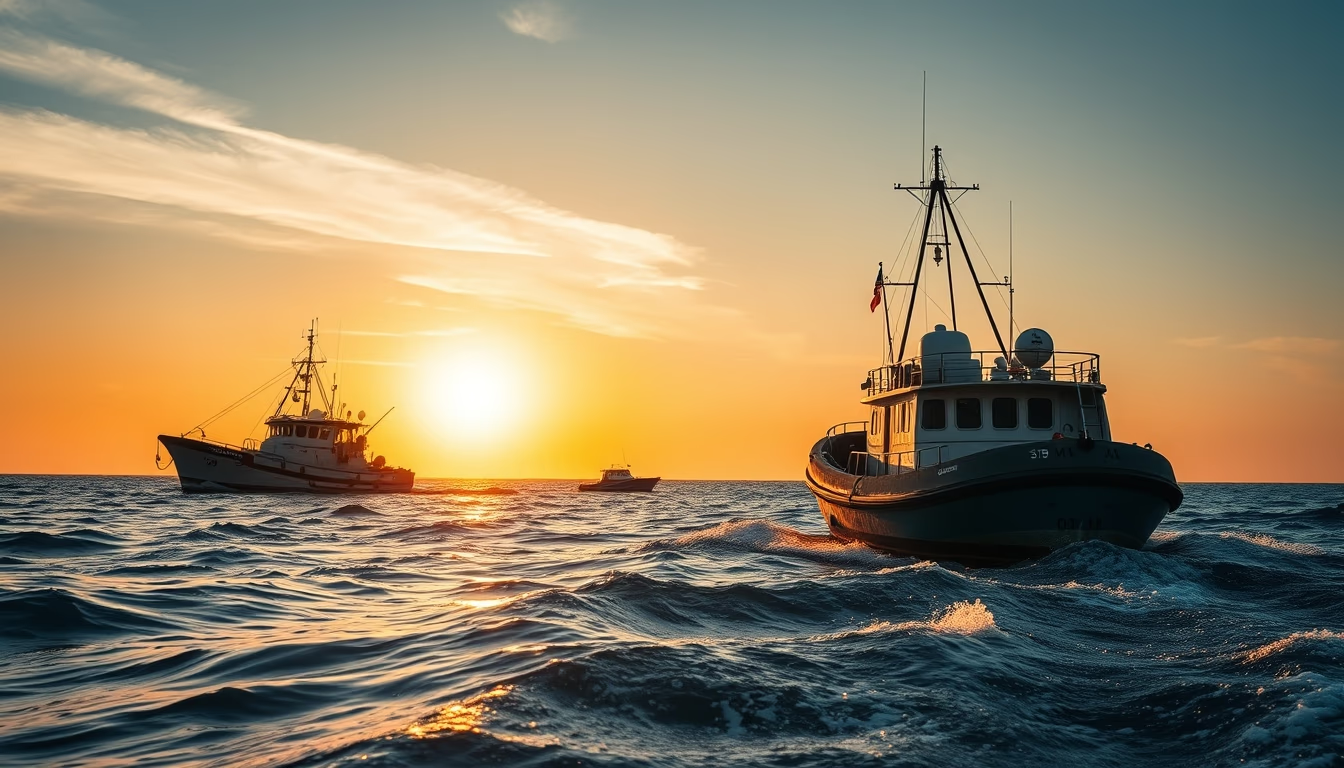
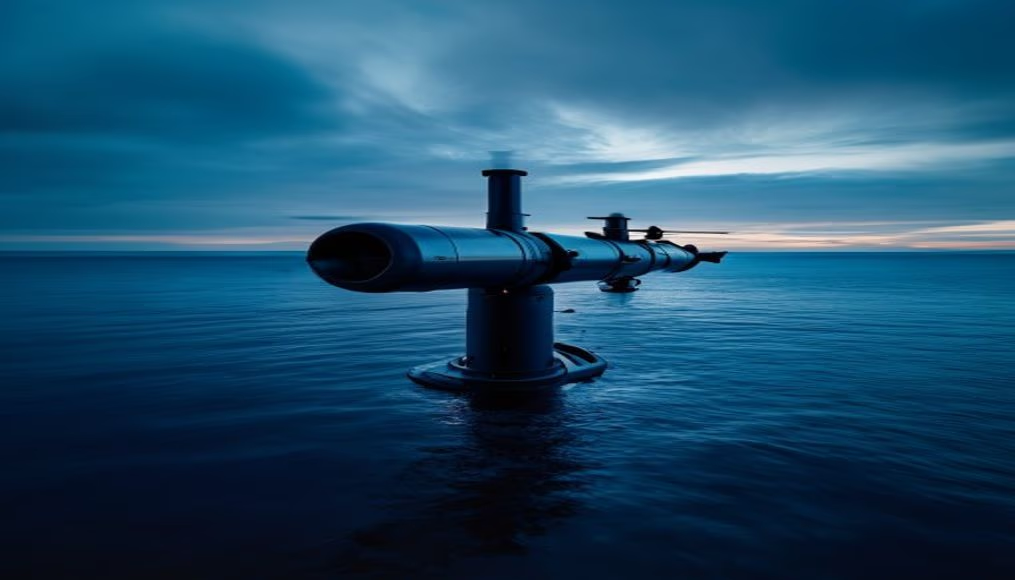
Fishing trawlers are industrial vessels that drag nets through the sea to catch large quantities of fish. These ships play a key role in the global economy but also spark debates about sustainability.
About this subject
A fishing trawler is a vessel designed to tow a trawl net through the water or along the seabed, capturing large quantities of fish and seafood. There are two main types: bottom trawling, which contacts the seafloor, and pelagic trawling, which operates in deeper waters without touching the bottom. This technique is widely used by fishing fleets from countries such as China, Peru, and Norway, which account for a significant portion of global fish production.
In Brazil, trawl fishing is economically vital for states like Santa Catarina and Rio Grande do Sul, targeting species such as shrimp, weakfish, and croaker. The industry provides thousands of direct and indirect jobs, supplying domestic and international markets. However, the efficiency of trawlers also raises environmental concerns, especially regarding bycatch and habitat degradation.
Environmental impacts of trawling include accidental capture of sea turtles, dolphins, and seabirds, as well as destruction of corals and sponges in bottom trawling. Overfishing is another critical issue, leading to the collapse of fish stocks in many regions. In response, governments and international organizations have implemented quotas, marine protected areas, and bycatch reduction devices. Some modern fleets have adopted controlled pelagic trawling and satellite monitoring technologies to minimize damage.
Technological innovations have transformed trawlers in recent decades. GPS navigation systems, side-scan sonars, and selective nets allow greater precision and waste reduction. Onboard processing, including freezing chambers and filleting machinery, has increased vessel autonomy. Despite these advances, the challenge remains to balance productivity with ocean conservation, a central debate for global food security and the health of marine ecosystems.
Frequently Asked Questions
How does trawl fishing work?
Trawl fishing uses a cone-shaped net, called a trawl net, towed by a vessel. The net can be dragged along the seabed (bottom trawling) or at midwater depths (pelagic trawling), catching fish in its path.
What are the main environmental impacts of trawlers?
Trawlers can cause accidental capture of non-target species (bycatch), destruction of marine habitats such as corals and sponges, and contribute to overfishing. Bottom trawling is particularly damaging to the seafloor.
Are there sustainable alternatives to trawl fishing?
Yes, alternatives include hook-and-line fishing, traps, and the use of selective nets that reduce bycatch. Additionally, implementing marine protected areas and catch quotas helps mitigate impacts.
Direct URL
https://pub-c7d6a6ea828543ac903a74a341ccb2e1.r2.dev/imagens/fishing-trawler-sea-travel-photography-p7.avifHow to credit
Include a visible link back to UtilizAí. Copy one of the snippets below:
<a href="https://xn--utiliza-eza.com/en/midia/imagens/fishing-trawler-sea-travel-photography-p7">Fishing trawler sea</a> by <a href="https://xn--utiliza-eza.com">UtilizAí</a>, licensed under <a href="https://creativecommons.org/licenses/by/4.0/">CC BY 4.0</a>.
[Fishing trawler sea](https://xn--utiliza-eza.com/en/midia/imagens/fishing-trawler-sea-travel-photography-p7) by [UtilizAí](https://xn--utiliza-eza.com), CC BY 4.0
License: CC-BY-4.0