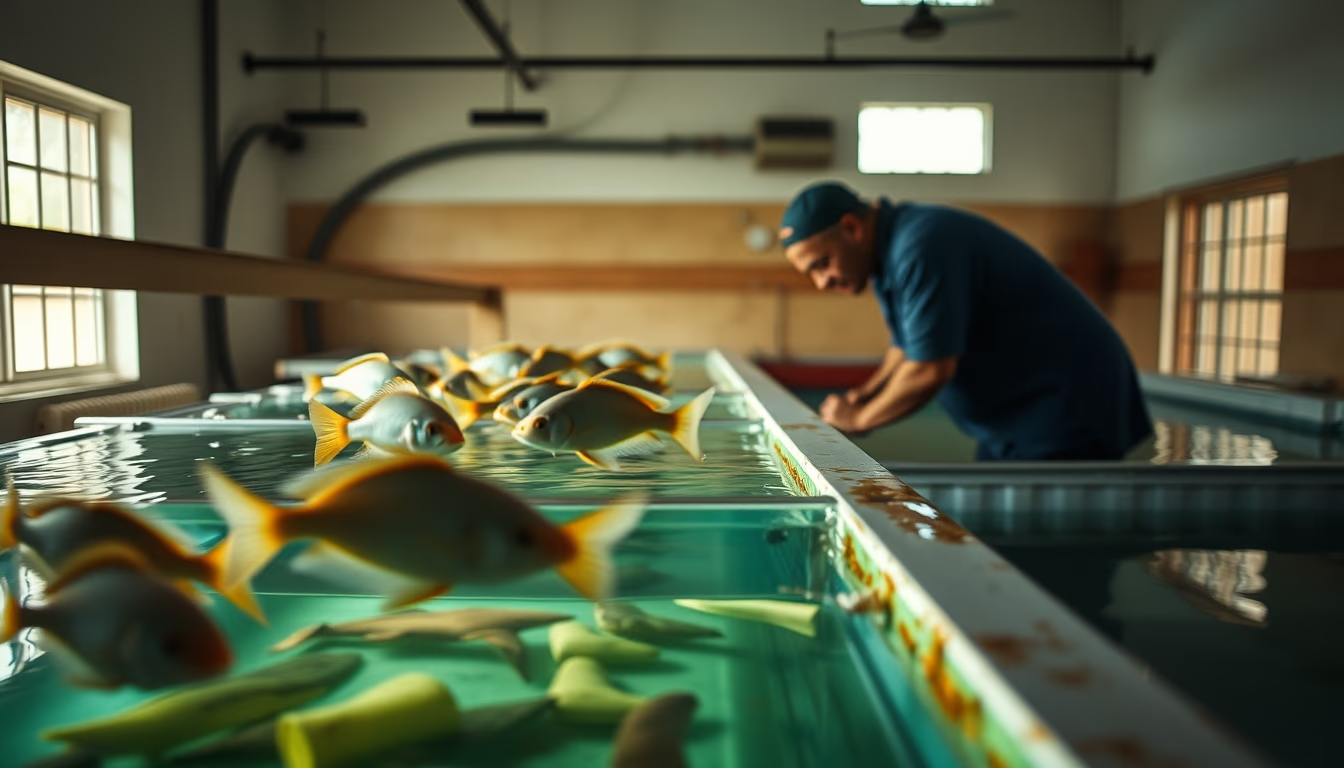
Fish hatchery raceways
1344×768 · AVIF · CC BY 4.0
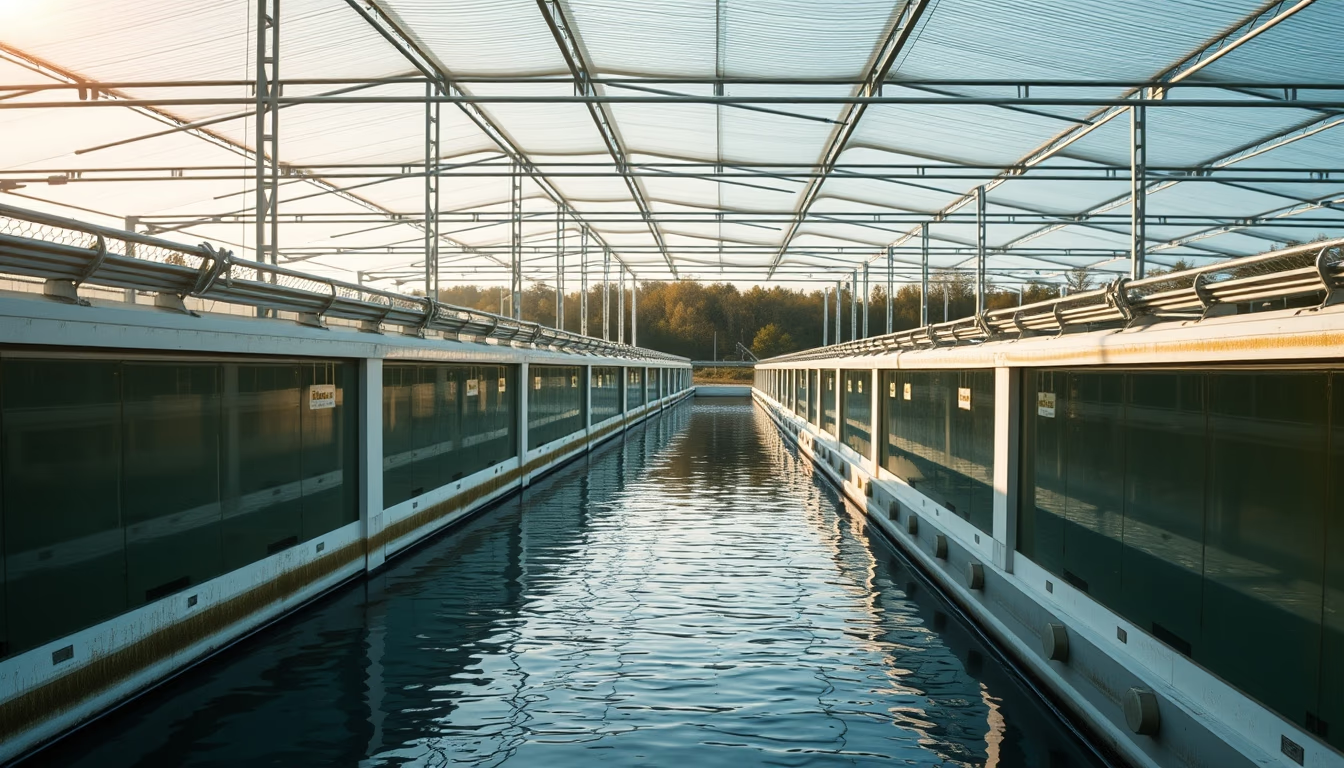
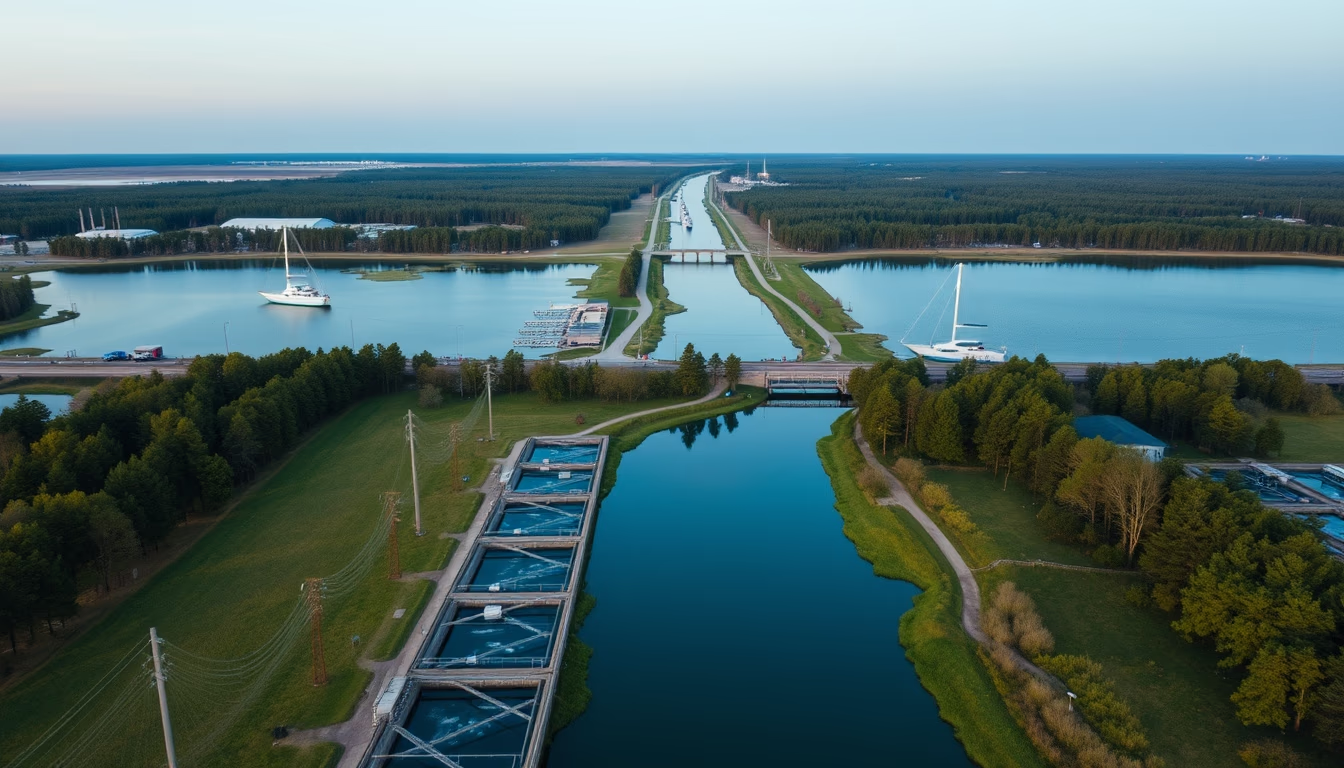
Fish hatchery raceways are rectangular concrete channels with continuous water flow, essential for intensive fish production in aquaculture systems.
About this subject
Fish hatchery raceways are linear concrete structures, usually arranged in series, through which water flows in a controlled and continuous manner. This system is widely used in intensive aquaculture, primarily for raising trout, salmon, and tilapia. Water enters at one end, flows through the tanks, and exits at the other, carrying away metabolic waste and oxygenating the environment. The constant flow simulates river conditions, reducing fish stress and improving growth rates. In the United States, trout farming in raceways accounts for over 70% of national rainbow trout production, with Idaho and Arkansas as leading states. Typical flow rates range from 100 to 500 liters per minute per tank, depending on fish density. Feeding is automated, and mortality is monitored daily. A curious fact: the elongated shape and shallow depth (about 1 meter) facilitate visual inspection of lots and selective harvesting. In Brazil, raceways are gaining ground in tilapia production in the South and Southeast regions, often coupled with recirculating systems for water reuse. Maintenance requires periodic wall cleaning and removal of accumulated sludge at the bottom. Economically, installation costs are high, but productivity per cubic meter can be up to 10 times higher than in earthen ponds.
Frequently Asked Questions
Which fish species are most suitable for raceway culture?
Cold-water species like rainbow trout and salmon are most common, but tilapia also adapt well, especially in mild climates. The choice depends on water temperature and available flow rate.
What is the main advantage of raceways over earthen ponds?
The main advantage is water flow control, allowing higher fish densities and continuous waste removal, resulting in greater productivity per volume and better water quality.
How is water oxygenation achieved in raceways?
Oxygenation occurs naturally through incoming fresh water and turbulence along the channel. In intensive systems, supplemental aerators such as diffusers or splashboards may be used to maintain adequate dissolved oxygen levels.
Direct URL
https://pub-c7d6a6ea828543ac903a74a341ccb2e1.r2.dev/imagens/fish-hatchery-raceways-minimalist-composition-fresh0.avifHow to credit
Include a visible link back to UtilizAí. Copy one of the snippets below:
<a href="https://xn--utiliza-eza.com/en/midia/imagens/fish-hatchery-raceways-minimalist-composition-fresh0">Fish hatchery raceways</a> by <a href="https://xn--utiliza-eza.com">UtilizAí</a>, licensed under <a href="https://creativecommons.org/licenses/by/4.0/">CC BY 4.0</a>.
[Fish hatchery raceways](https://xn--utiliza-eza.com/en/midia/imagens/fish-hatchery-raceways-minimalist-composition-fresh0) by [UtilizAí](https://xn--utiliza-eza.com), CC BY 4.0
License: CC-BY-4.0