Ferry crossing strait
1344×768 · AVIF · CC BY 4.0
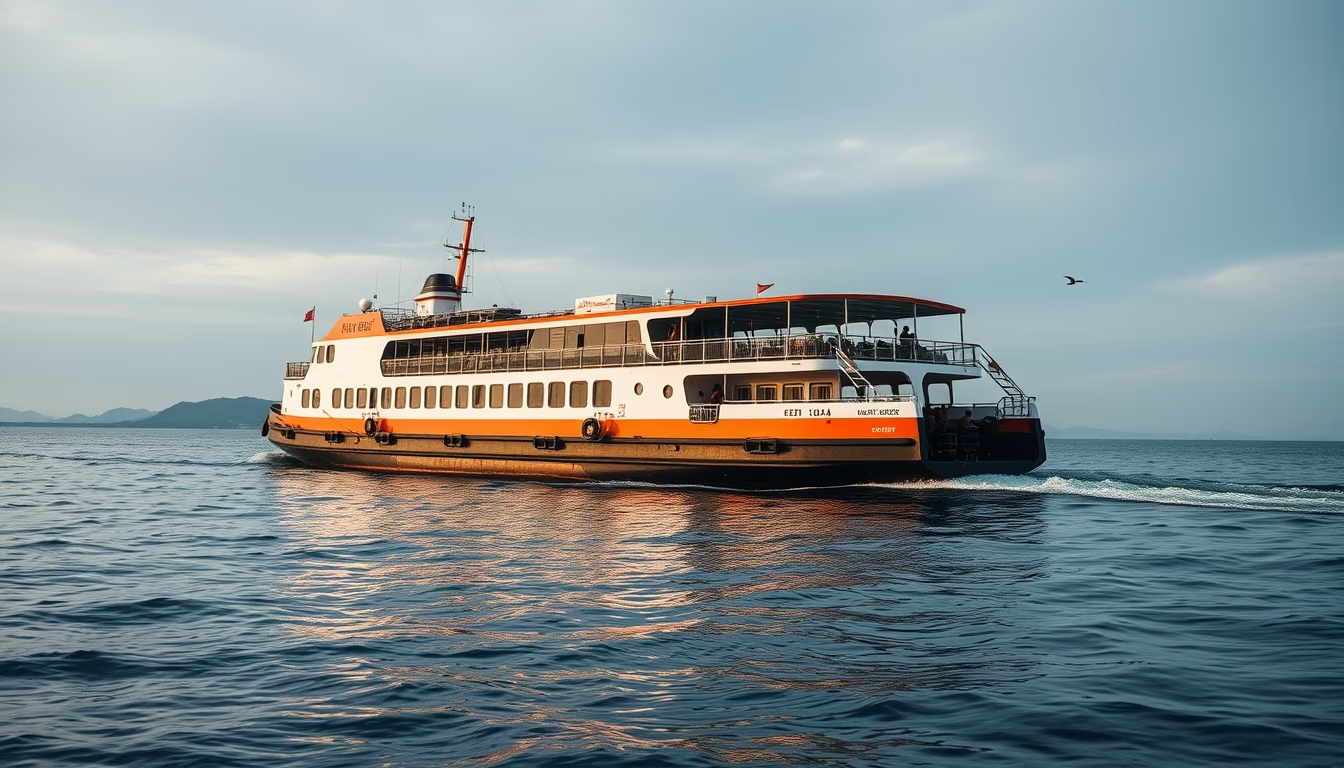
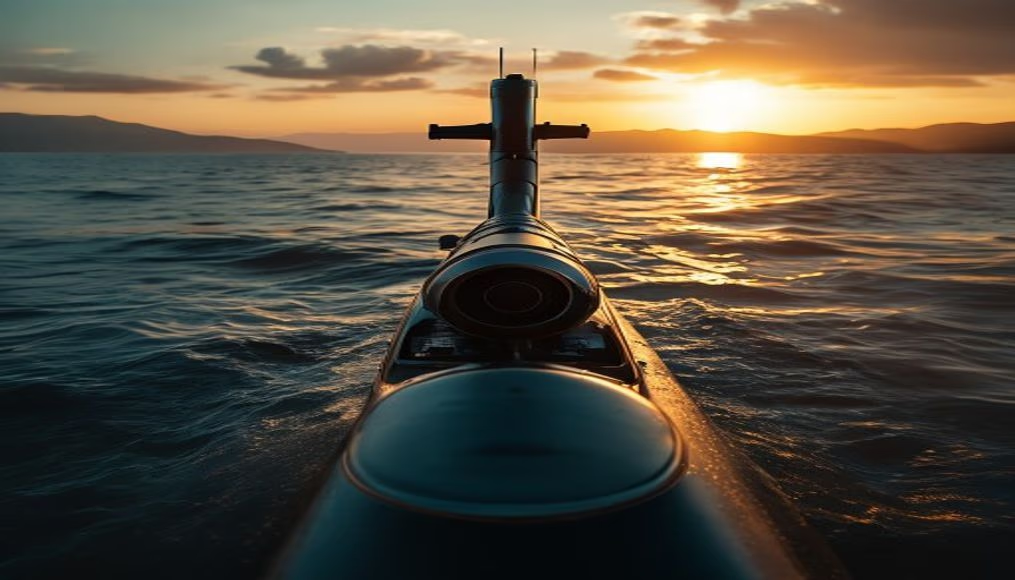
Ferries connect shores separated by straits, providing essential transportation and scenic routes worldwide.
About this subject
Ferries are vessels designed to transport passengers and vehicles across bodies of water, such as straits, rivers, and lakes. A strait is a narrow passage of water between two landmasses, often connecting two seas or oceans. Famous examples include the Bosphorus Strait, separating Europe and Asia in Istanbul, Turkey, and the Strait of Dover, linking the English Channel between England and France.
Ferries crossing straits play a vital role in regional transportation, often providing the only direct link between communities separated by water. For instance, the ferry service on the Bosphorus Strait carries millions of passengers daily, integrating Istanbul's urban fabric. On the Strait of Dover, ferries serve as an alternative to the Eurotunnel, moving commercial vehicles and tourists.
These crossings range from small local ferries to large ships capable of carrying hundreds of cars and passengers. Travel time depends on the strait's width and the vessel's speed. In many destinations, the route offers unique panoramic views, such as the skyline of coastal cities or geological formations.
Operating ferries in straits requires careful navigation due to strong currents and heavy maritime traffic. Technologies like GPS and traffic control systems help ensure safety. Additionally, many governments subsidize these services to maintain connectivity between regions.
Frequently Asked Questions
What is the difference between a ferry and a boat?
A ferry is a specific type of vessel designed to transport passengers and vehicles on scheduled routes. While all ferries are boats, not all boats are ferries.
How long does a Bosphorus Strait ferry crossing take?
The crossing typically takes 20 to 30 minutes, depending on the distance between ports and sea conditions.
Are ferries safe in straits with strong currents?
Yes, modern ferries are built with powerful engines and advanced navigation systems to handle currents. Crews are trained, and routes are monitored by maritime authorities.
Direct URL
https://pub-c7d6a6ea828543ac903a74a341ccb2e1.r2.dev/imagens/ferry-crossing-strait-national-geographic-style-p11.avifHow to credit
Include a visible link back to UtilizAí. Copy one of the snippets below:
<a href="https://xn--utiliza-eza.com/en/midia/imagens/ferry-crossing-strait-national-geographic-style-p11">Ferry crossing strait</a> by <a href="https://xn--utiliza-eza.com">UtilizAí</a>, licensed under <a href="https://creativecommons.org/licenses/by/4.0/">CC BY 4.0</a>.
[Ferry crossing strait](https://xn--utiliza-eza.com/en/midia/imagens/ferry-crossing-strait-national-geographic-style-p11) by [UtilizAí](https://xn--utiliza-eza.com), CC BY 4.0
License: CC-BY-4.0