Ferry crossing strait
1344×768 · AVIF · CC BY 4.0
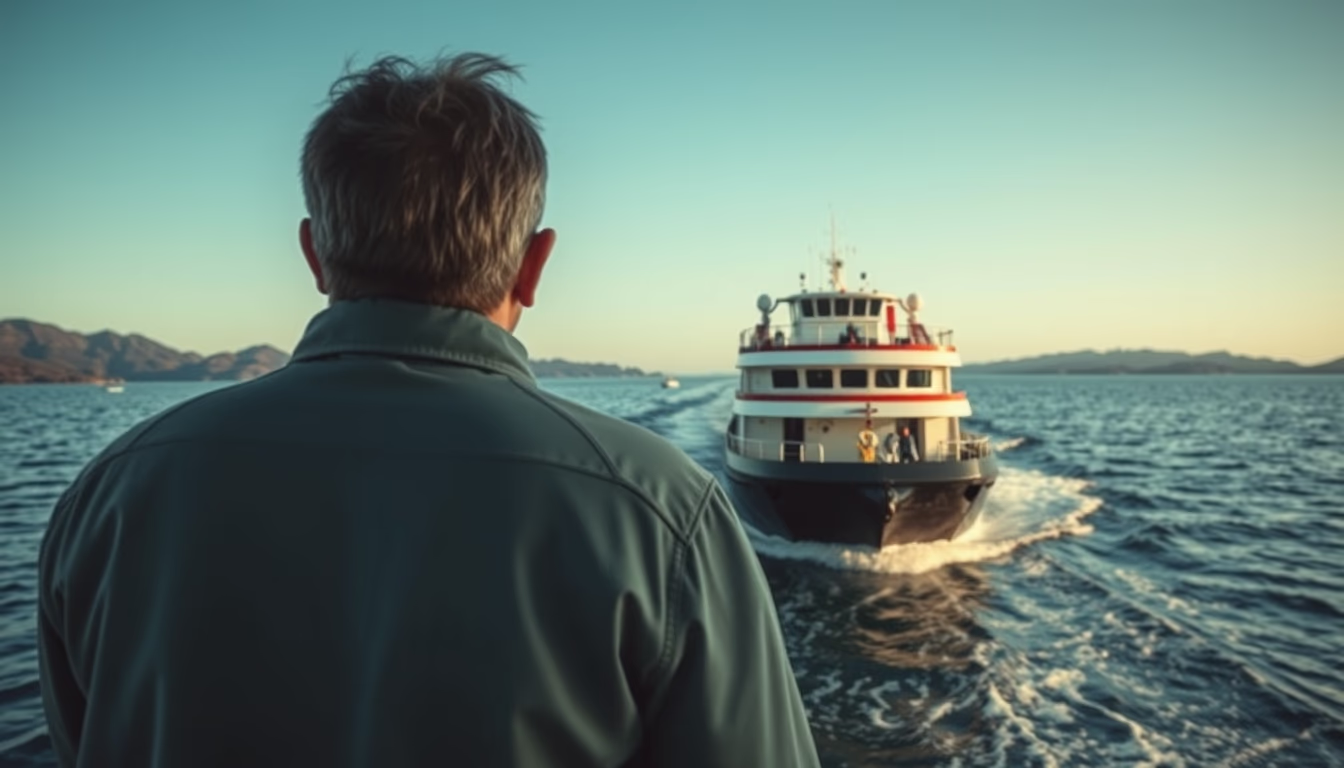
Ferry crossings through straits connect separated regions, vital for transportation and global tourism.
About this subject
Ferry crossings through straits play a crucial role in connecting areas separated by narrow bodies of water, serving as alternatives to bridges and tunnels. Notable examples include the Bosphorus Strait in Istanbul, linking Europe and Asia, and the Strait of Messina between Italy and Sicily. In Brazil, the Cananeia Strait crossing connects islands to the mainland. These routes are vital for trade, tourism, and daily commutes for thousands of people.
Technically, ferries range from roll-on/roll-off vessels for vehicles to high-speed passenger craft. Capacity can reach hundreds of vehicles and thousands of passengers. In many cases, ferries are preferred due to lower implementation costs compared to large bridges, especially in straits with deep waters or heavy maritime traffic. For instance, the Strait of Dover, with over 500 daily crossings, is one of the busiest routes worldwide.
Interestingly, some straits present navigation challenges such as strong currents or fog, requiring experienced crews. The Torres Strait, between Australia and Papua New Guinea, is known for its shallow waters and reefs, demanding specialized ferries. Additionally, the environmental impact of ferries is significant; many are adopting cleaner fuels and electric propulsion to reduce emissions. These vessels also boost local tourism by offering panoramic views and access to remote islands.
Frequently Asked Questions
What is the busiest ferry crossing in the world?
The busiest ferry crossing is the Strait of Dover between England and France, with around 500 to 600 daily ferry crossings, transporting millions of passengers and vehicles annually.
Why are ferries used instead of bridges in some straits?
Ferries are preferred due to lower implementation costs, especially in straits that are very deep or have heavy maritime traffic, where bridge construction would be impractical or extremely expensive. Additionally, ferries can be adapted to different capacities and routes.
Which major straits rely on ferries?
Examples include the Bosphorus Strait (Turkey), the Strait of Messina (Italy), the Torres Strait (Australia/Papua New Guinea), the Cook Strait (New Zealand), and the Cananeia Strait (Brazil).
Direct URL
https://pub-c7d6a6ea828543ac903a74a341ccb2e1.r2.dev/imagens/ferry-crossing-strait-documentary-photography-p1.avifHow to credit
Include a visible link back to UtilizAí. Copy one of the snippets below:
<a href="https://xn--utiliza-eza.com/en/midia/imagens/ferry-crossing-strait-documentary-photography-p1">Ferry crossing strait</a> by <a href="https://xn--utiliza-eza.com">UtilizAí</a>, licensed under <a href="https://creativecommons.org/licenses/by/4.0/">CC BY 4.0</a>.
[Ferry crossing strait](https://xn--utiliza-eza.com/en/midia/imagens/ferry-crossing-strait-documentary-photography-p1) by [UtilizAí](https://xn--utiliza-eza.com), CC BY 4.0
License: CC-BY-4.0