Ferry crossing strait
1344×768 · AVIF · CC BY 4.0
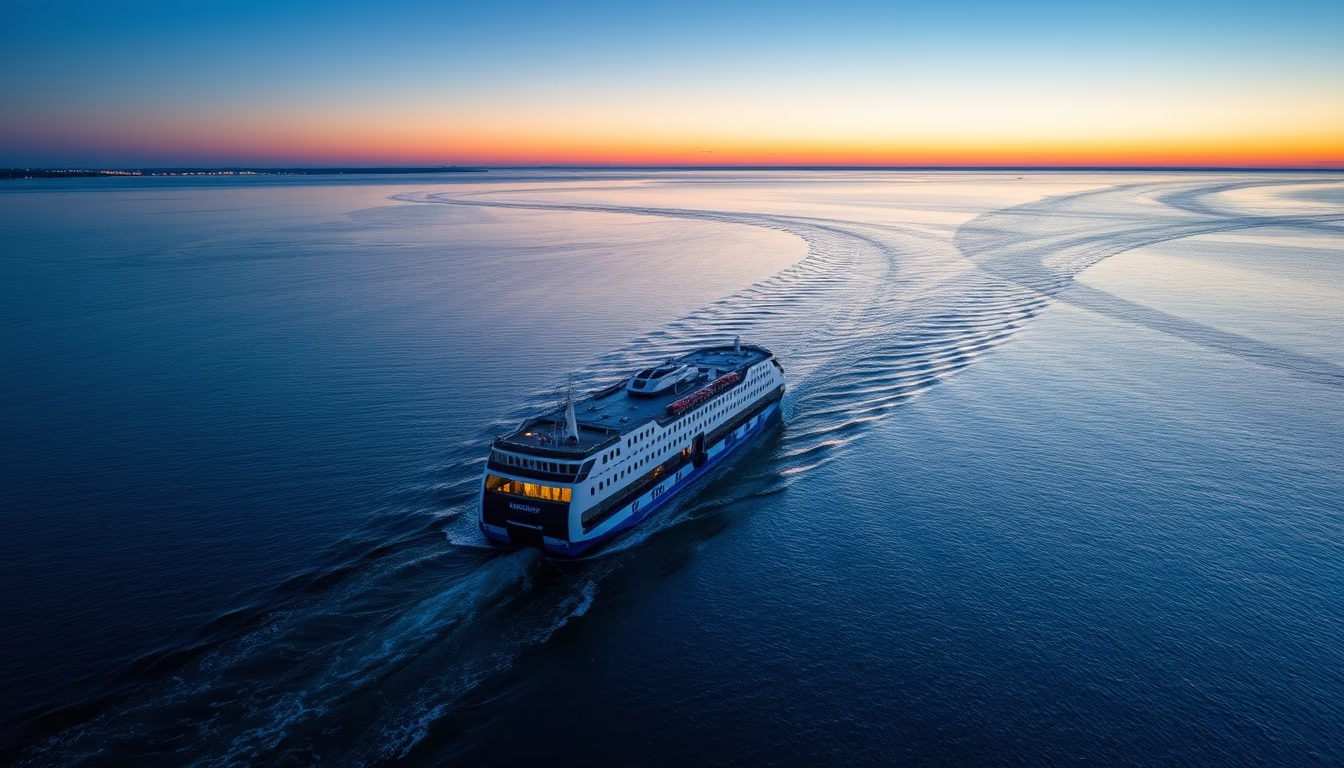
A ferry crosses a strait, a vital maritime route for transporting people and cargo in coastal regions.
About this subject
Straits are narrow maritime passages that connect two larger bodies of water, such as seas or oceans. They are strategic routes for trade and transportation, and ferries play a crucial role in crossing these channels, offering an alternative to bridges or tunnels. Famous examples include the Bosphorus Strait, which separates Europe from Asia in Istanbul, Turkey, where ferries transport thousands of people daily. Another is the Strait of Gibraltar, linking the Mediterranean Sea to the Atlantic Ocean, though there is no regular ferry service for vehicles between Europe and Africa due to political and geographical issues.
The ferries used in straits range from small boats to large ferries capable of carrying cars, trucks, and passengers. The frequency of crossings depends on demand, the width of the strait, and weather conditions. For instance, the Strait of Messina, between mainland Italy and Sicily, is about 3 km wide and crossed by high-frequency ferries, while the Strait of Magellan in southern Chile is over 600 km long and traversed by larger ships.
Historically, straits have been points of commercial and military control, such as the Strait of Hormuz, through which nearly 20% of the world's oil passes. Ferries in these locations not only transport passengers but are also essential for local economies, connecting islands and isolated regions. In Brazil, the São Sebastião Strait on the northern coast of São Paulo is an important ferry corridor to Ilhabela, moving tourists and residents.
Technologically, many modern ferries are equipped with high-power engines and sophisticated navigation systems to ensure safety in narrow waters with strong currents. Crossing a strait can take from a few minutes to several hours, depending on the distance. Ferries are a sustainable alternative compared to building bridges, which can be expensive and impact the environment.
Frequently Asked Questions
What is a strait?
A strait is a narrow maritime passage connecting two larger bodies of water, such as seas or oceans. Examples include the Bosphorus Strait and the Strait of Gibraltar.
How long does a ferry crossing in a strait take?
Time varies from minutes to hours, depending on the width of the strait and the vessel type. For instance, the Strait of Messina can be crossed in about 20 minutes, while the Strait of Magellan may take over a day.
Why are ferries important in straits?
Ferries are vital for transporting people and cargo, connecting regions separated by water. They offer an economical and sustainable alternative to bridges and tunnels, especially in high-traffic areas.
Direct URL
https://pub-c7d6a6ea828543ac903a74a341ccb2e1.r2.dev/imagens/ferry-crossing-strait-aerial-drone-shot-p4.avifHow to credit
Include a visible link back to UtilizAí. Copy one of the snippets below:
<a href="https://xn--utiliza-eza.com/en/midia/imagens/ferry-crossing-strait-aerial-drone-shot-p4">Ferry crossing strait</a> by <a href="https://xn--utiliza-eza.com">UtilizAí</a>, licensed under <a href="https://creativecommons.org/licenses/by/4.0/">CC BY 4.0</a>.
[Ferry crossing strait](https://xn--utiliza-eza.com/en/midia/imagens/ferry-crossing-strait-aerial-drone-shot-p4) by [UtilizAí](https://xn--utiliza-eza.com), CC BY 4.0
License: CC-BY-4.0