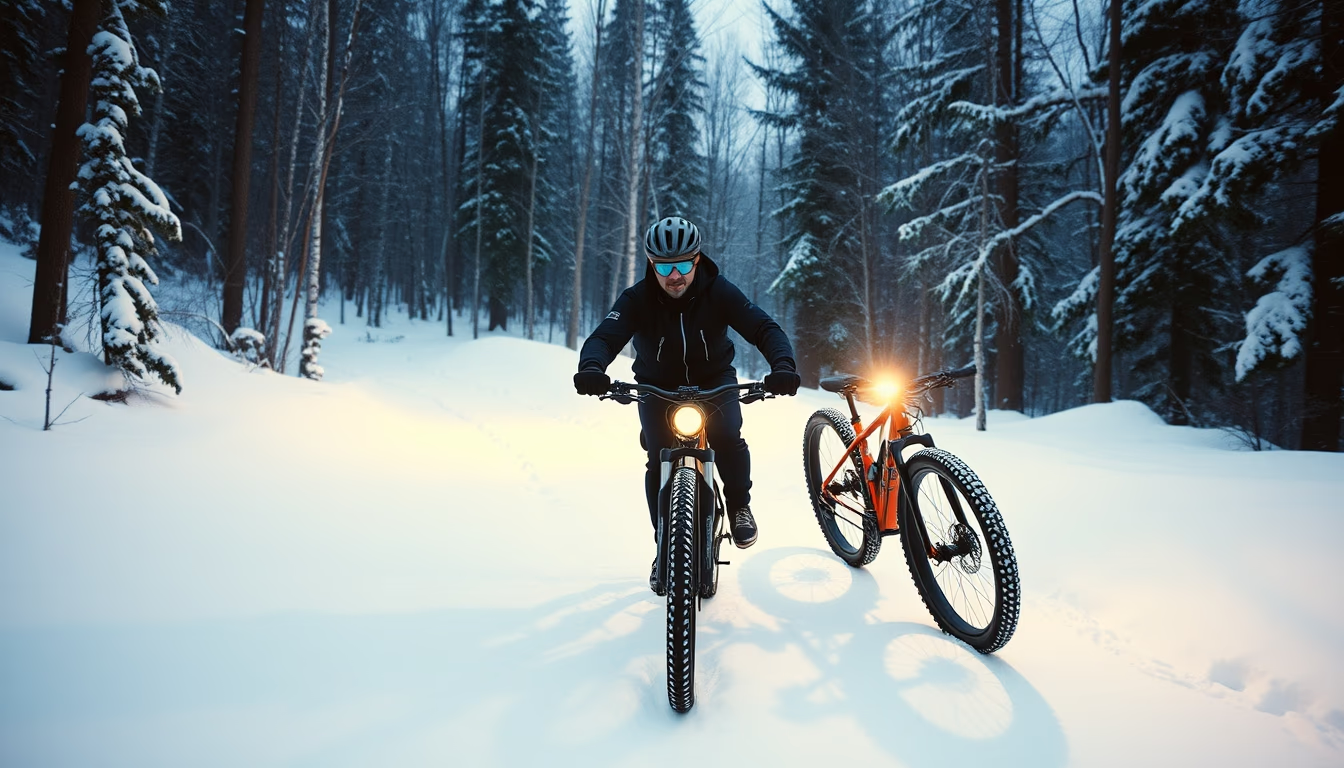
Fat bike snow trail
1344×768 · AVIF · CC BY 4.0
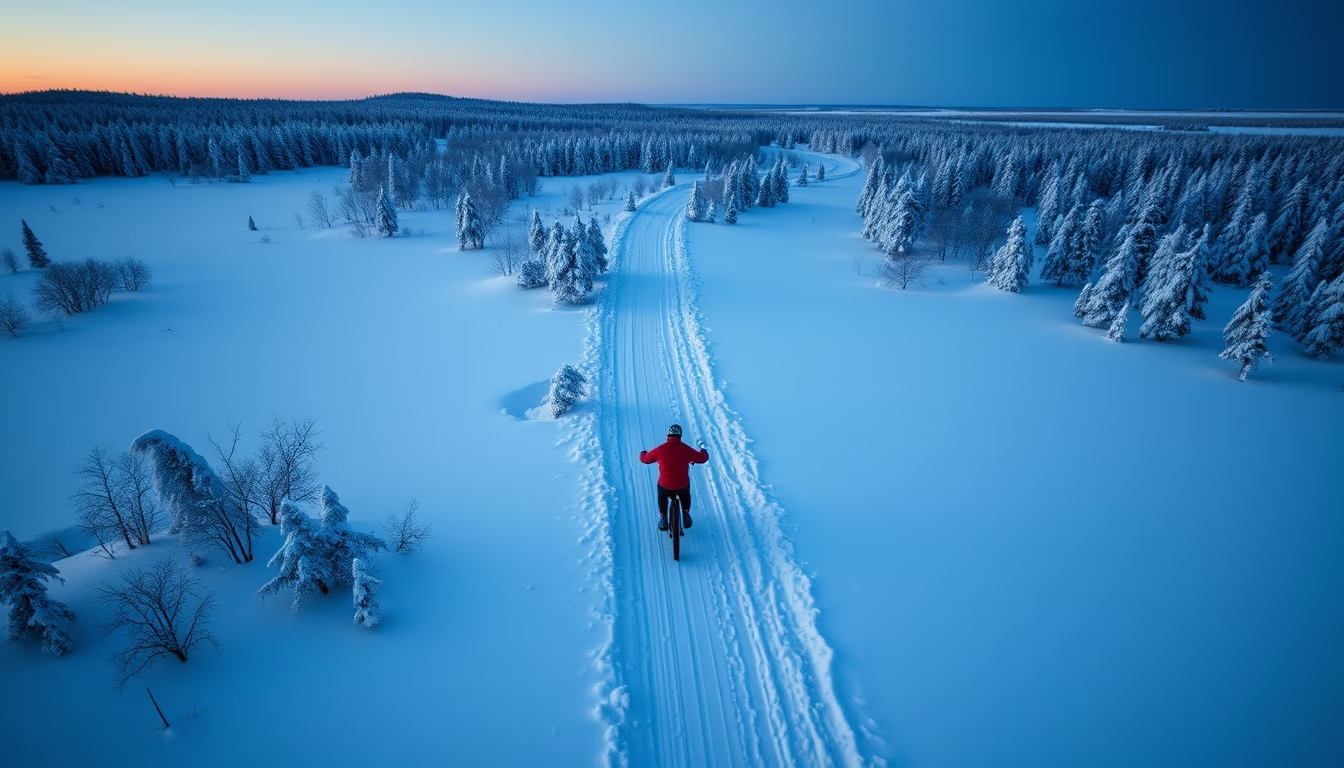
Explore the world of fat bikes on snow trails, combining off-road cycling and adventure in icy landscapes.
About this subject
A fat bike is a bicycle designed for low-traction terrains such as snow and sand. Its origins date back to the late 1980s, when cyclists in Alaska began modifying mountain bikes with wider tires to tackle snow-covered trails. Since then, the sport has evolved and gained global popularity, with manufacturers developing specific frames and tires up to 5 inches wide. Low tire pressure, typically between 5 and 15 PSI, allows the bike to float on soft surfaces, providing stability and control even in slippery conditions.
Riding a fat bike on snow requires different techniques. The rider must keep weight centered and avoid sudden movements to maintain traction. Shorter gears are used due to the added resistance of snow, and a seated position is preferred to maximize grip. Equipment such as platform pedals and waterproof shoes are common. Maintenance is crucial: chains and cables must be lubricated with low-temperature products, and disc brakes are essential for safety.
In Brazil, locations like Campos do Jordão (SP) and São Joaquim (SC) offer seasonal snow trails for fat bikes. Internationally, destinations such as Yellowstone National Park (USA) and the Lapland region (Finland) are famous for their groomed trails. The practice is also common in tundra areas and snowy mountains, where fat bikes replace traditional winter transportation. Events like the Fat Bike World Championship in Utah and the Iditarod Trail Invitational in Alaska attract athletes from around the world.
Beyond recreation, fat bikes have utility applications, such as trail patrol in national parks and rescue in remote areas. The versatility of the bikes allows them to be used in different seasons, simply by changing tires to adapt to asphalt or dirt. Beginners are advised to start on flat terrain with compacted snow, gradually progressing to more challenging conditions. Regular practice improves cardiovascular fitness and muscle strength, making it a complete outdoor activity option.
Frequently Asked Questions
What is the ideal tire pressure for a fat bike on snow?
The ideal pressure ranges from 5 to 15 PSI, depending on the rider's weight and snow consistency. Lower pressures provide more flotation, while higher pressures reduce rolling resistance on packed snow.
Can a fat bike be used on terrains other than snow?
Yes, fat bikes are versatile and can be used on sand, mud, loose dirt, and even asphalt. Simply adjust tire pressure and, in some cases, swap tires for models better suited to the terrain.
Do I need special training to ride a fat bike on snow?
While not mandatory, it is advisable to practice on flat, compacted snow before tackling more technical trails. Lessons with experienced instructors can help develop balance and control techniques.
Direct URL
https://pub-c7d6a6ea828543ac903a74a341ccb2e1.r2.dev/imagens/fat-bike-snow-trail-aerial-drone-shot-fresh8.avifHow to credit
Include a visible link back to UtilizAí. Copy one of the snippets below:
<a href="https://xn--utiliza-eza.com/en/midia/imagens/fat-bike-snow-trail-aerial-drone-shot-fresh8">Fat bike snow trail</a> by <a href="https://xn--utiliza-eza.com">UtilizAí</a>, licensed under <a href="https://creativecommons.org/licenses/by/4.0/">CC BY 4.0</a>.
[Fat bike snow trail](https://xn--utiliza-eza.com/en/midia/imagens/fat-bike-snow-trail-aerial-drone-shot-fresh8) by [UtilizAí](https://xn--utiliza-eza.com), CC BY 4.0
License: CC-BY-4.0