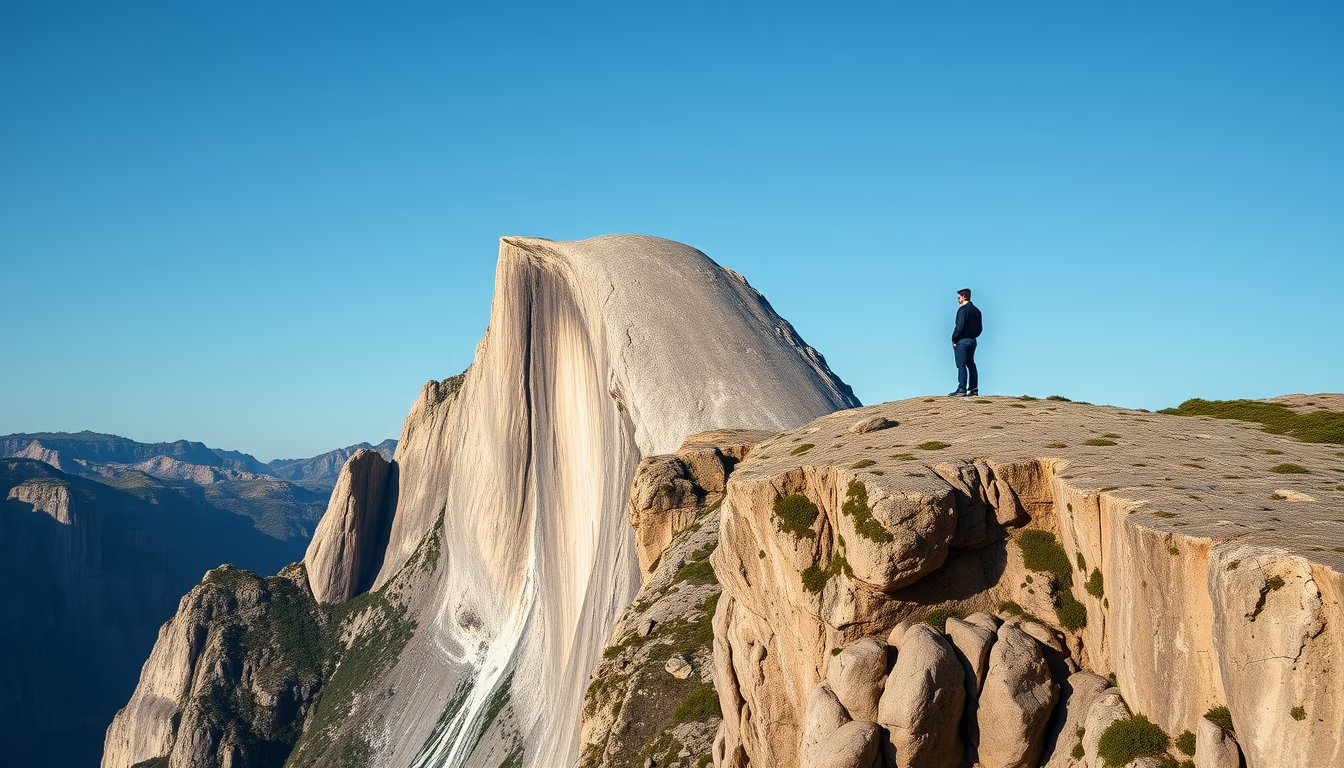
El capitan cliff
1344×768 · AVIF · CC BY 4.0
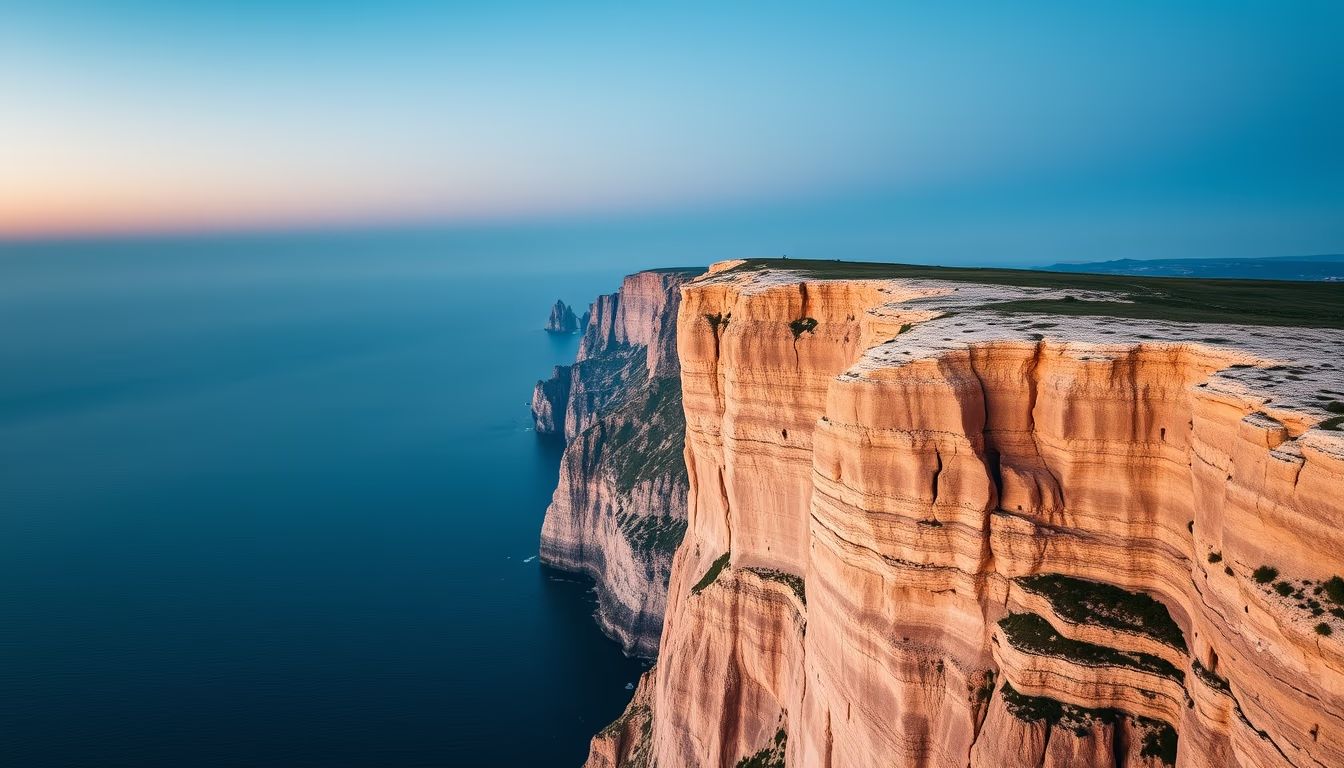
El Capitan, the iconic granite monolith in Yosemite National Park, is one of the most challenging climbing destinations in the world.
About this subject
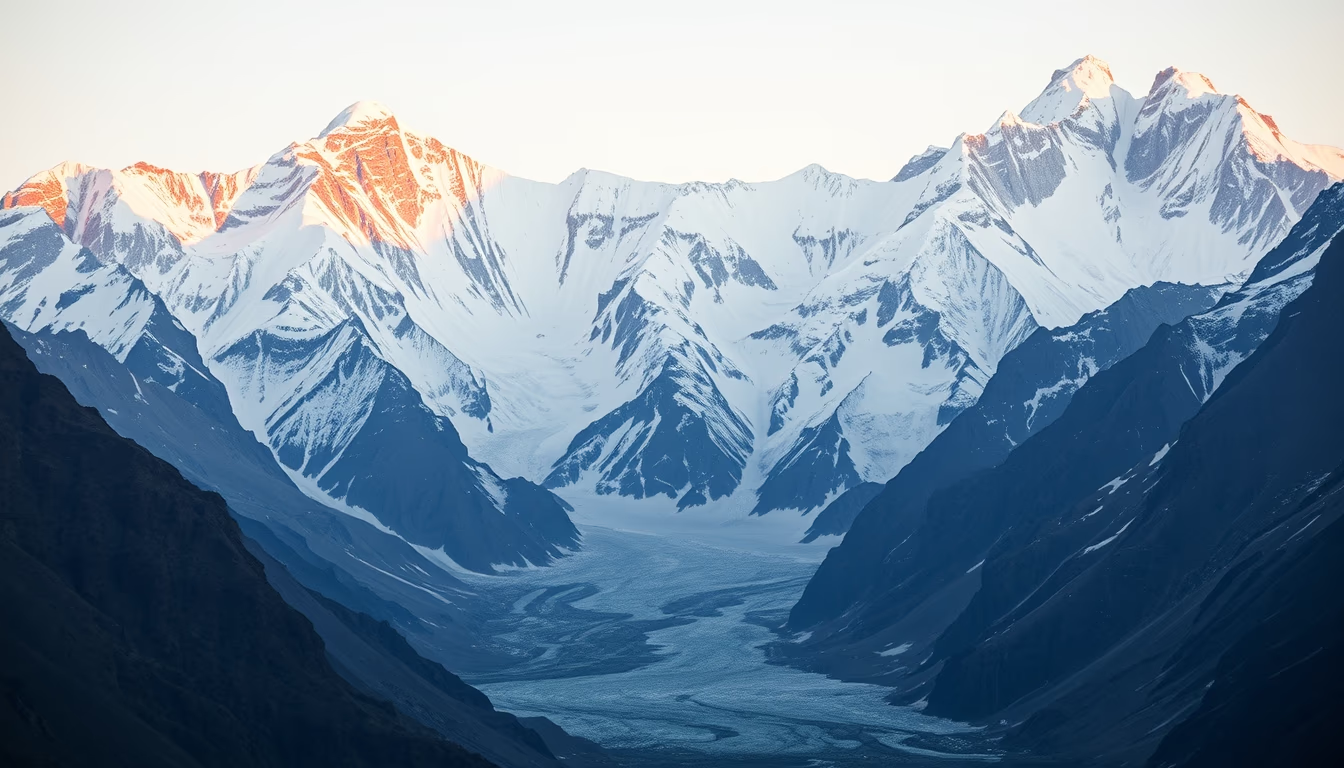
El Capitan is a granite rock formation located on the north side of Yosemite Valley in central California, United States. Rising approximately 900 meters (3,000 feet) vertically from its base to the summit, it is one of the largest granite monoliths on Earth. The rock was sculpted by glaciers during the last Ice Age about 15,000 years ago, exposing a mass of granite estimated to be 100 million years old. Its vertical and smooth face is the result of glacial erosion and natural fracture patterns in the granite, making it an almost perfect wall for technical climbing.
The climbing history of El Capitan began in the 1950s, with the first successful ascent of The Nose in 1958 by Warren Harding, Wayne Merry, and George Whitmore after 47 days of effort. Since then, the wall has become the stage for some of mountaineering's greatest achievements. In 2017, American climber Alex Honnold completed the first free solo ascent (without ropes or equipment) of the Freerider route, a feat documented in the Oscar-winning film "Free Solo". Beyond technical climbs, El Capitan attracts geologists interested in granite structure and tourists who admire its grandeur from viewpoints such as El Capitan Meadow.
Culturally, El Capitan is a symbol of Yosemite National Park, which has been protected as a natural area since 1864. The formation appears in countless photographs, paintings, and films, representing the grandeur of American nature. Climbing is strictly regulated to preserve the local ecosystem, with restrictions on bolt placement and temporary camps. Despite the challenges, approximately 150 new routes are opened each year on the face, totaling over 200 cataloged routes today. The peak receives around 50,000 climbers annually, but only a fraction complete the full ascent.
Geological curiosities: El Capitan's granite contains quartz and feldspar crystals that give it a light gray color. The rock is so resistant that it withstands constant sun, snow, and wind without significant erosion. Studies indicate that the erosion rate on the face is only 1 centimeter every 10,000 years, explaining its seemingly unchanged appearance over centuries.
Frequently Asked Questions
What is the exact height of El Capitan?
The vertical height from base to summit is approximately 900 meters (3,000 feet) on the southwest face. The summit elevation is 2,307 meters (7,569 feet) above sea level.
How many people have died climbing El Capitan?
Statistics indicate about 30 deaths have been recorded on the wall since the 1970s, mostly due to falls or equipment failure. The climb is considered extremely risky even for professionals.
Can I visit El Capitan without climbing?
Yes. Yosemite National Park offers viewpoints such as El Capitan Meadow and Tunnel View where you can admire the formation. There are also hiking trails around the base.
Direct URL
https://pub-c7d6a6ea828543ac903a74a341ccb2e1.r2.dev/imagens/el-capitan-cliff-aerial-drone-shot-p9.avifHow to credit
Include a visible link back to UtilizAí. Copy one of the snippets below:
<a href="https://xn--utiliza-eza.com/en/midia/imagens/el-capitan-cliff-aerial-drone-shot-p9">El capitan cliff</a> by <a href="https://xn--utiliza-eza.com">UtilizAí</a>, licensed under <a href="https://creativecommons.org/licenses/by/4.0/">CC BY 4.0</a>.
[El capitan cliff](https://xn--utiliza-eza.com/en/midia/imagens/el-capitan-cliff-aerial-drone-shot-p9) by [UtilizAí](https://xn--utiliza-eza.com), CC BY 4.0
License: CC-BY-4.0