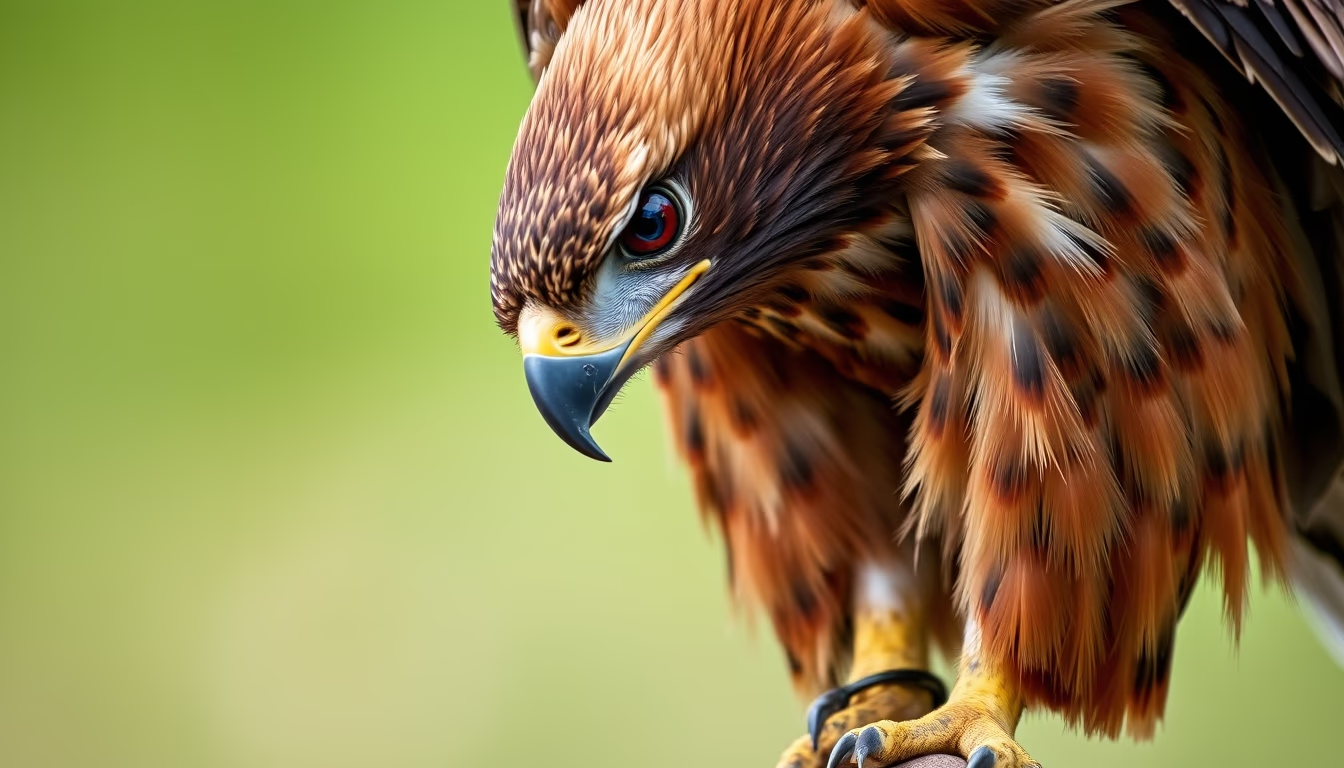
Eagle hunter mongolia
1344×768 · AVIF · CC BY 4.0

Eagle hunting in Mongolia is a millennia-old tradition of the Kazakh people, where hunters train golden eagles to catch foxes and hares on the steppes.
About this subject
Eagle hunting, known as falconry with golden eagles, is an ancient practice of the Kazakh ethnic group in western Mongolia, particularly in Bayan-Ölgii Province. This tradition dates back over 2,000 years, passed down through generations as a symbol of status and skill. Hunters, called 'bürkütchi', capture golden eagle chicks at around four years of age and meticulously train them to hunt during harsh winters. The eagles are hand-fed and develop a deep bond with their owners, but after about a decade of service, they are released back into the wild to breed.
The training process requires patience and knowledge: the eagle learns to return to the hunter's arm after catching prey. Hunting takes place mainly in November and December, when temperatures drop below -20°C, and hunters traverse vast steppes on horseback. When the eagle spots a fox or hare, it dives at high speed to seize the prey, then is rewarded with raw meat. This technique provides both food and pelts for clothing and handicrafts.
Culturally, eagle hunting is celebrated annually at the Golden Eagle Festival in Bayan-Ölgii. The event gathers dozens of hunters who compete in agility, calling, and accuracy contests. Currently, the tradition faces challenges such as aging practitioners, waning interest among youth, and climate change affecting prey. However, cultural preservation efforts and tourism have helped sustain this unique practice, which was recognized by UNESCO as an Intangible Cultural Heritage of Humanity in 2010 under the broader designation of 'culture of hunting with birds of prey'.
Frequently Asked Questions
How do Kazakh hunters train golden eagles?
Hunters capture golden eagle chicks around four years old and train them gradually. They use lures and meat rewards to teach the bird to return to the arm after catching prey. The process can take months, requiring patience and a close bond between hunter and animal.
What is the cultural significance of eagle hunting in Mongolia?
The practice is a symbol of identity and pride for Mongolian Kazakhs. It represents survival skills, respect for nature, and family tradition. The annual Golden Eagle Festival celebrates this heritage and attracts tourists from around the world.
Is the eagle hunting tradition endangered?
It faces challenges such as aging hunters, waning youth interest, and climate change reducing prey availability. However, UNESCO recognition and ecotourism have spurred preservation efforts, with some schools teaching the art to new generations.
Direct URL
https://pub-c7d6a6ea828543ac903a74a341ccb2e1.r2.dev/imagens/eagle-hunter-mongolia-tilt-shift-miniature-fresh17.avifHow to credit
Include a visible link back to UtilizAí. Copy one of the snippets below:
<a href="https://xn--utiliza-eza.com/en/midia/imagens/eagle-hunter-mongolia-tilt-shift-miniature-fresh17">Eagle hunter mongolia</a> by <a href="https://xn--utiliza-eza.com">UtilizAí</a>, licensed under <a href="https://creativecommons.org/licenses/by/4.0/">CC BY 4.0</a>.
[Eagle hunter mongolia](https://xn--utiliza-eza.com/en/midia/imagens/eagle-hunter-mongolia-tilt-shift-miniature-fresh17) by [UtilizAí](https://xn--utiliza-eza.com), CC BY 4.0
License: CC-BY-4.0