Distributed ledger multiple servers in data center
1344×768 · AVIF · CC BY 4.0

Distributed ledgers are digital records replicated across multiple servers in data centers, ensuring transparency and security without a central authority.
About this subject
A distributed ledger is a decentralized database maintained by a network of computers, known as nodes, that validate and store transactions through consensus. Unlike a traditional ledger centralized in a single entity, the distributed ledger replicates information across multiple servers in data centers worldwide. This architecture eliminates single points of failure and reduces tampering risks, as any change must be approved by the majority of the network.
Distributed ledger technology gained prominence with Bitcoin in 2009, but its applications go far beyond cryptocurrencies. Sectors such as supply chains, healthcare, and finance use this technology to track assets, verify identities, and automate smart contracts. Data centers hosting these servers require high availability, power redundancy, and low-latency connectivity to keep the network running 24/7.
A practical example is Hyperledger Fabric, a permissioned framework that allows companies to share data securely without exposing sensitive information to the public. Public blockchains like Ethereum require each node to maintain a full copy of the ledger, demanding significant storage and processing capacity in data centers. The choice between public and private ledger depends on the desired level of trust among participants.
Interestingly, the image mentions "anomaly-detected", which refers to monitoring mechanisms in data centers that identify suspicious behavior on the network, such as attack attempts or hardware failures. These systems are crucial for maintaining the integrity of the distributed ledger, as any compromised node can be automatically isolated.
Frequently Asked Questions
What is the difference between distributed ledger and blockchain?
Every blockchain is a type of distributed ledger, but not every distributed ledger is a blockchain. Blockchains organize data in cryptographically chained blocks, while distributed ledgers may use other data structures like directed acyclic graphs (DAG).
How does a data center ensure the security of a distributed ledger?
Data centers implement firewalls, intrusion detection systems, data encryption, and geographically distributed replicas. Additionally, network consensus prevents a malicious node from altering the ledger without approval.
What does 'anomaly-detected' mean in the context of data centers?
It indicates that monitoring systems have identified abnormal behavior, such as suspicious traffic, hardware failure, or an attack attempt. This triggers alerts so administrators can isolate the problematic node and prevent network compromise.
Direct URL
https://pub-c7d6a6ea828543ac903a74a341ccb2e1.r2.dev/imagens/distributed-ledger-multiple-servers-in-data-center-symmetric-composition-twilight-blue-hour.avifHow to credit
Include a visible link back to UtilizAí. Copy one of the snippets below:
<a href="https://xn--utiliza-eza.com/en/midia/imagens/distributed-ledger-multiple-servers-in-data-center-symmetric-composition-twilight-blue-hour">Distributed ledger multiple servers in data center</a> by <a href="https://xn--utiliza-eza.com">UtilizAí</a>, licensed under <a href="https://creativecommons.org/licenses/by/4.0/">CC BY 4.0</a>.
[Distributed ledger multiple servers in data center](https://xn--utiliza-eza.com/en/midia/imagens/distributed-ledger-multiple-servers-in-data-center-symmetric-composition-twilight-blue-hour) by [UtilizAí](https://xn--utiliza-eza.com), CC BY 4.0
License: CC-BY-4.0
Tags
Related images
 Smart contract code on monitor with solidity syntax highlighted
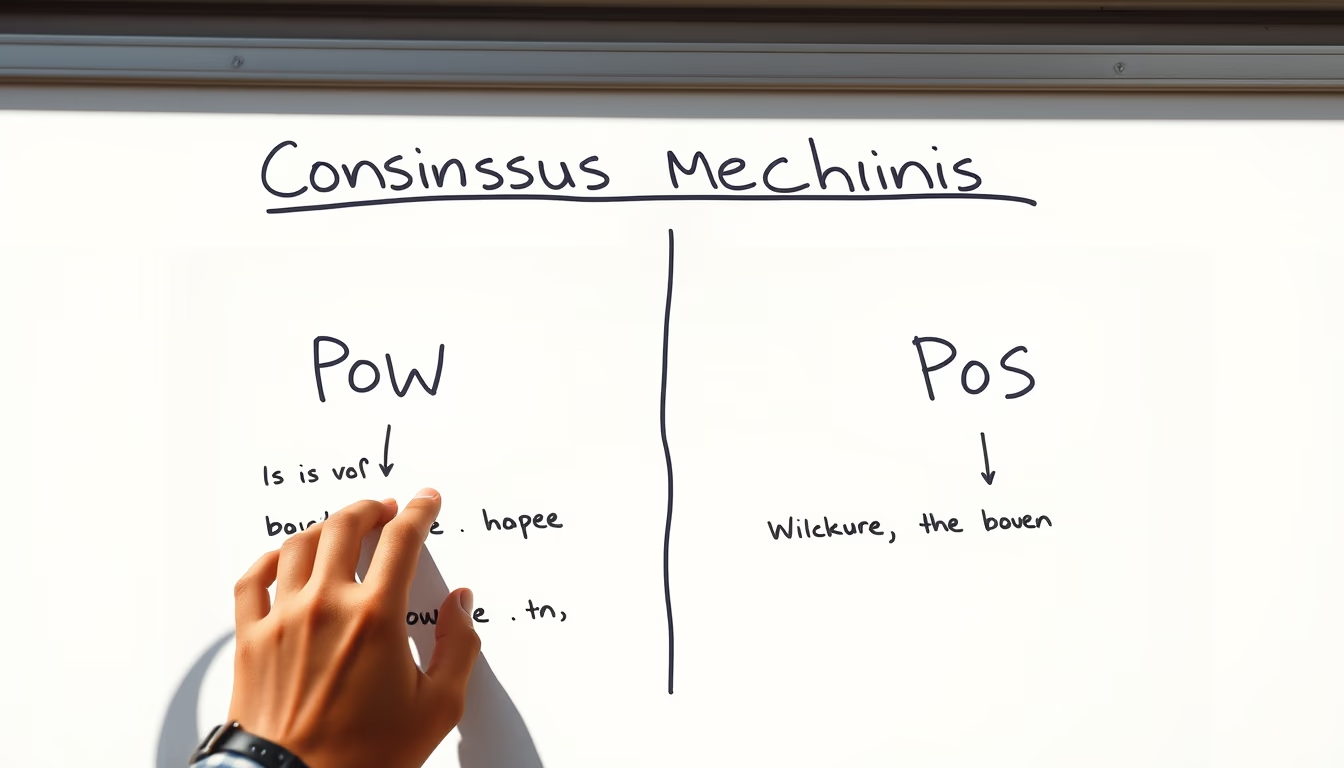 Consensus mechanism diagram on whiteboard showing PoW vs PoS
 Distributed ledger multiple servers in data center
 Hash function visualization cryptographic equations on glass screen
 Hash function visualization cryptographic equations on glass screen
 Hash function visualization cryptographic equations on glass screen