Distributed ledger multiple servers in data center
1344×768 · AVIF · CC BY 4.0

The distributed ledger is the technological foundation of blockchain, operating on multiple servers to ensure transparency and decentralized security.
About this subject
A distributed ledger is a shared digital record synchronized across multiple servers without the need for a central authority. This technology is the backbone of blockchain, where each transaction is recorded in linked blocks and validated by consensus among network nodes. The use of multiple servers, often located in geographically dispersed data centers, increases resilience against failures and cyberattacks. Each server maintains a full or partial copy of the ledger, and any change must be approved by the majority of participants, ensuring immutability and auditability.
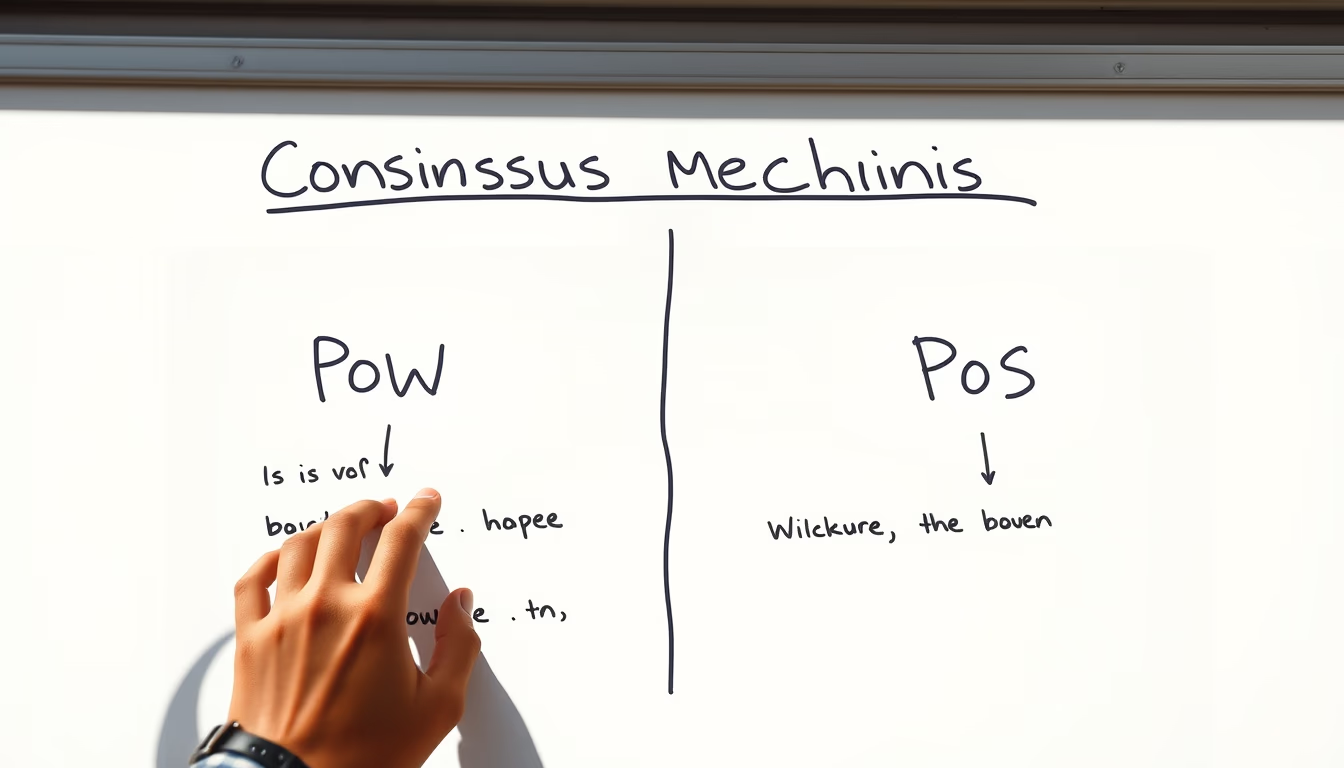
The origin of distributed ledgers dates back to consensus protocols like Byzantine Fault Tolerance (BFT) and later Bitcoin's Proof-of-Work. Unlike a traditional centralized database, where a single point of failure can compromise the entire system, distributed ledgers offer redundancy and transparency. Modern data centers hosting these servers use advanced cooling systems, redundant power sources, and high-speed connections to ensure continuous operation.
In the Brazilian context, companies and financial institutions have adopted distributed ledgers to track supply chains, streamline compliance processes, and reduce fraud. The Central Bank of Brazil, for example, is developing Drex (digital real) based on DLT technology. Scalability remains a challenge, but solutions like sharding and sidechains aim to increase processing capacity without compromising security. Distributed ledgers are also used in applications beyond cryptocurrencies, such as electronic voting systems and real estate property registries.
Frequently Asked Questions
What is a distributed ledger?
It is a decentralized database where information is recorded and synchronized across multiple servers, ensuring transparency and security without a central authority.
What is the difference between a distributed ledger and blockchain?
Blockchain is a specific type of distributed ledger that organizes data into cryptographically chained blocks. Not all distributed ledgers use blocks, but blockchain is the most well-known example.
What are the advantages of using multiple servers in data centers?
Server redundancy in data centers increases availability and fault tolerance. Geographic distribution also hinders cyberattacks and ensures continuity even in local disasters.
Direct URL
https://pub-c7d6a6ea828543ac903a74a341ccb2e1.r2.dev/imagens/distributed-ledger-multiple-servers-in-data-center-symmetric-composition-golden-hour-late-afternoon.avifHow to credit
Include a visible link back to UtilizAí. Copy one of the snippets below:
<a href="https://xn--utiliza-eza.com/en/midia/imagens/distributed-ledger-multiple-servers-in-data-center-symmetric-composition-golden-hour-late-afternoon">Distributed ledger multiple servers in data center</a> by <a href="https://xn--utiliza-eza.com">UtilizAí</a>, licensed under <a href="https://creativecommons.org/licenses/by/4.0/">CC BY 4.0</a>.
[Distributed ledger multiple servers in data center](https://xn--utiliza-eza.com/en/midia/imagens/distributed-ledger-multiple-servers-in-data-center-symmetric-composition-golden-hour-late-afternoon) by [UtilizAí](https://xn--utiliza-eza.com), CC BY 4.0
License: CC-BY-4.0
Tags
Related images
 Smart contract code on monitor with solidity syntax highlighted
 Consensus mechanism diagram on whiteboard showing PoW vs PoS
 Distributed ledger multiple servers in data center
 Hash function visualization cryptographic equations on glass screen
 Hash function visualization cryptographic equations on glass screen
 Hash function visualization cryptographic equations on glass screen