Distributed ledger multiple servers in data center
1344×768 · AVIF · CC BY 4.0

Distributed ledger technology running on multiple servers in a data center ensures security and transparency in digital transactions.
About this subject
A distributed ledger, also known as a shared ledger, is a consensual and synchronized database replicated across multiple nodes (servers) in a network. Unlike traditional centralized databases where a single entity controls the data, a distributed ledger operates on a peer-to-peer architecture, where each server holds an identical copy of the record. This structure eliminates intermediaries, reduces fraud risks, and increases system resilience, as there is no single point of failure.
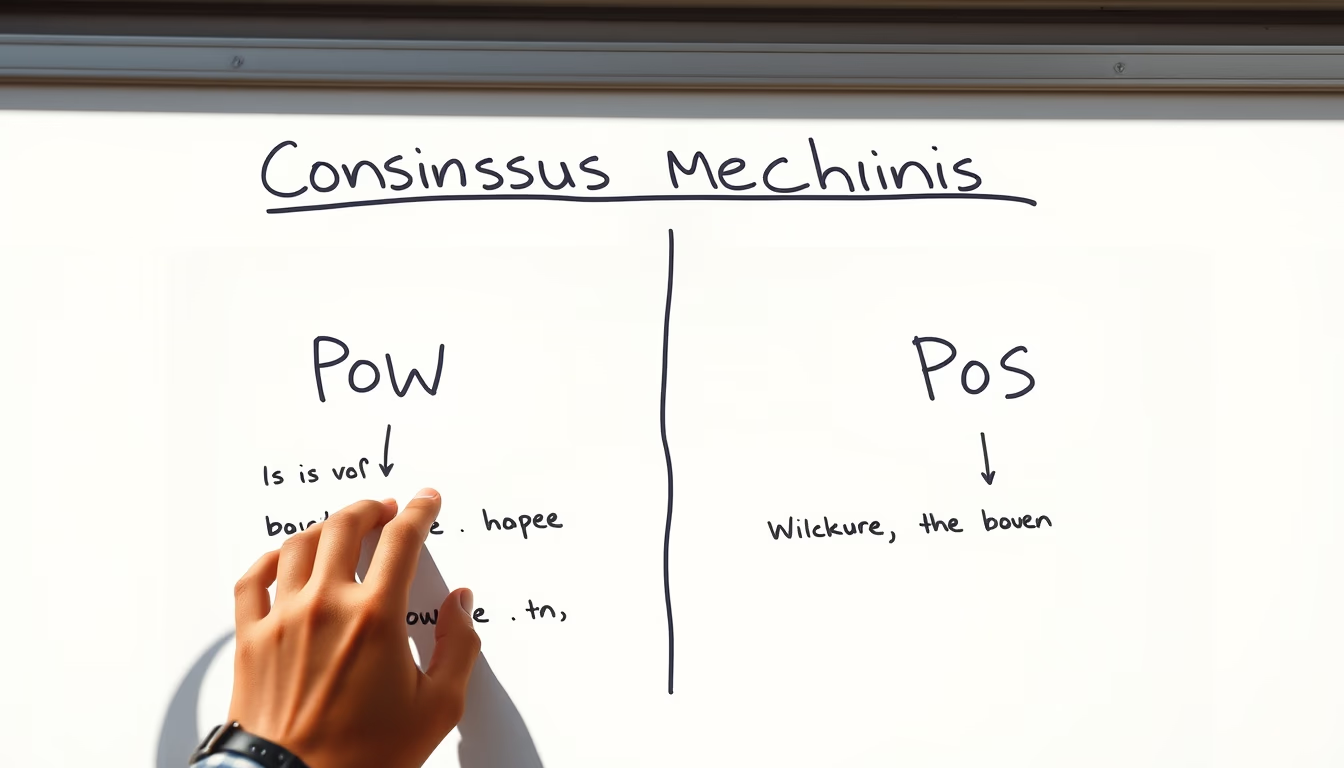
In a modern data center, dedicated servers run consensus algorithms, such as Proof of Work (PoW) or Proof of Stake (PoS), to validate and add new transaction blocks to the ledger. Server redundancy ensures high availability and fault tolerance. Data centers hosting distributed ledgers often employ advanced cooling systems, uninterruptible power supplies (UPS), and stringent physical security to protect critical hardware.
Distributed ledger technology is the foundation of blockchains like Bitcoin and Ethereum, but it is also used in enterprise applications such as supply chain tracking, digital identity, and electronic voting systems. The inherent decentralization promotes transparency, immutability, and auditability, features valued in sectors like finance, healthcare, and logistics.
Trivia: The first functional distributed ledger was Bitcoin, launched in 2009 by Satoshi Nakamoto. Since then, the technology has evolved to support smart contracts and decentralized applications (dApps), with platforms like Hyperledger Fabric and Corda focusing on permissioned enterprise environments.
Frequently Asked Questions
What is the difference between a distributed ledger and a blockchain?
Every blockchain is a type of distributed ledger, but not every distributed ledger is a blockchain. Blockchains organize data in cryptographically linked blocks, while distributed ledgers may use other structures like DAG (Directed Acyclic Graph).
What are the advantages of using multiple servers in a data center for a distributed ledger?
Multiple servers provide redundancy, high availability, and fault tolerance. If one server fails, others continue operating, maintaining ledger integrity. Geographic distribution also reduces risks from localized disasters.
Is a distributed ledger immutable?
Yes, once a transaction is recorded and confirmed by network consensus, it cannot be altered or deleted without controlling a majority of nodes. This ensures historical data integrity.
Direct URL
https://pub-c7d6a6ea828543ac903a74a341ccb2e1.r2.dev/imagens/distributed-ledger-multiple-servers-in-data-center-editorial-portrait-studio-professional-lighting.avifHow to credit
Include a visible link back to UtilizAí. Copy one of the snippets below:
<a href="https://xn--utiliza-eza.com/en/midia/imagens/distributed-ledger-multiple-servers-in-data-center-editorial-portrait-studio-professional-lighting">Distributed ledger multiple servers in data center</a> by <a href="https://xn--utiliza-eza.com">UtilizAí</a>, licensed under <a href="https://creativecommons.org/licenses/by/4.0/">CC BY 4.0</a>.
[Distributed ledger multiple servers in data center](https://xn--utiliza-eza.com/en/midia/imagens/distributed-ledger-multiple-servers-in-data-center-editorial-portrait-studio-professional-lighting) by [UtilizAí](https://xn--utiliza-eza.com), CC BY 4.0
License: CC-BY-4.0
Tags
Related images
 Smart contract code on monitor with solidity syntax highlighted
 Consensus mechanism diagram on whiteboard showing PoW vs PoS
 Distributed ledger multiple servers in data center
 Hash function visualization cryptographic equations on glass screen
 Hash function visualization cryptographic equations on glass screen
 Hash function visualization cryptographic equations on glass screen