Distributed ledger multiple servers in data center
1344×768 · AVIF · CC BY 4.0

Distributed ledgers are replicated databases across multiple servers, ensuring transparency and security without a central authority.
About this subject
A distributed ledger is a decentralized database maintained by a network of servers, called nodes, which validate and record transactions through consensus. Unlike traditional databases, no single entity controls the data; each node holds an identical copy, and changes require majority approval. This technology underpins blockchain, where transaction blocks are cryptographically chained. While blockchain is the most famous type, other architectures exist, such as DAG (Directed Acyclic Graph), used in projects like IOTA.
The main advantage of distributed ledgers is immutability: once recorded, a transaction cannot be altered without network consensus, reducing fraud and errors. They are widely used in cryptocurrencies, smart contracts, supply chain tracking, and electronic voting systems. In Brazil, projects like using blockchain for property registration in partnership with notary offices explore this technology to enhance transparency.
Data centers hosting servers for distributed ledgers require high availability, redundancy, and physical security. Many companies, such as IBM and Microsoft, offer cloud solutions for deploying permissioned (restricted access) or public (open to anyone) ledgers. The choice depends on the use case: permissioned ledgers are common in business consortia, while public ones prioritize full decentralization.
A curiosity: the first functional distributed ledger was Bitcoin, launched in 2009. Since then, the technology has evolved to support thousands of transactions per second, as in networks like Solana and Cardano. However, challenges such as scalability and energy consumption are still debated, especially with Bitcoin's Proof of Work.
Frequently Asked Questions
What is the difference between a distributed ledger and blockchain?
Blockchain is a specific type of distributed ledger where data is organized in chained blocks. Every blockchain is a distributed ledger, but not every distributed ledger is blockchain. Examples of non-blockchain ledgers include DAGs (like IOTA) and Hashgraph.
How does a distributed ledger ensure security?
Security comes from consensus among multiple nodes. To alter a record, an attacker would need to control over half the nodes (51% attack), which is impractical in large networks. Additionally, cryptography protects transactions.
What are practical uses of distributed ledgers in Brazil?
In Brazil, they are used in supply chain tracking (agribusiness), intellectual property registries, experimental electronic voting, and digital identity systems. The Central Bank is also studying a digital real based on distributed ledger.
Direct URL
https://pub-c7d6a6ea828543ac903a74a341ccb2e1.r2.dev/imagens/distributed-ledger-multiple-servers-in-data-center-documentary-photography-golden-hour-late-afternoon.avifHow to credit
Include a visible link back to UtilizAí. Copy one of the snippets below:
<a href="https://xn--utiliza-eza.com/en/midia/imagens/distributed-ledger-multiple-servers-in-data-center-documentary-photography-golden-hour-late-afternoon">Distributed ledger multiple servers in data center</a> by <a href="https://xn--utiliza-eza.com">UtilizAí</a>, licensed under <a href="https://creativecommons.org/licenses/by/4.0/">CC BY 4.0</a>.
[Distributed ledger multiple servers in data center](https://xn--utiliza-eza.com/en/midia/imagens/distributed-ledger-multiple-servers-in-data-center-documentary-photography-golden-hour-late-afternoon) by [UtilizAí](https://xn--utiliza-eza.com), CC BY 4.0
License: CC-BY-4.0
Tags
Related images
 Smart contract code on monitor with solidity syntax highlighted
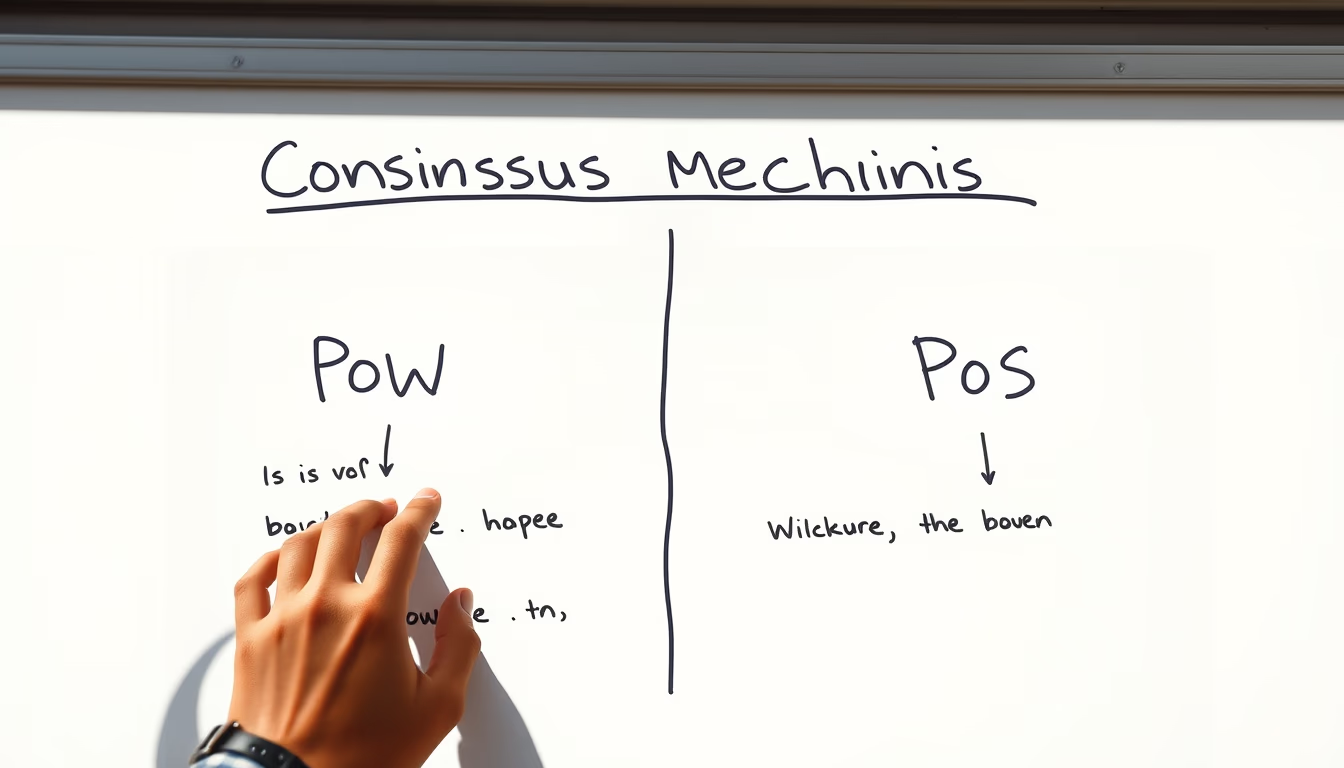 Consensus mechanism diagram on whiteboard showing PoW vs PoS
 Distributed ledger multiple servers in data center
 Hash function visualization cryptographic equations on glass screen
 Hash function visualization cryptographic equations on glass screen
 Hash function visualization cryptographic equations on glass screen