Distributed ledger multiple servers in data center
1344×768 · AVIF · CC BY 4.0

Understand how a distributed ledger works across multiple servers in a data center, the core technology behind blockchain.
About this subject
A distributed ledger is a consensual and shared database that runs across multiple servers, typically located in data centers worldwide. Unlike centralized systems where a single entity controls the data, the distributed ledger ensures that each node (server) maintains an identical copy of the record, updated in real time through consensus algorithms such as Proof of Work or Proof of Stake. This architecture eliminates the need for intermediaries and increases security, as altering a block would require modifying the majority of nodes simultaneously.
Data centers hosting these servers are designed with power redundancy, precision cooling, and high-speed connectivity to guarantee 24/7 availability. In a blockchain scenario, servers run specific software to validate transactions and mine new blocks. Controlled temperature and lighting, such as the twilight blue hour, are common in server environments to indicate normal operation or alerts.
Geographic distribution of servers is crucial for network resilience: if one data center fails, others continue operating. Additionally, latency between nodes is minimized by fiber optic connections. Using multiple servers also allows horizontal scalability, adding more nodes as demand grows. Technologies like Hyperledger Fabric and Corda are examples of frameworks implementing distributed ledgers in enterprise environments.
Interesting fact: the first distributed ledger was Bitcoin, launched in 2009. Since then, the technology has evolved to support smart contracts and decentralized applications (dApps). The image shows a macro close-up of servers in a data center during the blue hour, highlighting the physical infrastructure underpinning the digital revolution.
Frequently Asked Questions
What is the difference between a distributed ledger and a traditional database?
A distributed ledger is decentralized: each node holds a copy of the data and updates are validated by consensus. A traditional database is centralized, with a single point of control and failure.
Why are blockchain servers located in data centers?
Data centers provide robust infrastructure: redundant power, cooling, physical security, and high-speed connections, essential for keeping the blockchain network running without interruptions.
What does the blue light on servers mean?
The blue light (twilight blue hour) is common lighting in data centers to indicate operational status, such as normal activity or alerts, and also helps with visual identification of equipment.
Direct URL
https://pub-c7d6a6ea828543ac903a74a341ccb2e1.r2.dev/imagens/distributed-ledger-multiple-servers-in-data-center-closeup-macro-shot-twilight-blue-hour.avifHow to credit
Include a visible link back to UtilizAí. Copy one of the snippets below:
<a href="https://xn--utiliza-eza.com/en/midia/imagens/distributed-ledger-multiple-servers-in-data-center-closeup-macro-shot-twilight-blue-hour">Distributed ledger multiple servers in data center</a> by <a href="https://xn--utiliza-eza.com">UtilizAí</a>, licensed under <a href="https://creativecommons.org/licenses/by/4.0/">CC BY 4.0</a>.
[Distributed ledger multiple servers in data center](https://xn--utiliza-eza.com/en/midia/imagens/distributed-ledger-multiple-servers-in-data-center-closeup-macro-shot-twilight-blue-hour) by [UtilizAí](https://xn--utiliza-eza.com), CC BY 4.0
License: CC-BY-4.0
Tags
Related images
 Smart contract code on monitor with solidity syntax highlighted
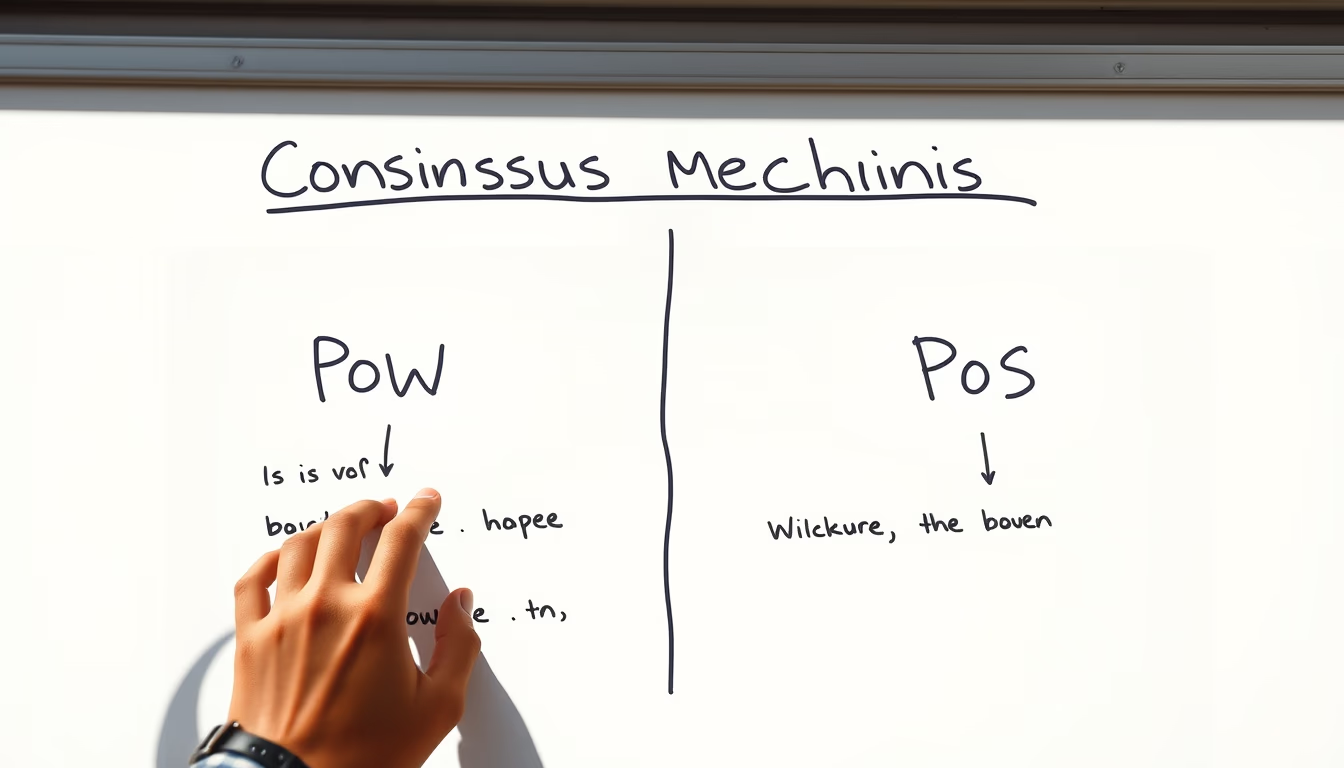 Consensus mechanism diagram on whiteboard showing PoW vs PoS
 Distributed ledger multiple servers in data center
 Hash function visualization cryptographic equations on glass screen
 Hash function visualization cryptographic equations on glass screen
 Hash function visualization cryptographic equations on glass screen