Distributed ledger multiple servers in data center
1344×768 · AVIF · CC BY 4.0

A distributed ledger is a decentralized database maintained by multiple servers in data centers, ensuring transparency and security without a central authority.
About this subject
A distributed ledger is a shared record-keeping technology that replicates data across multiple servers in various locations, such as data centers. Unlike traditional databases controlled by a single entity, a distributed ledger operates on a peer-to-peer network where each node (server) holds an identical copy of the ledger. Updates are validated through consensus among participants, often using algorithms like Proof of Work or Proof of Stake. This eliminates intermediaries, reduces fraud risk, and increases fault tolerance.
The most well-known application of distributed ledger is blockchain, which underpins cryptocurrencies like Bitcoin and Ethereum. However, the technology extends beyond: it is used in supply chains to track products, in electronic voting systems to ensure integrity, and in smart contracts that automate agreements. Data centers hosting these servers require high availability, power redundancy, and network connectivity to maintain constant synchronization among nodes.
Interestingly, the term "distributed ledger" predates blockchain but gained prominence with Bitcoin in 2009. A key advantage is immutability: once a block of data is added, altering it would require modifying all subsequent blocks across more than half the network, which is computationally infeasible. Major companies like IBM and Microsoft offer distributed ledger platforms (Hyperledger, Azure Blockchain) for enterprise solutions, demonstrating mainstream adoption.
Security is a core pillar: because data is distributed, an attack on one server does not compromise the entire system. Additionally, transparency allows any participant to audit transactions. Despite benefits, challenges include scalability and energy consumption, especially in blockchains using Proof of Work. Solutions like sharding and proof of stake aim to mitigate these issues, making the technology more sustainable.
Frequently Asked Questions
What is a distributed ledger?
It is a decentralized database maintained by multiple servers, where each node holds an identical copy of the data. Updates are validated by consensus, ensuring security and transparency without a central authority.
What is the difference between a distributed ledger and blockchain?
Blockchain is a specific type of distributed ledger that organizes data into cryptographically chained blocks. All blockchains are distributed ledgers, but not all distributed ledgers are blockchains (other structures like DAG exist).
What are the advantages of using servers in data centers for a distributed ledger?
Data centers provide robust infrastructure: redundant power, cooling, high-speed connectivity, and physical security. This ensures high availability and efficient synchronization among network nodes.
Direct URL
https://pub-c7d6a6ea828543ac903a74a341ccb2e1.r2.dev/imagens/distributed-ledger-multiple-servers-in-data-center-closeup-macro-shot-studio-professional-lighting.avifHow to credit
Include a visible link back to UtilizAí. Copy one of the snippets below:
<a href="https://xn--utiliza-eza.com/en/midia/imagens/distributed-ledger-multiple-servers-in-data-center-closeup-macro-shot-studio-professional-lighting">Distributed ledger multiple servers in data center</a> by <a href="https://xn--utiliza-eza.com">UtilizAí</a>, licensed under <a href="https://creativecommons.org/licenses/by/4.0/">CC BY 4.0</a>.
[Distributed ledger multiple servers in data center](https://xn--utiliza-eza.com/en/midia/imagens/distributed-ledger-multiple-servers-in-data-center-closeup-macro-shot-studio-professional-lighting) by [UtilizAí](https://xn--utiliza-eza.com), CC BY 4.0
License: CC-BY-4.0
Tags
Related images
 Smart contract code on monitor with solidity syntax highlighted
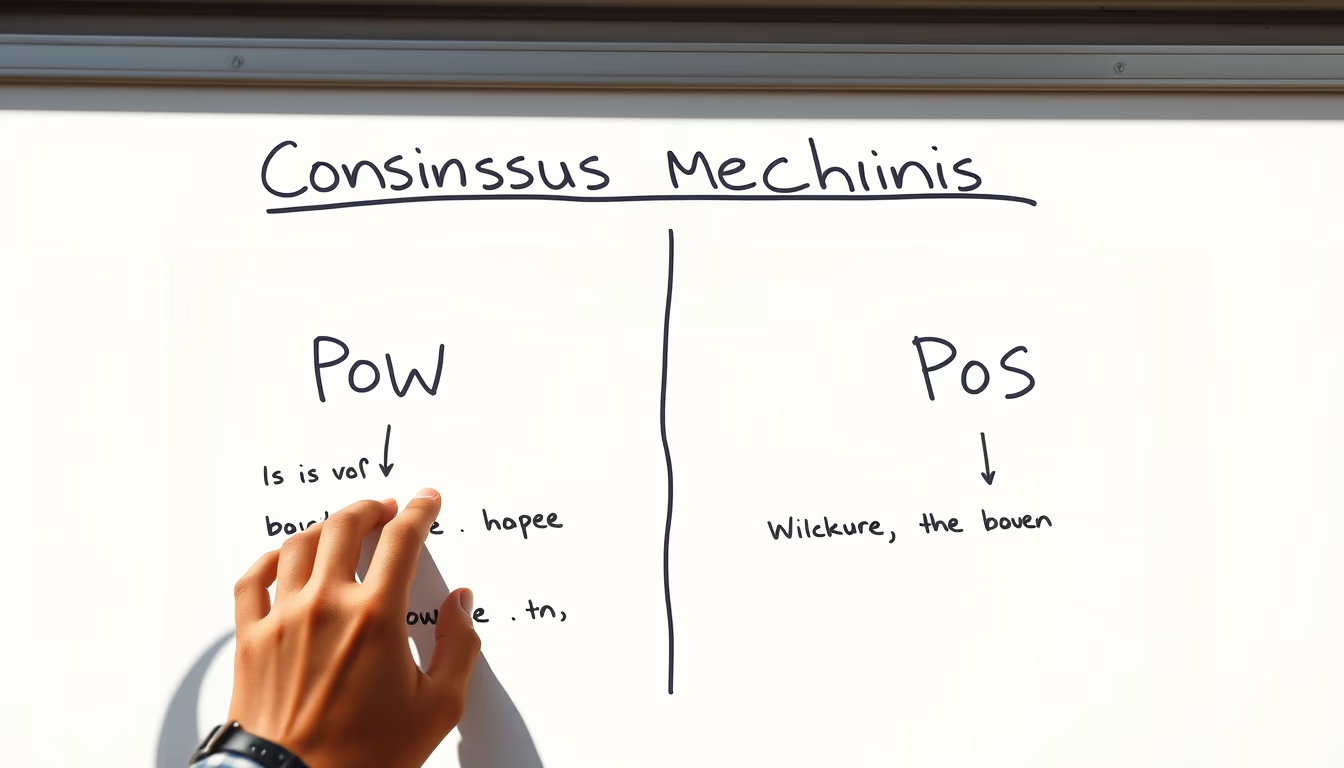 Consensus mechanism diagram on whiteboard showing PoW vs PoS
 Distributed ledger multiple servers in data center
 Hash function visualization cryptographic equations on glass screen
 Hash function visualization cryptographic equations on glass screen
 Hash function visualization cryptographic equations on glass screen