Distributed ledger multiple servers in data center
1344×768 · AVIF · CC BY 4.0

Distributed ledger technology, essential for blockchains, operates across multiple servers in data centers worldwide.
About this subject
A distributed ledger is a decentralized database that maintains a record of transactions replicated across multiple servers, known as nodes. Unlike traditional centralized databases, it does not rely on a single entity for validation, enhancing security and resilience. This technology underpins blockchains like Bitcoin and Ethereum, but is also used in permissioned systems such as Hyperledger Fabric, adopted by enterprises for supply chain tracking. Data centers hosting these servers often employ consensus protocols, like Proof of Work or Proof of Stake, to ensure all nodes agree on the current ledger state.
Operating across multiple servers in geographically distributed data centers reduces the risk of a single point of failure. For instance, if one data center goes offline, other nodes continue processing transactions. This is critical for financial applications where 24/7 availability is mandatory. Additionally, data redundancy prevents information from being lost or altered without network consensus. The Bitcoin network alone has thousands of nodes spread across over 90 countries, many running in professional data centers.
Interestingly, the concept of distributed ledgers is not new. Before blockchain, systems like BitTorrent used peer-to-peer networks for file sharing. However, the innovation came with cryptographic mechanisms ensuring immutability and transparency. Companies like IBM and Amazon Web Services offer managed distributed ledger services, allowing organizations to implement the technology without managing physical infrastructure. The energy consumption of these data centers, especially in proof-of-work blockchains, has sparked sustainability debates, leading to alternatives like proof-of-stake that consume less electricity.
Frequently Asked Questions
What is the difference between a distributed ledger and blockchain?
Blockchain is a specific type of distributed ledger that organizes data into cryptographically chained blocks. All blockchains are distributed ledgers, but not all distributed ledgers are blockchains, such as DAG-based systems.
How many servers are needed for a distributed ledger?
There is no fixed minimum, but public networks typically have thousands of nodes. Permissioned networks may operate with dozens of servers. More nodes generally increase security and decentralization.
What happens if a data center fails?
Since the ledger is replicated across multiple servers, a single data center failure does not disrupt the network. Other nodes continue validating transactions, ensuring availability and data integrity.
Direct URL
https://pub-c7d6a6ea828543ac903a74a341ccb2e1.r2.dev/imagens/distributed-ledger-multiple-servers-in-data-center-closeup-macro-shot-bright-midday-sun.avifHow to credit
Include a visible link back to UtilizAí. Copy one of the snippets below:
<a href="https://xn--utiliza-eza.com/en/midia/imagens/distributed-ledger-multiple-servers-in-data-center-closeup-macro-shot-bright-midday-sun">Distributed ledger multiple servers in data center</a> by <a href="https://xn--utiliza-eza.com">UtilizAí</a>, licensed under <a href="https://creativecommons.org/licenses/by/4.0/">CC BY 4.0</a>.
[Distributed ledger multiple servers in data center](https://xn--utiliza-eza.com/en/midia/imagens/distributed-ledger-multiple-servers-in-data-center-closeup-macro-shot-bright-midday-sun) by [UtilizAí](https://xn--utiliza-eza.com), CC BY 4.0
License: CC-BY-4.0
Tags
Related images
 Smart contract code on monitor with solidity syntax highlighted
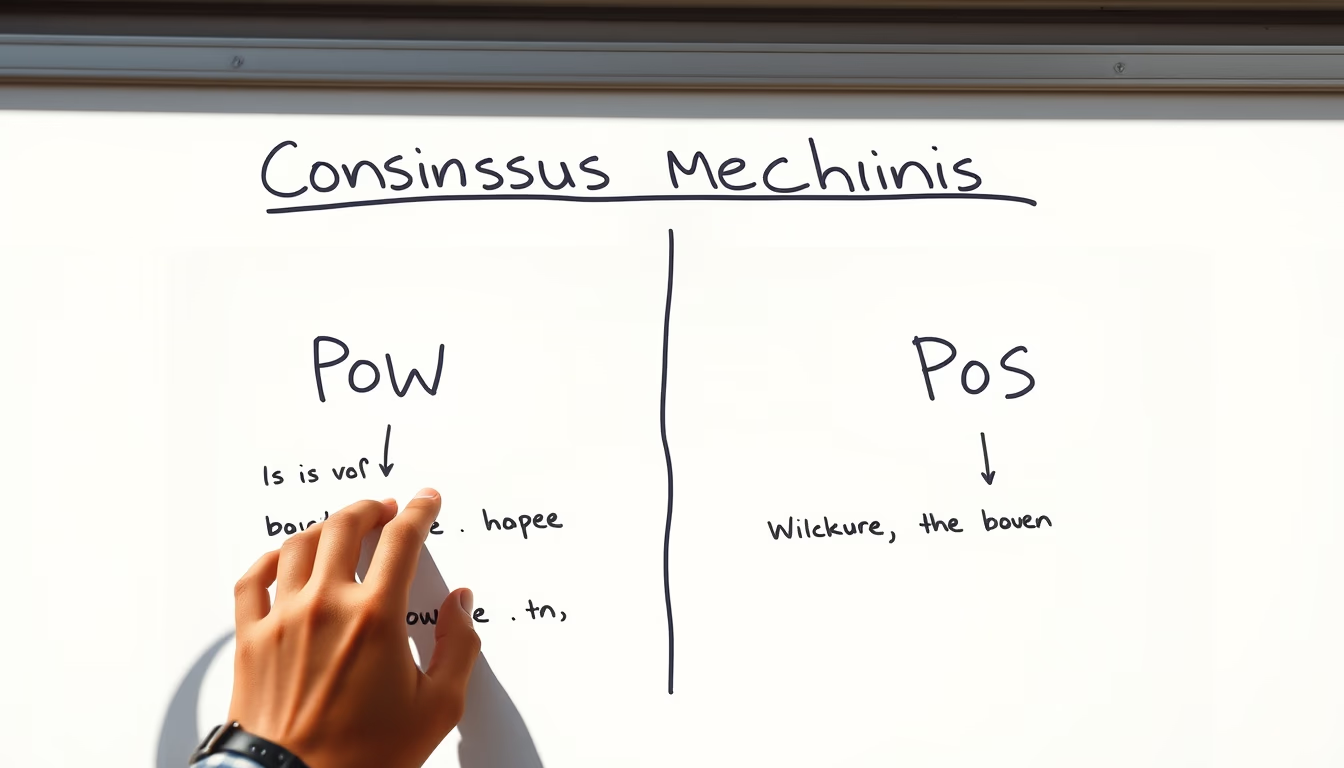 Consensus mechanism diagram on whiteboard showing PoW vs PoS
 Distributed ledger multiple servers in data center
 Hash function visualization cryptographic equations on glass screen
 Hash function visualization cryptographic equations on glass screen
 Hash function visualization cryptographic equations on glass screen