Distributed ledger multiple servers in data center
1344×768 · AVIF · CC BY 4.0

Distributed ledger technology (DLT) in a data center with multiple synchronized servers, the foundation of decentralized trust in blockchains.
About this subject
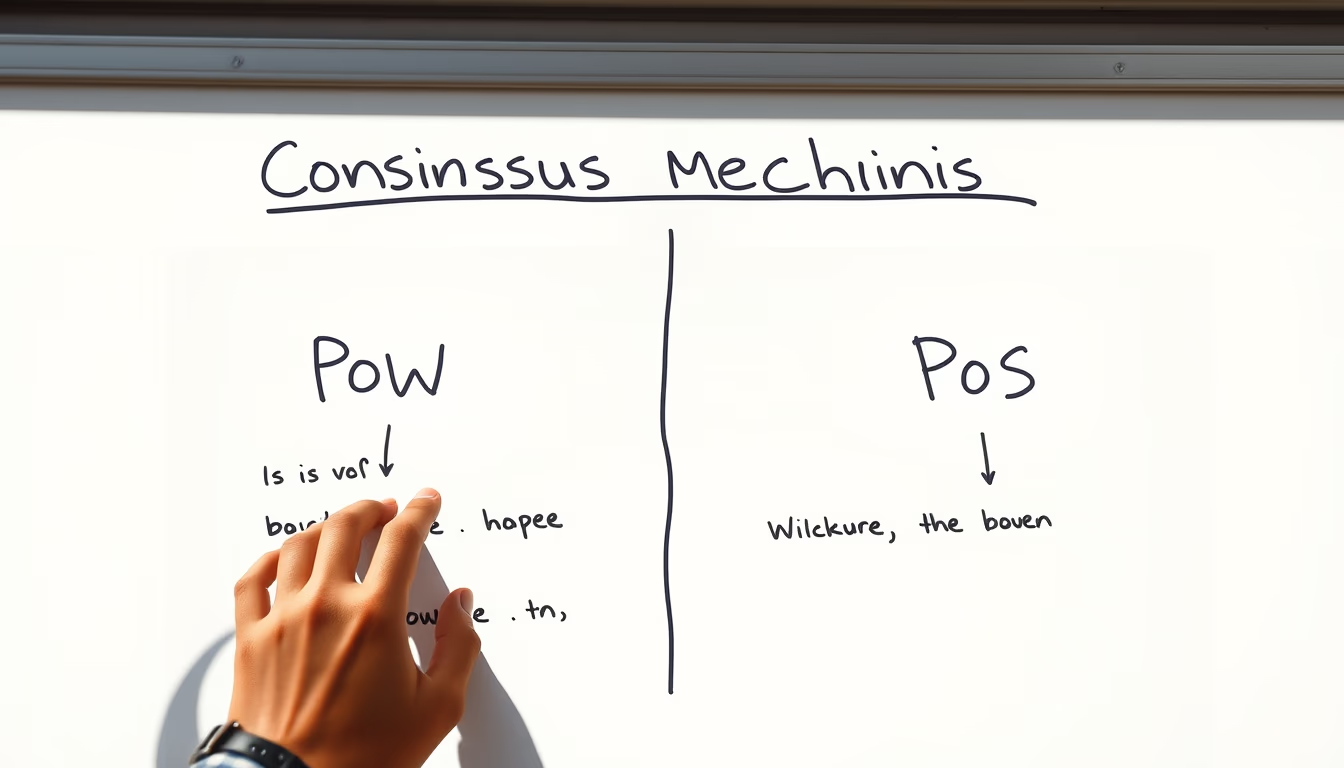
A distributed ledger (DLT) is a transaction recording system that operates across multiple servers or nodes, geographically dispersed in data centers. Unlike centralized databases where a single entity controls the data, DLT ensures each node maintains an identical copy of the ledger, updated through consensus mechanisms like Proof of Work (PoW) or Proof of Stake (PoS). This architecture eliminates single points of failure and reduces the need for intermediaries, making systems like Bitcoin and Ethereum resistant to censorship and tampering.
Data centers hosting DLT nodes often use specialized hardware, such as ASICs for mining or GPUs for transaction processing. Redundancy is critical: servers are connected by high-speed links and protected by uninterruptible power supplies (UPS) and cooling systems. In public blockchains, anyone can operate a node, but in permissioned networks (e.g., Hyperledger Fabric) participants are authorized. Synchronization between servers occurs via gossip protocols, where each node propagates newly validated blocks to its peers, ensuring eventual consistency.
Horizontal scalability is a core challenge. Solutions like sharding (splitting the ledger) and sidechains aim to distribute computational load across more servers. Brazil has important data centers for blockchain networks, such as HostDime in São Paulo and UOLDIVEO, which host cryptocurrency nodes and DeFi applications. Latency between servers on different continents can impact consensus time; therefore, networks like Solana prioritize high processing speed on robust hardware.
Trivia: the first data center to host a Bitcoin node was operated by Hal Finney, one of the project's early developers, in 2009. Today, there are an estimated 15,000+ active nodes on the Bitcoin network, spread across data centers and homes, processing an average of 300,000 transactions per day.
Frequently Asked Questions
What is the difference between a distributed ledger and a traditional database?
A traditional database is centralized: one server or cluster controls the data. DLT distributes copies of the ledger among multiple independent nodes, which validate and synchronize transactions via consensus, ensuring immutability and no single point of failure.
How many servers are needed to form a distributed ledger?
There is no fixed minimum, but public networks like Bitcoin operate with thousands of nodes. Permissioned blockchains typically use 4 to 20 servers, depending on the desired fault tolerance level.
Do data centers in Brazil host blockchain nodes?
Yes. Providers like HostDime, UOLDIVEO, and Locaweb offer servers for mining and cryptocurrency nodes. The Bitcoin network has nodes in São Paulo, Rio de Janeiro, and Brasília, contributing to global decentralization.
Direct URL
https://pub-c7d6a6ea828543ac903a74a341ccb2e1.r2.dev/imagens/distributed-ledger-multiple-servers-in-data-center-cinematic-wide-shot-morning-natural-light.avifHow to credit
Include a visible link back to UtilizAí. Copy one of the snippets below:
<a href="https://xn--utiliza-eza.com/en/midia/imagens/distributed-ledger-multiple-servers-in-data-center-cinematic-wide-shot-morning-natural-light">Distributed ledger multiple servers in data center</a> by <a href="https://xn--utiliza-eza.com">UtilizAí</a>, licensed under <a href="https://creativecommons.org/licenses/by/4.0/">CC BY 4.0</a>.
[Distributed ledger multiple servers in data center](https://xn--utiliza-eza.com/en/midia/imagens/distributed-ledger-multiple-servers-in-data-center-cinematic-wide-shot-morning-natural-light) by [UtilizAí](https://xn--utiliza-eza.com), CC BY 4.0
License: CC-BY-4.0
Tags
Related images
 Smart contract code on monitor with solidity syntax highlighted
 Consensus mechanism diagram on whiteboard showing PoW vs PoS
 Distributed ledger multiple servers in data center
 Hash function visualization cryptographic equations on glass screen
 Hash function visualization cryptographic equations on glass screen
 Hash function visualization cryptographic equations on glass screen