Distributed ledger multiple servers in data center
1344×768 · AVIF · CC BY 4.0

In modern data centers, multiple servers run a distributed ledger, ensuring decentralized consensus and immutability of records.
About this subject
The distributed ledger, the technological foundation of blockchain, is implemented in clusters of servers located in data centers around the world. Unlike centralized databases, where a single entity controls the data, the distributed ledger replicates and synchronizes information across multiple nodes, ensuring no single point of failure compromises integrity. This architecture is fundamental for cryptocurrencies like Bitcoin and Ethereum, but is also adopted by companies in supply chain tracking, digital identity, and smart contracts.
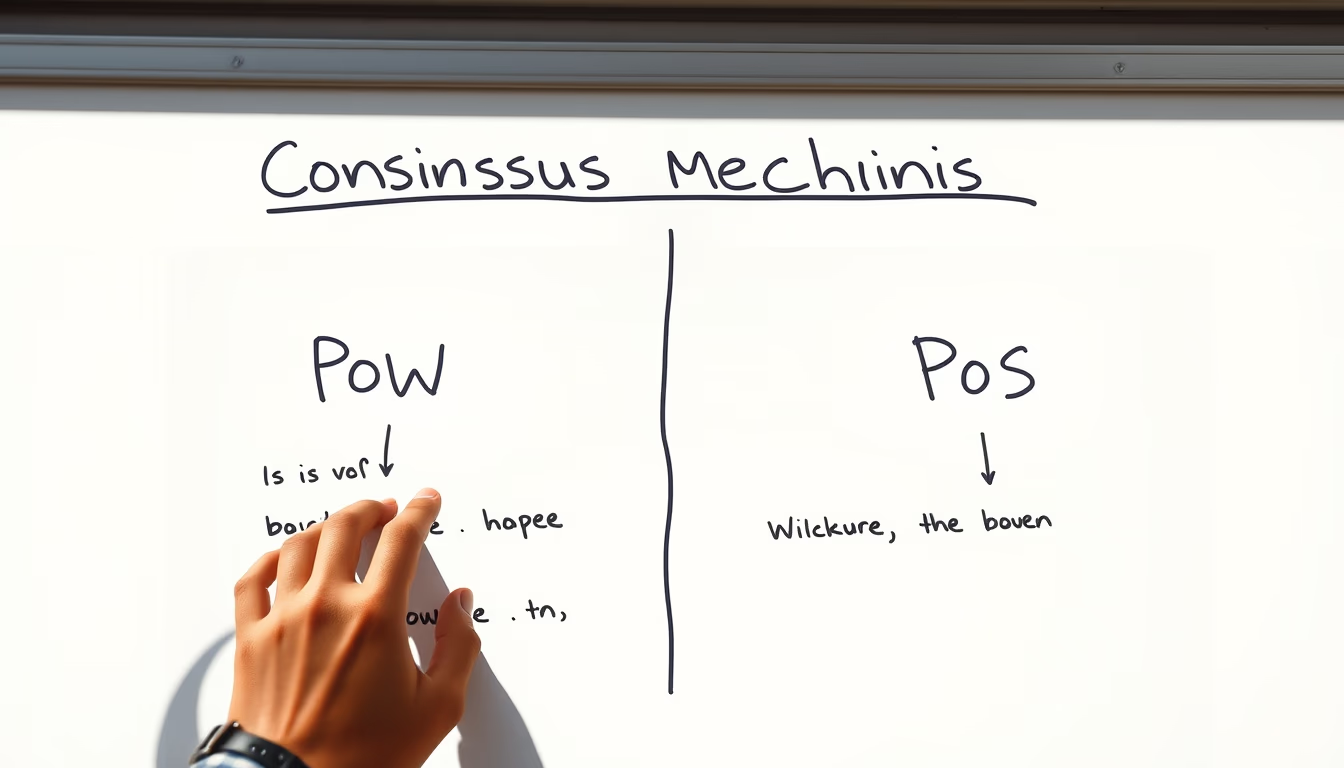
Data centers hosting these systems require robust infrastructure: electrical redundancy, precision cooling, and high-speed connectivity. Each server in the cluster runs consensus software, such as Proof of Work or Proof of Stake, which validates transactions without intermediaries. In Brazil, data centers in São Paulo and Rio de Janeiro host blockchain network nodes, contributing to global decentralization. Latency between servers is critical; many operators use dedicated optical networks to synchronize the ledger within milliseconds.
A technical curiosity: the term “ledger” comes from traditional accounting, and the distributed version eliminates the need for a central ledger. Each server maintains a full copy of the transaction history, and changes are only accepted if a majority of nodes agree. This mechanism, called Byzantine consensus, is inspired by the Byzantine Generals Problem, a distributed computing challenge studied since the 1980s.
Scalability is an ongoing challenge. While public blockchains like Bitcoin process about 7 transactions per second, enterprise solutions like Hyperledger Fabric achieve thousands. Modern data centers use load balancing and sharding to split the ledger into smaller parts, increasing efficiency without sacrificing security.
Frequently Asked Questions
What is a distributed ledger?
It is a shared and synchronized database across multiple servers in different locations, without a central controller. Each server maintains an identical copy of the records, and changes are validated by consensus.
What is the difference between a distributed ledger and blockchain?
Blockchain is a specific type of distributed ledger that organizes data into cryptographically chained blocks. Not every distributed ledger uses blocks, but all share the characteristic of decentralization.
Why are data centers important for distributed ledgers?
Data centers provide the necessary physical infrastructure: redundant power, cooling, security, and high-speed connectivity, ensuring servers operate 24/7 without interruptions.
Direct URL
https://pub-c7d6a6ea828543ac903a74a341ccb2e1.r2.dev/imagens/distributed-ledger-multiple-servers-in-data-center-cinematic-wide-shot-bright-midday-sun.avifHow to credit
Include a visible link back to UtilizAí. Copy one of the snippets below:
<a href="https://xn--utiliza-eza.com/en/midia/imagens/distributed-ledger-multiple-servers-in-data-center-cinematic-wide-shot-bright-midday-sun">Distributed ledger multiple servers in data center</a> by <a href="https://xn--utiliza-eza.com">UtilizAí</a>, licensed under <a href="https://creativecommons.org/licenses/by/4.0/">CC BY 4.0</a>.
[Distributed ledger multiple servers in data center](https://xn--utiliza-eza.com/en/midia/imagens/distributed-ledger-multiple-servers-in-data-center-cinematic-wide-shot-bright-midday-sun) by [UtilizAí](https://xn--utiliza-eza.com), CC BY 4.0
License: CC-BY-4.0
Tags
Related images
 Smart contract code on monitor with solidity syntax highlighted
 Consensus mechanism diagram on whiteboard showing PoW vs PoS
 Distributed ledger multiple servers in data center
 Hash function visualization cryptographic equations on glass screen
 Hash function visualization cryptographic equations on glass screen
 Hash function visualization cryptographic equations on glass screen