Distributed ledger multiple servers in data center
1344×768 · AVIF · CC BY 4.0
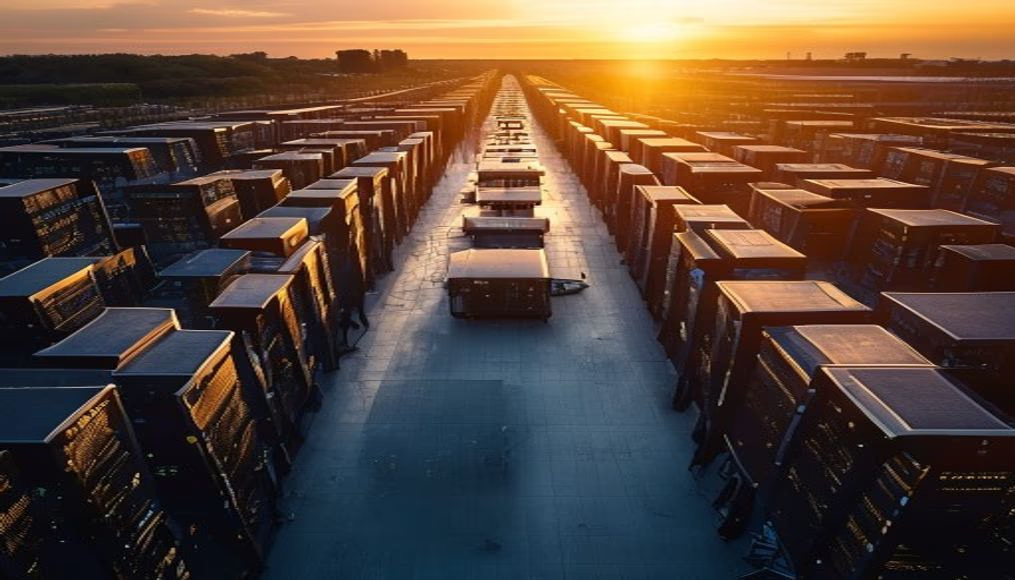
Data centers house servers running blockchains, ensuring decentralization and security in globally distributed networks.
About this subject
Blockchains are distributed ledgers running on a network of servers spread across data centers worldwide. Each server, or node, maintains a copy of the ledger and validates transactions through consensus, eliminating the need for a central authority. This decentralized architecture makes blockchains like Bitcoin and Ethereum resistant to censorship and fraud.
Modern data centers are designed for high availability, efficient cooling, and energy redundancy. Companies like Amazon Web Services, Google Cloud, and Microsoft Azure host thousands of blockchain nodes, often across different geographic regions to maximize resilience. The location of a data center can influence network latency and compliance with local regulations, such as Brazil's LGPD.
An interesting phenomenon is cryptocurrency mining, which requires specialized hardware and high energy consumption. Large mining farms are often located near cheap energy sources, such as hydroelectric plants. In Brazil, for example, operations exist in regions with energy surplus. Physical decentralization of servers helps avoid single points of failure but also raises environmental sustainability concerns.
The security of a distributed ledger depends on server and network integrity. A 51% attack is possible if a group controls most of the computational power, but geographic dispersion and operator diversity hinder such concentration. Additionally, consensus protocols like Proof of Work and Proof of Stake evolve to reduce energy consumption while maintaining security.
Frequently Asked Questions
What is a distributed ledger?
It is a shared database synchronized across multiple servers in different locations, without a central authority. Each transaction is recorded in blocks and validated by consensus.
Why are data centers important for blockchains?
They provide the physical infrastructure to host servers running network nodes, ensuring power, cooling, and 24/7 connectivity.
How does data center location affect blockchain?
It influences latency, energy costs, and legal compliance. Regions with cheap energy or cool climates are preferred for mining.
Direct URL
https://pub-c7d6a6ea828543ac903a74a341ccb2e1.r2.dev/imagens/distributed-ledger-multiple-servers-in-data-center-aerial-drone-shot-golden-hour-late-afternoon.avifHow to credit
Include a visible link back to UtilizAí. Copy one of the snippets below:
<a href="https://xn--utiliza-eza.com/en/midia/imagens/distributed-ledger-multiple-servers-in-data-center-aerial-drone-shot-golden-hour-late-afternoon">Distributed ledger multiple servers in data center</a> by <a href="https://xn--utiliza-eza.com">UtilizAí</a>, licensed under <a href="https://creativecommons.org/licenses/by/4.0/">CC BY 4.0</a>.
[Distributed ledger multiple servers in data center](https://xn--utiliza-eza.com/en/midia/imagens/distributed-ledger-multiple-servers-in-data-center-aerial-drone-shot-golden-hour-late-afternoon) by [UtilizAí](https://xn--utiliza-eza.com), CC BY 4.0
License: CC-BY-4.0
Tags
Related images
 Smart contract code on monitor with solidity syntax highlighted
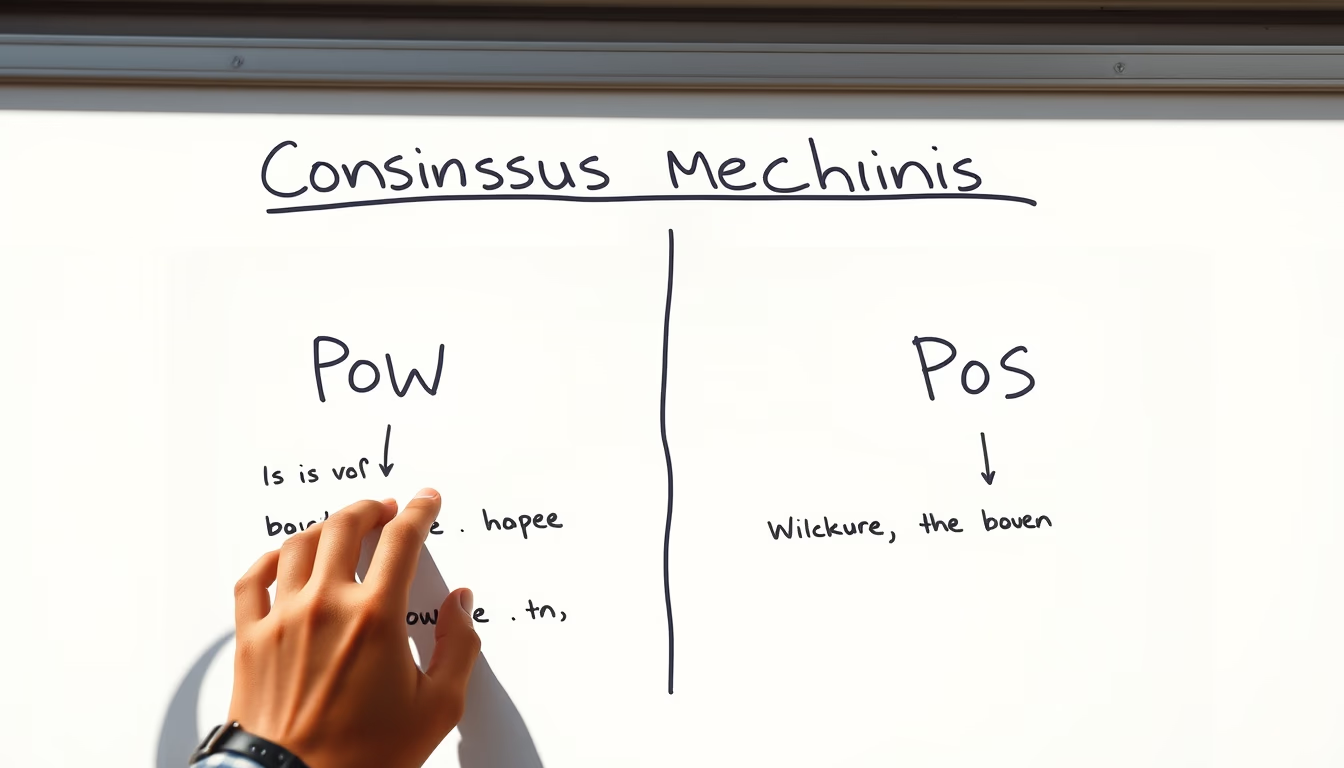 Consensus mechanism diagram on whiteboard showing PoW vs PoS
 Hash function visualization cryptographic equations on glass screen
 Hash function visualization cryptographic equations on glass screen
 Hash function visualization cryptographic equations on glass screen
 Hash function visualization cryptographic equations on glass screen