Distributed ledger multiple servers in data center
1344×768 · AVIF · CC BY 4.0

Modern data centers house servers running distributed ledgers like blockchains, ensuring decentralized consensus and transaction security.
About this subject
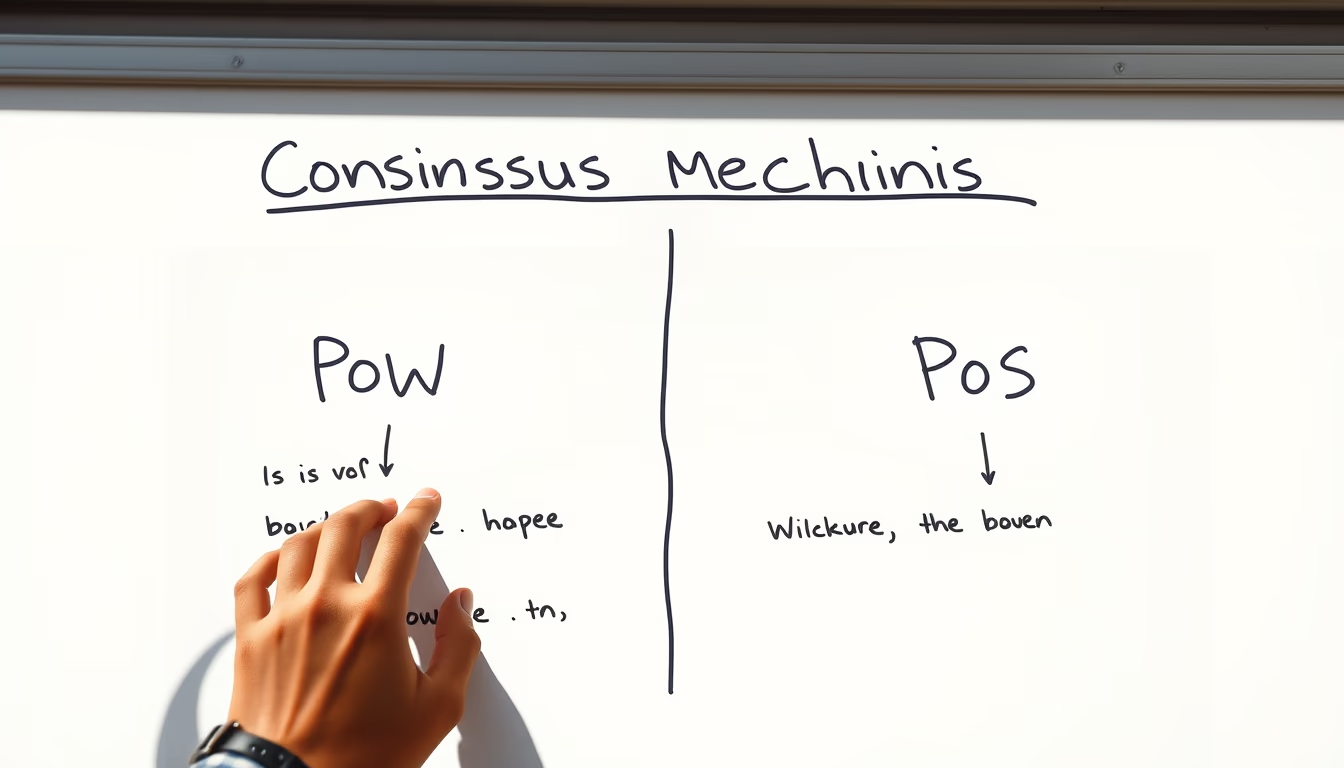
A distributed ledger is a shared database synchronized across multiple participants without a central authority. It underpins technologies like blockchain, used for cryptocurrencies, smart contracts, and supply chain tracking. In data centers, specialized servers maintain copies of the ledger and validate new transactions through consensus algorithms like Proof of Work or Proof of Stake.
Decentralization is a key feature of distributed ledgers. Unlike traditional databases controlled by a single server or company, each network node holds an identical, updated copy. This makes the system resistant to fraud and censorship, as altering data would require modifying most nodes simultaneously. Major data centers, such as those from Amazon Web Services, Google Cloud, and Microsoft Azure, host thousands of servers dedicated to blockchain networks.
Security and immutability are ensured by advanced cryptography. Each block of transactions is linked to the previous one via a cryptographic hash, forming a chain. Any attempt to alter a block would break the chain and be detected by other nodes. Additionally, the geographic redundancy of data centers worldwide ensures the ledger remains accessible even during local failures.
Interestingly, the first distributed ledger was Bitcoin's blockchain, launched in 2009. Since then, hundreds of other networks have emerged, such as Ethereum, Hyperledger, and Ripple. Data centers are also used for cryptocurrency mining, where powerful servers compete to solve mathematical problems and validate transactions, earning rewards. This activity consumes vast amounts of energy, sparking debates about sustainability.
Frequently Asked Questions
What is a distributed ledger?
A distributed ledger is a shared database synchronized across multiple participants without a central authority. It underpins blockchains and ensures transparency and security.
How do data centers contribute to distributed ledgers?
Data centers host servers that act as network nodes, maintaining copies of the ledger and validating transactions through consensus algorithms like Proof of Work.
What is the difference between a distributed ledger and a blockchain?
Blockchain is a specific type of distributed ledger that organizes data in chained blocks. All blockchains are distributed ledgers, but not all distributed ledgers are blockchains.
Direct URL
https://pub-c7d6a6ea828543ac903a74a341ccb2e1.r2.dev/imagens/distributed-ledger-multiple-servers-in-data-center-aerial-drone-shot-bright-midday-sun.avifHow to credit
Include a visible link back to UtilizAí. Copy one of the snippets below:
<a href="https://xn--utiliza-eza.com/en/midia/imagens/distributed-ledger-multiple-servers-in-data-center-aerial-drone-shot-bright-midday-sun">Distributed ledger multiple servers in data center</a> by <a href="https://xn--utiliza-eza.com">UtilizAí</a>, licensed under <a href="https://creativecommons.org/licenses/by/4.0/">CC BY 4.0</a>.
[Distributed ledger multiple servers in data center](https://xn--utiliza-eza.com/en/midia/imagens/distributed-ledger-multiple-servers-in-data-center-aerial-drone-shot-bright-midday-sun) by [UtilizAí](https://xn--utiliza-eza.com), CC BY 4.0
License: CC-BY-4.0
Tags
Related images
 Smart contract code on monitor with solidity syntax highlighted
 Consensus mechanism diagram on whiteboard showing PoW vs PoS
 Distributed ledger multiple servers in data center
 Hash function visualization cryptographic equations on glass screen
 Hash function visualization cryptographic equations on glass screen
 Hash function visualization cryptographic equations on glass screen