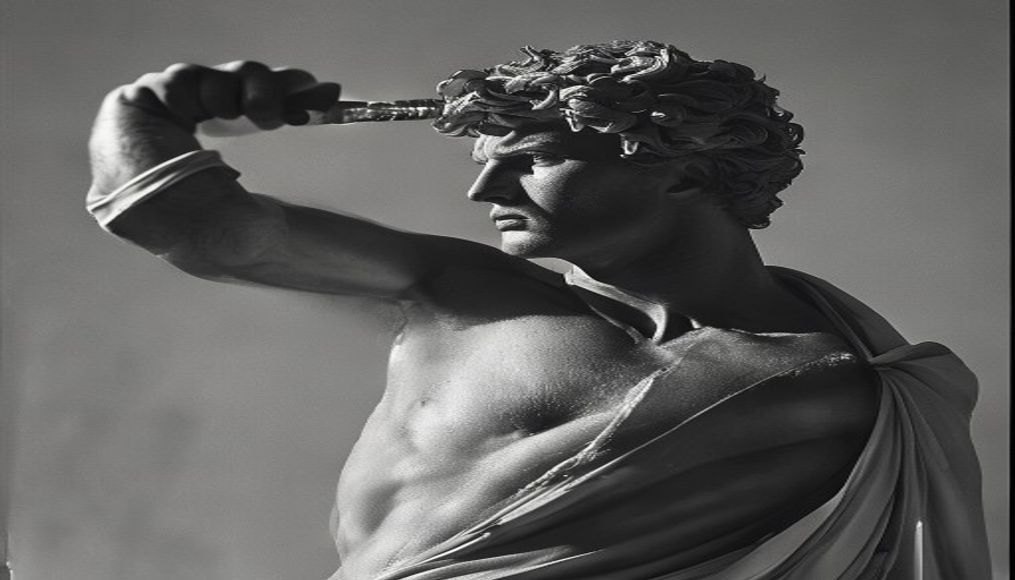
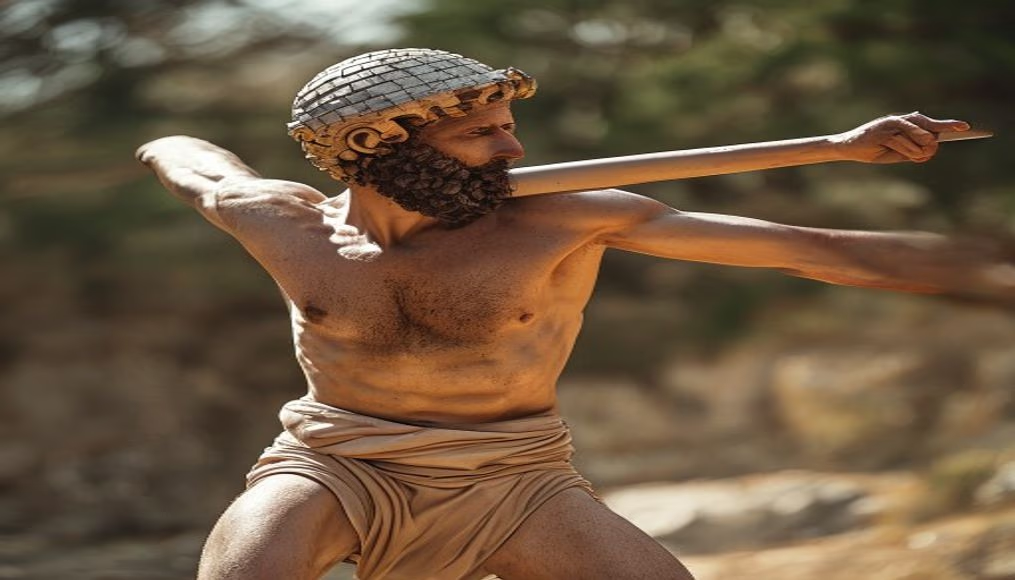
Discobolus statue greek
1344×768 · AVIF · CC BY 4.0
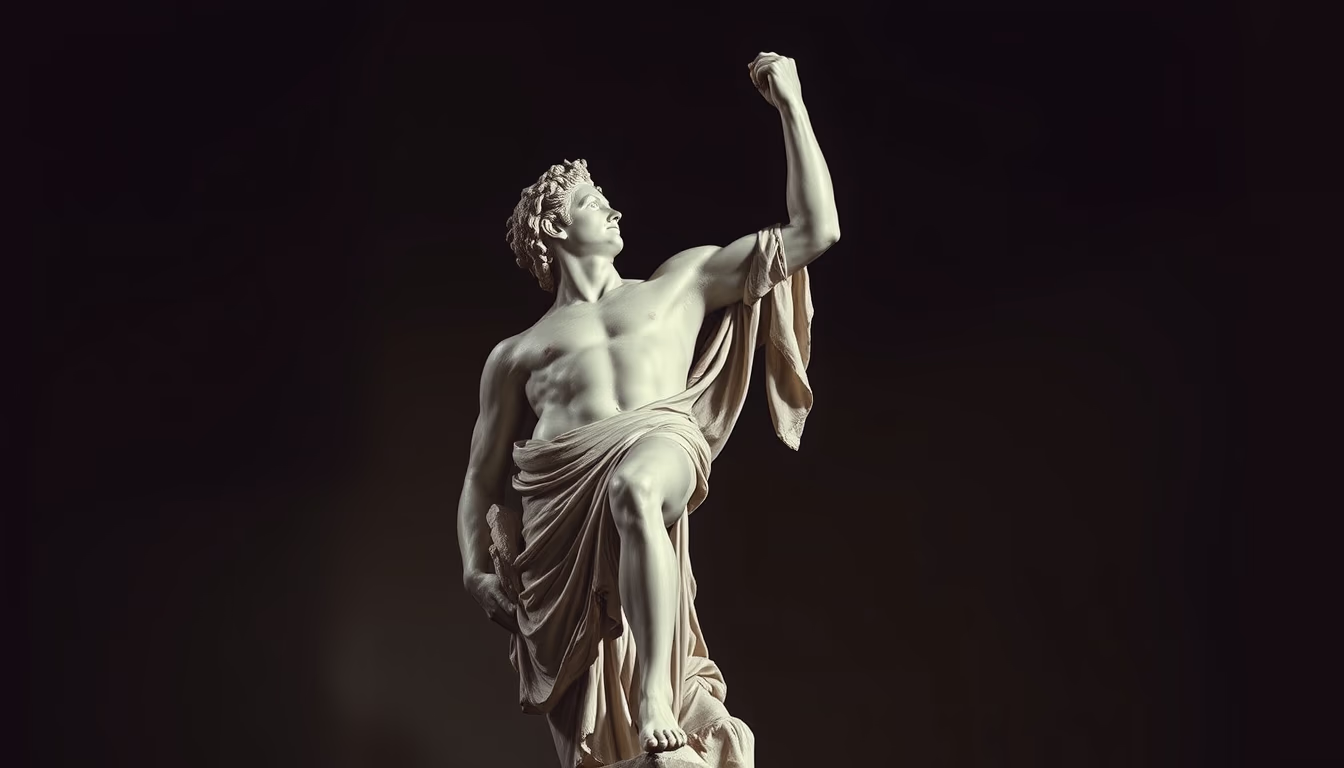
The Discobolus, a Greek sculpture from the 5th century BC, depicts a discus thrower in motion and is a classic symbol of athletics.
About this subject
The Discobolus is one of the most iconic sculptures of classical antiquity. Created by the Greek sculptor Myron around 460, 450 BC, the original bronze was lost, but several Roman marble copies survive, the most famous being the one found at the Palazzo Lancellotti in Rome, now in the Museo Nazionale Romano. The statue captures the exact moment when the athlete twists his body to throw the discus, combining dynamic balance and idealized anatomy.
The work reflects the importance of athletics in ancient Greece, especially in the Olympic Games, where discus throwing was a sport. Myron innovated by depicting the human body in a complex motion, breaking away from the stiffness of earlier poses. The Discobolus also influenced Renaissance and modern art, studied by artists such as Leonardo da Vinci.
The most celebrated copy, known as the Lancellotti Discobolus, was discovered in 1781 in the Villa Palombara in Rome and restored by the Italian sculptor Giuseppe Angelini. It became a cultural icon, appearing on stamps, coins, and even at the opening of the 1948 London Olympics. Other important copies are in the British Museum and the Metropolitan Museum of Art in New York.
Interestingly, the pose of the Discobolus was adapted for the logo of the International Olympic Committee, though the modern version shows an athlete with an arm raised, different from the original. The sculpture has also sparked debates about anatomical accuracy: scholars note that the twist of the torso is not natural for a real throw, but Myron prioritized aesthetics over functionality.
Frequently Asked Questions
Who sculpted the original Discobolus?
The original Discobolus was sculpted by the Greek artist Myron in the 5th century BC in bronze. The work has not survived, but Roman marble copies exist.
Where is the most famous copy of the Discobolus?
The most famous copy, the Lancellotti Discobolus, is located at the Museo Nazionale Romano in Rome, Italy.
Does the Discobolus depict a real athlete?
No, it is an idealized representation of a Greek athlete, capturing a moment of motion during the discus throw.
Direct URL
https://pub-c7d6a6ea828543ac903a74a341ccb2e1.r2.dev/imagens/discobolus-statue-greek-high-fashion-editorial-p11.avifHow to credit
Include a visible link back to UtilizAí. Copy one of the snippets below:
<a href="https://xn--utiliza-eza.com/en/midia/imagens/discobolus-statue-greek-high-fashion-editorial-p11">Discobolus statue greek</a> by <a href="https://xn--utiliza-eza.com">UtilizAí</a>, licensed under <a href="https://creativecommons.org/licenses/by/4.0/">CC BY 4.0</a>.
[Discobolus statue greek](https://xn--utiliza-eza.com/en/midia/imagens/discobolus-statue-greek-high-fashion-editorial-p11) by [UtilizAí](https://xn--utiliza-eza.com), CC BY 4.0
License: CC-BY-4.0