Dead vlei namibia trees
1344×768 · AVIF · CC BY 4.0
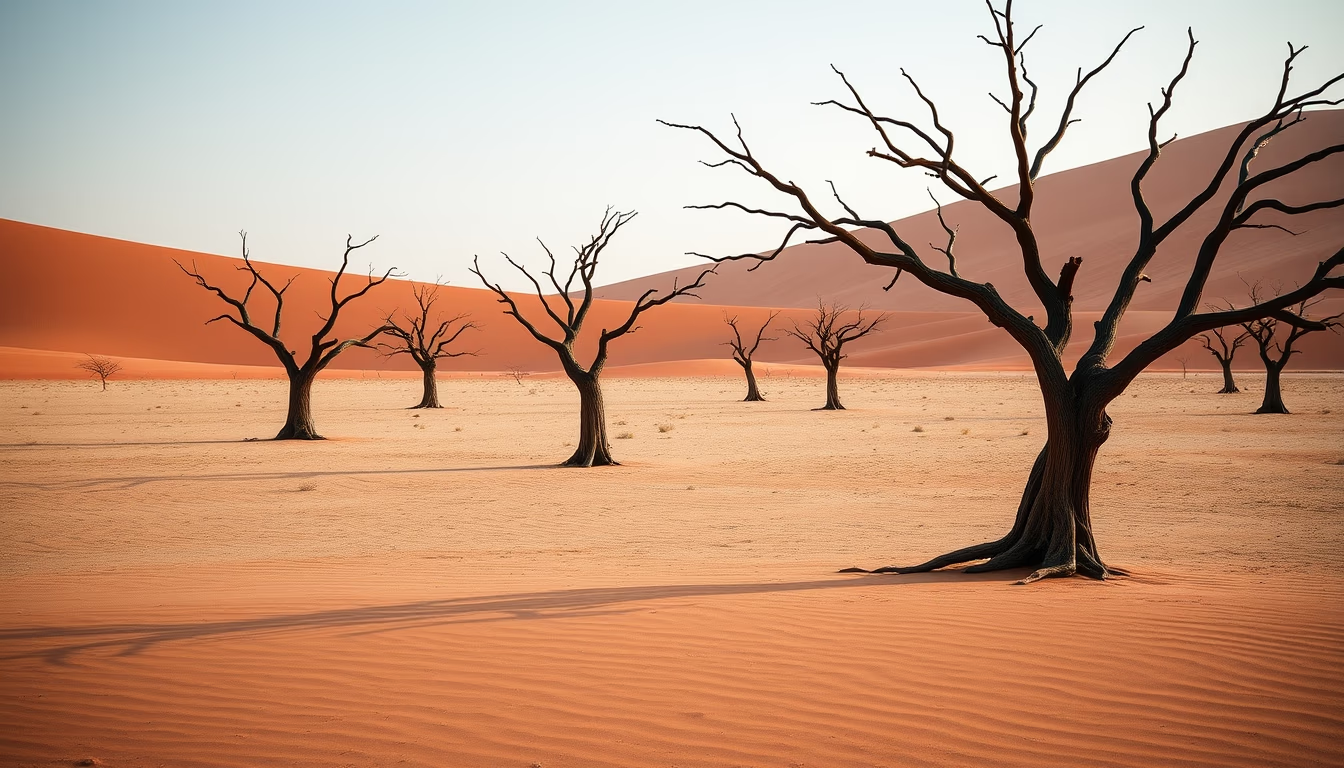
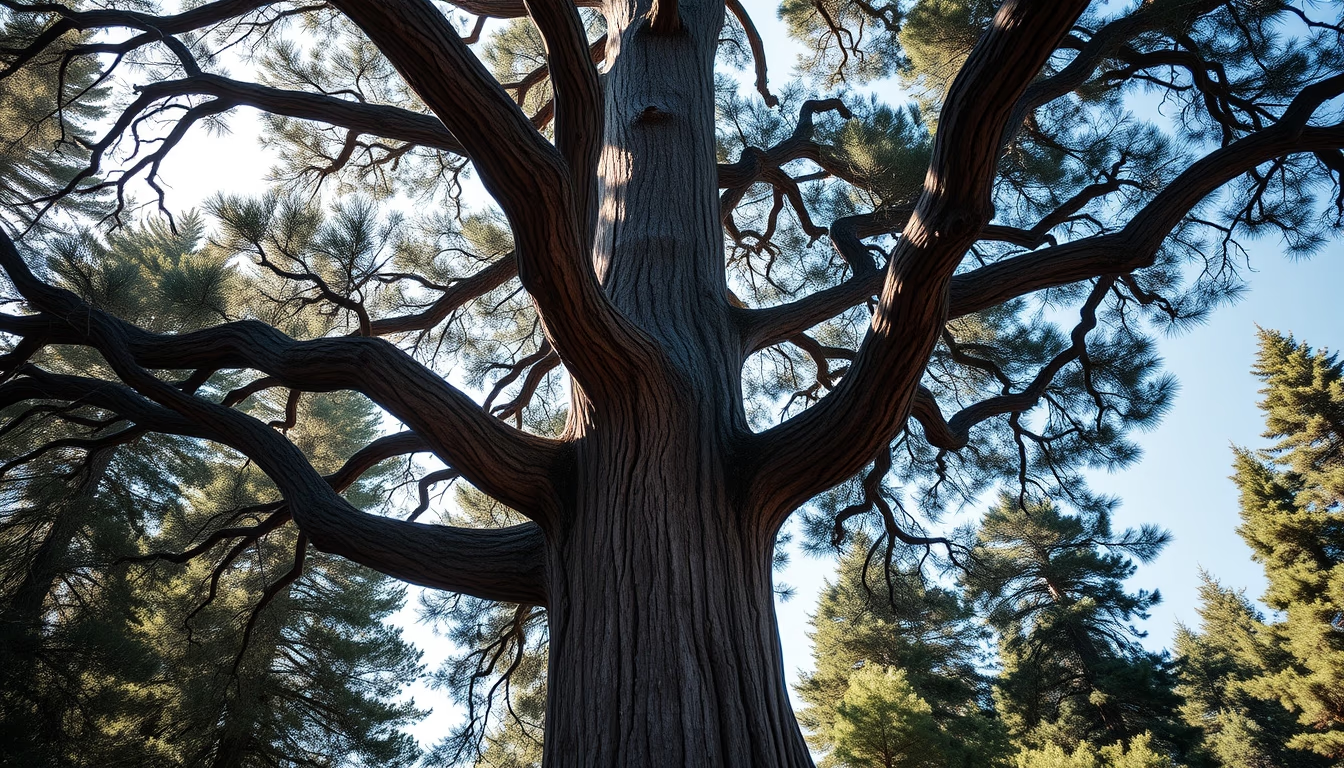
Deadvlei, a clay pan in Namibia, holds dead camel thorn trees dating back around 900 years, preserved by the arid climate.
About this subject
Deadvlei is a white clay pan located in the Namib-Naukluft National Park in Namibia, surrounded by some of the world's tallest sand dunes, such as the famous Big Daddy. Geologically, it is an ancient marsh formed by the Tsauchab River, which, about 900 years ago, was blocked by shifting dunes, cutting off the water flow. Over time, the water evaporated, leaving behind salt-rich clay soil, and the camel thorn acacias (Vachellia erioloba) that grew there died because their roots could no longer reach the water table.
The dead trees did not fossilize; they underwent intense desiccation under the desert sun, becoming charred and extremely hard. Carbon-14 dating indicates the trees lived around 1300 AD but died about 600 to 700 years ago. The hyper-arid climate, with less than 10 mm of annual rainfall, prevents decomposition by fungi and bacteria, keeping the trunks intact for centuries. The contrast between the white clay, dark wood, and blue or orange sky at sunrise and sunset has made Deadvlei one of the most photographed locations in Southern Africa.
To reach Deadvlei, visitors usually start from Sossusvlei, a neighboring pan, and walk about 1.5 km across the dunes. The experience is both visual and sensory: absolute silence, intense heat, and a lunar-like atmosphere. Camel thorn acacias are native to the semi-arid regions of southern Africa and can live up to 300 years under normal conditions; at Deadvlei, however, extreme drought was fatal. Despite the desolate appearance, the area hosts adapted life, such as beetles and geckos that camouflage in the sand.
Notably, the surrounding dunes reach up to 300 meters in height and are composed of iron-rich sand, giving them their characteristic reddish color. Constant wind shapes the dune crests into perfect curves. The combination of geological, climatic, and biological factors makes Deadvlei a unique natural laboratory for studies on desertification, paleoclimatology, and geomorphology.
Frequently Asked Questions
Why don't the trees in Deadvlei decompose?
The hyper-arid climate, with less than 10 mm of annual rainfall, inhibits fungal and bacterial activity, keeping the trees desiccated and charred for centuries.
How old are the dead trees in Deadvlei?
Carbon-14 dating indicates the acacias lived around 1300-1400 AD and died approximately 600 to 700 years ago.
How was the Deadvlei clay pan formed?
It was a marsh fed by the Tsauchab River, which was blocked by dunes about 900 years ago. Without fresh water, the soil dried out, creating the current salt and clay crust.
Direct URL
https://pub-c7d6a6ea828543ac903a74a341ccb2e1.r2.dev/imagens/dead-vlei-namibia-trees-documentary-photography-p2.avifHow to credit
Include a visible link back to UtilizAí. Copy one of the snippets below:
<a href="https://xn--utiliza-eza.com/en/midia/imagens/dead-vlei-namibia-trees-documentary-photography-p2">Dead vlei namibia trees</a> by <a href="https://xn--utiliza-eza.com">UtilizAí</a>, licensed under <a href="https://creativecommons.org/licenses/by/4.0/">CC BY 4.0</a>.
[Dead vlei namibia trees](https://xn--utiliza-eza.com/en/midia/imagens/dead-vlei-namibia-trees-documentary-photography-p2) by [UtilizAí](https://xn--utiliza-eza.com), CC BY 4.0
License: CC-BY-4.0