Cuneiform sumerian tablet
1344×768 · AVIF · CC BY 4.0
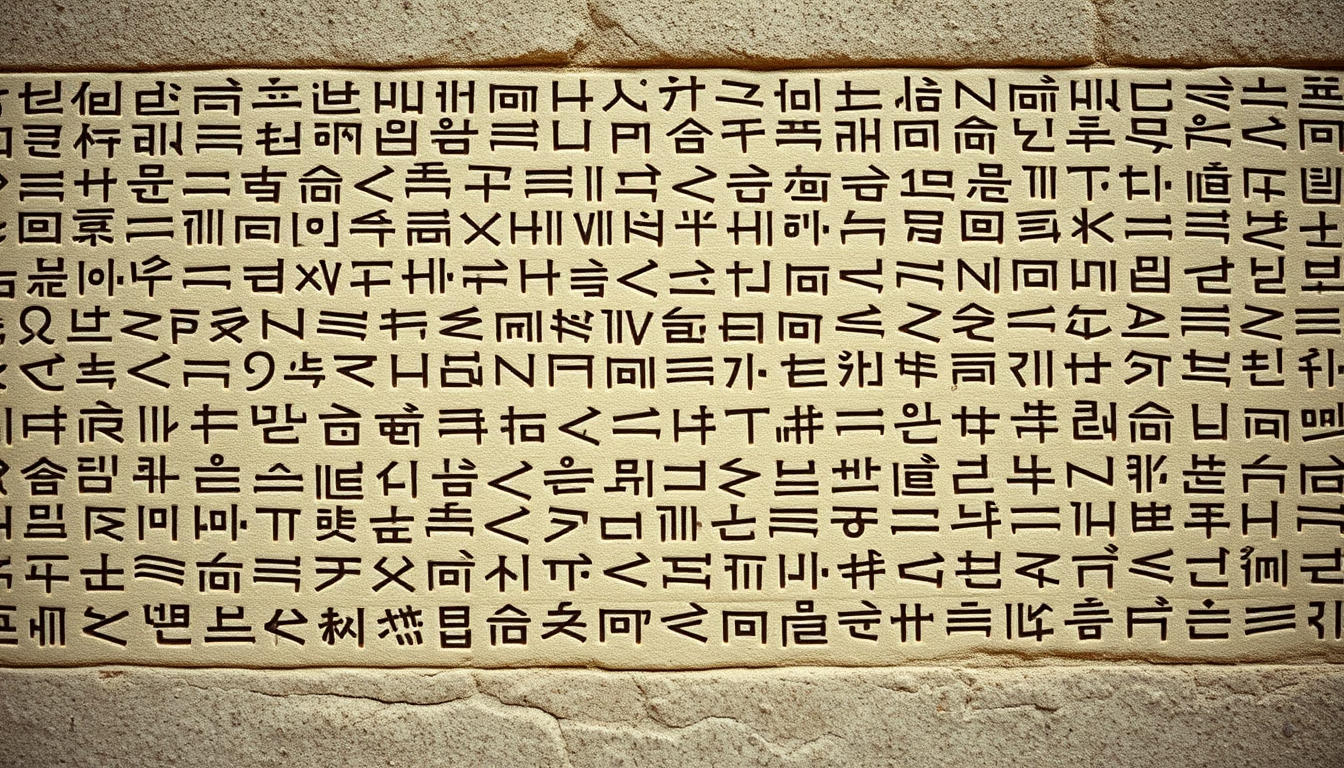
Sumerian tablet with cuneiform script, one of the earliest writing systems in human history, dating back to around 3,000 BCE.
About this subject
Cuneiform writing was developed by the Sumerians, a people who inhabited Mesopotamia, the region between the Tigris and Euphrates rivers in present-day Iraq. It emerged around 3,200 BCE as a system for administrative and economic records, evolving into a full-fledged script covering epic poems and legal codes. Clay tablets were the primary writing surface: moist clay was shaped, and a reed stylus made wedge-shaped marks, hence the name cuneiform.
Cuneiform tablets provide invaluable insights into ancient Sumerian life. They include crop records, trade transactions, religious hymns, and the famous Epic of Gilgamesh. After writing, tablets were sun-dried or baked in kilns for preservation. Many survived millennia, enabling archaeologists and historians to decipher aspects of Sumerian society, such as its social structure, economy, and beliefs.
The decipherment of cuneiform began in the 19th century, with scholars like Henry Rawlinson using the Behistun inscription to decode the system. Today, thousands of tablets are housed in museums worldwide, including the British Museum and the Louvre. Cuneiform influenced later scripts like Akkadian and Elamite, and it is regarded as a milestone in human communication. 3D scanning technology has enabled new readings and virtual preservation of these artifacts.
Frequently Asked Questions
How were cuneiform tablets made?
Tablets were made from moist clay shaped into rectangles or ovals. A reed stylus was used to make wedge-shaped marks. They were then sun-dried or baked in kilns to harden.
What is the historical importance of Sumerian tablets?
They represent the earliest forms of writing and provide data on Sumerian economy, religion, law, and literature. The Epic of Gilgamesh, one of the oldest literary works, was preserved on cuneiform tablets.
Where can I see original cuneiform tablets?
Museums such as the British Museum in London, the Louvre in Paris, and the Iraq Museum in Baghdad hold significant collections. Many are also available through online virtual exhibitions.
Direct URL
https://pub-c7d6a6ea828543ac903a74a341ccb2e1.r2.dev/imagens/cuneiform-sumerian-tablet-film-grain-authentic-fresh16.avifHow to credit
Include a visible link back to UtilizAí. Copy one of the snippets below:
<a href="https://xn--utiliza-eza.com/en/midia/imagens/cuneiform-sumerian-tablet-film-grain-authentic-fresh16">Cuneiform sumerian tablet</a> by <a href="https://xn--utiliza-eza.com">UtilizAí</a>, licensed under <a href="https://creativecommons.org/licenses/by/4.0/">CC BY 4.0</a>.
[Cuneiform sumerian tablet](https://xn--utiliza-eza.com/en/midia/imagens/cuneiform-sumerian-tablet-film-grain-authentic-fresh16) by [UtilizAí](https://xn--utiliza-eza.com), CC BY 4.0
License: CC-BY-4.0