Cuneiform sumerian tablet
1344×768 · AVIF · CC BY 4.0
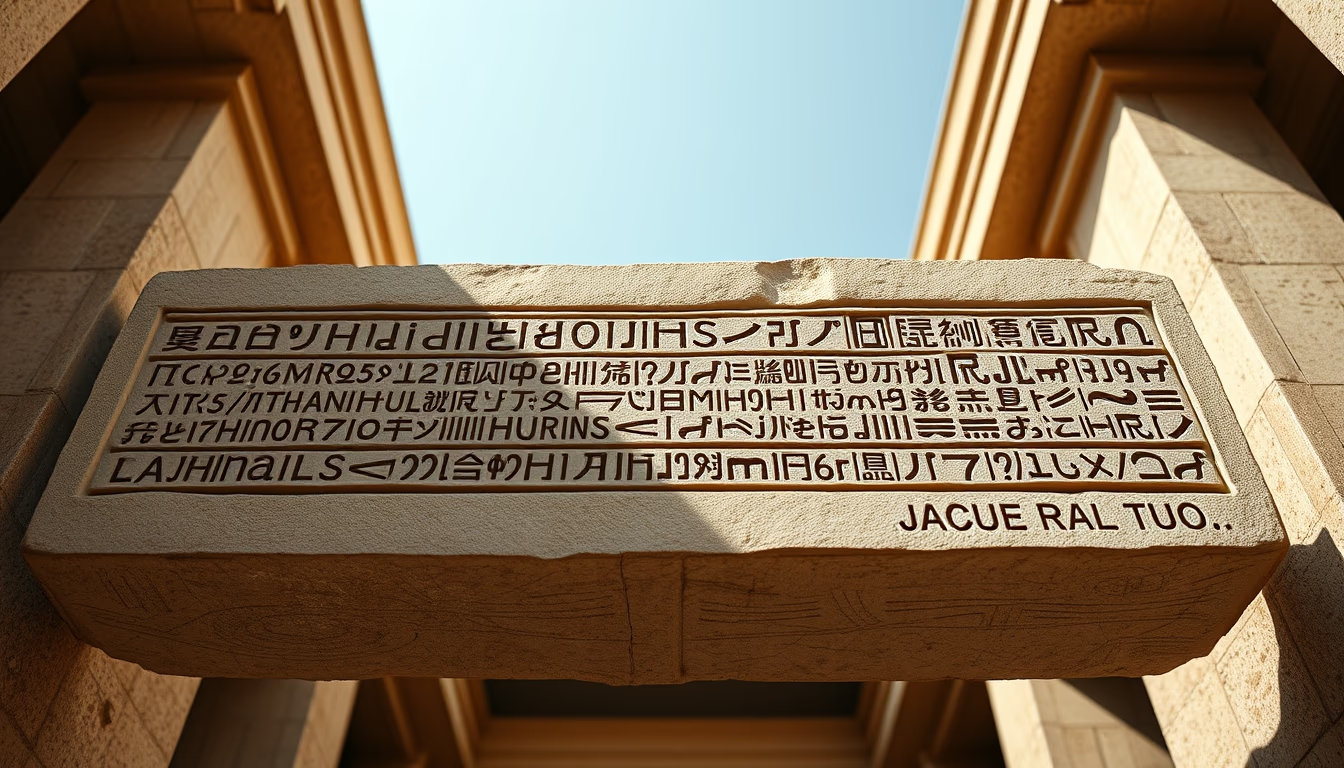
Clay tablet with Sumerian cuneiform script, one of humanity's earliest writing systems, used over 5,000 years ago in Mesopotamia.
About this subject
Cuneiform writing emerged in the 4th millennium BCE in Mesopotamia, between the Tigris and Euphrates rivers. The Sumerians developed this system to record commercial transactions, laws, and epic narratives. City-states like Uruk, Ur, and Lagash produced thousands of clay tablets documenting everything from grain lists to poems such as the Epic of Gilgamesh.
Writing was done with a reed stylus pressed into soft clay, creating wedge-shaped signs. Originally pictographic, the script evolved to represent syllables and abstract concepts, enabling the recording of Sumerian and later Akkadian and other languages. Tablets were usually sun-dried or fired in kilns, ensuring their millennia-long preservation.
The rediscovery of cuneiform tablets in the 19th century revolutionized ancient knowledge. Archaeologists such as Austen Henry Layard and Henry Rawlinson excavated sites like Nineveh and Persepolis, unearthing royal libraries with thousands of tablets. Decipherment, pioneered by Rawlinson using the Behistun Inscription, allowed reading of administrative texts, letters, and literary works, revealing details of daily life, religion, and science in Sumer.
Today, cuneiform tablets are preserved in museums worldwide, including the British Museum and the Louvre. They are primary sources for historians and linguists, offering direct testimony to the development of writing, state bureaucracy, and cultural exchanges in the Fertile Crescent. Despite the fragility of clay, many tablets survived due to accidental or intentional firing in ancient conflagrations.
Frequently Asked Questions
What is cuneiform writing?
Cuneiform writing is a script created by the Sumerians around 3200 BCE, characterized by wedge-shaped marks made with a stylus on clay tablets. It was used for over 3,000 years in Mesopotamia to record languages such as Sumerian, Akkadian, and Hittite.
How were cuneiform tablets produced?
Tablets were made from kneaded clay, shaped into rectangular or oval forms. Using a reed stylus, the scribe pressed wedge-shaped signs into the soft surface. The tablets were then sun-dried or fired to harden.
Where were major cuneiform tablets found?
Thousands of tablets have been uncovered at archaeological sites like Uruk, Nineveh, Nippur, and Ebla. Royal libraries, such as Ashurbanipal's in Nineveh, contained over 20,000 tablets. Today, many reside in museums in Europe, the United States, and the Middle East.
Direct URL
https://pub-c7d6a6ea828543ac903a74a341ccb2e1.r2.dev/imagens/cuneiform-sumerian-tablet-architectural-photography-fresh15.avifHow to credit
Include a visible link back to UtilizAí. Copy one of the snippets below:
<a href="https://xn--utiliza-eza.com/en/midia/imagens/cuneiform-sumerian-tablet-architectural-photography-fresh15">Cuneiform sumerian tablet</a> by <a href="https://xn--utiliza-eza.com">UtilizAí</a>, licensed under <a href="https://creativecommons.org/licenses/by/4.0/">CC BY 4.0</a>.
[Cuneiform sumerian tablet](https://xn--utiliza-eza.com/en/midia/imagens/cuneiform-sumerian-tablet-architectural-photography-fresh15) by [UtilizAí](https://xn--utiliza-eza.com), CC BY 4.0
License: CC-BY-4.0