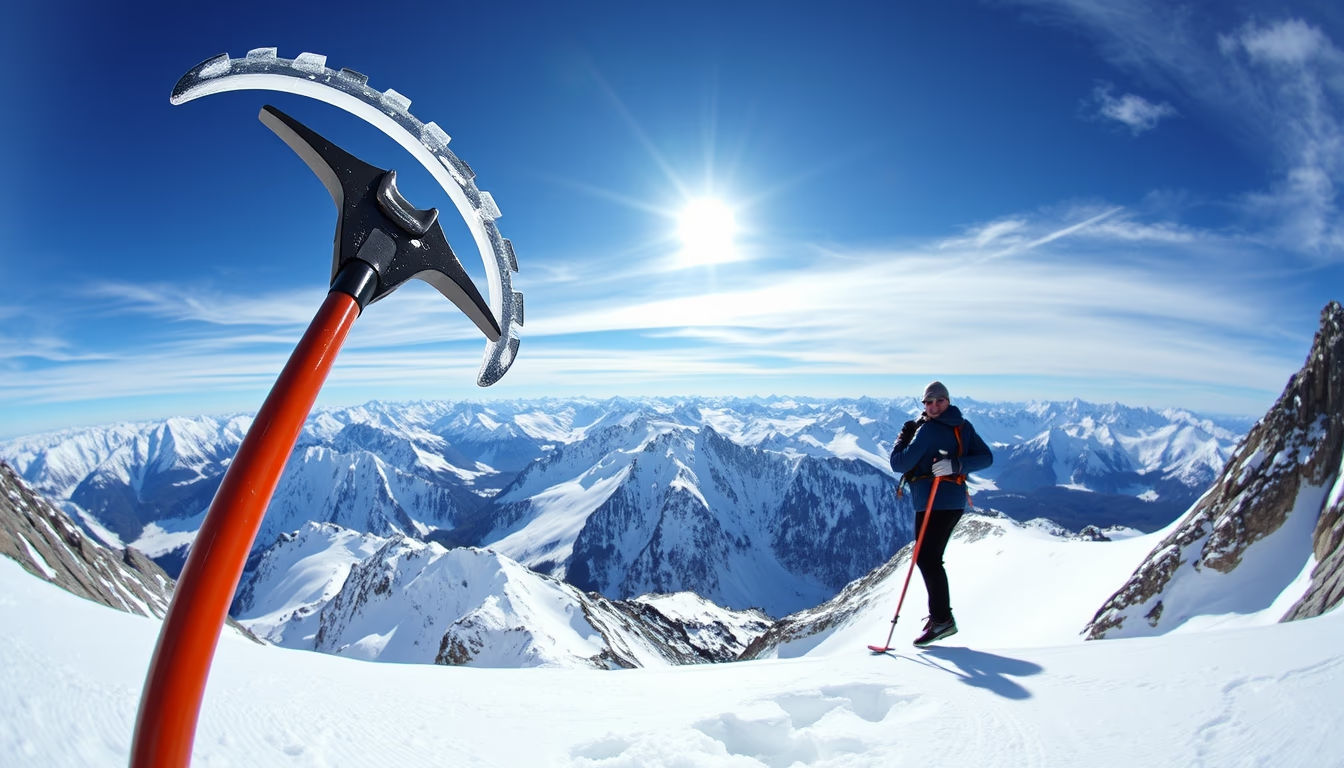
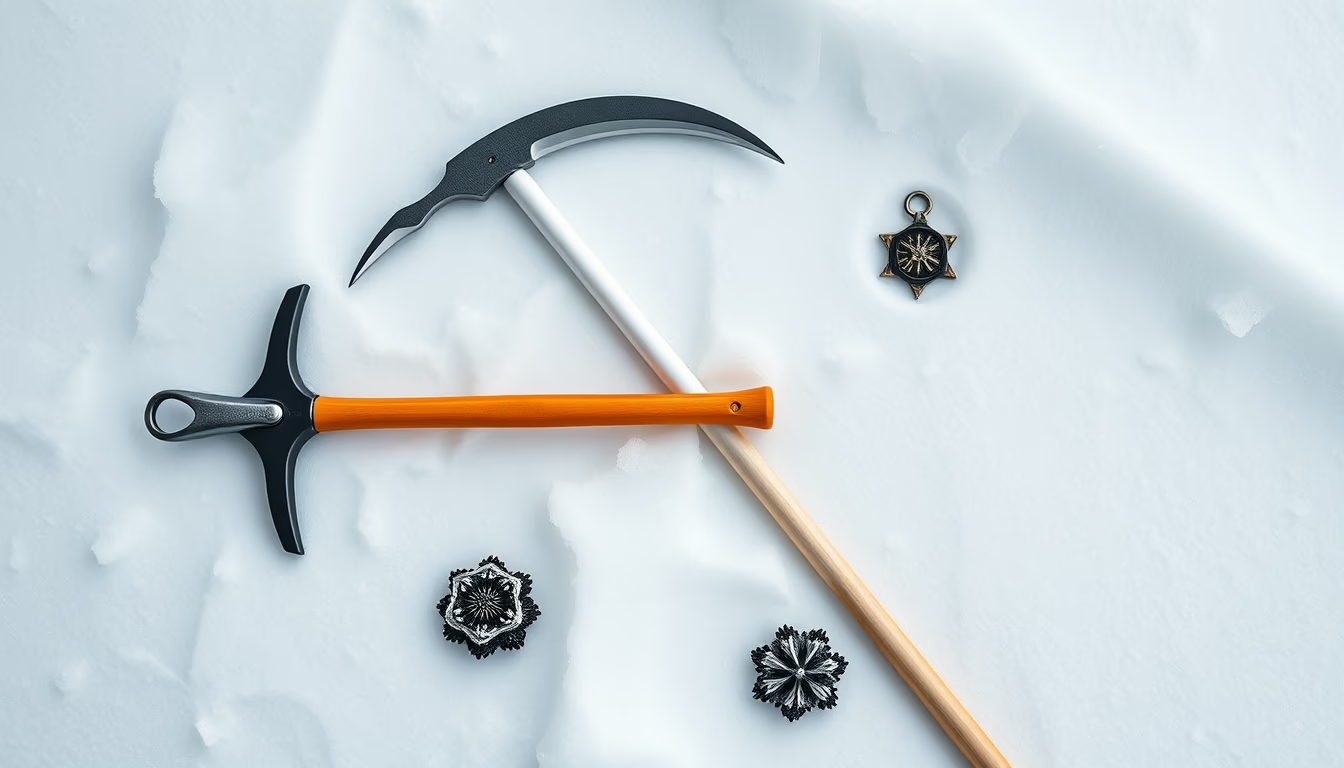
Crampons mountaineering
1344×768 · AVIF · CC BY 4.0
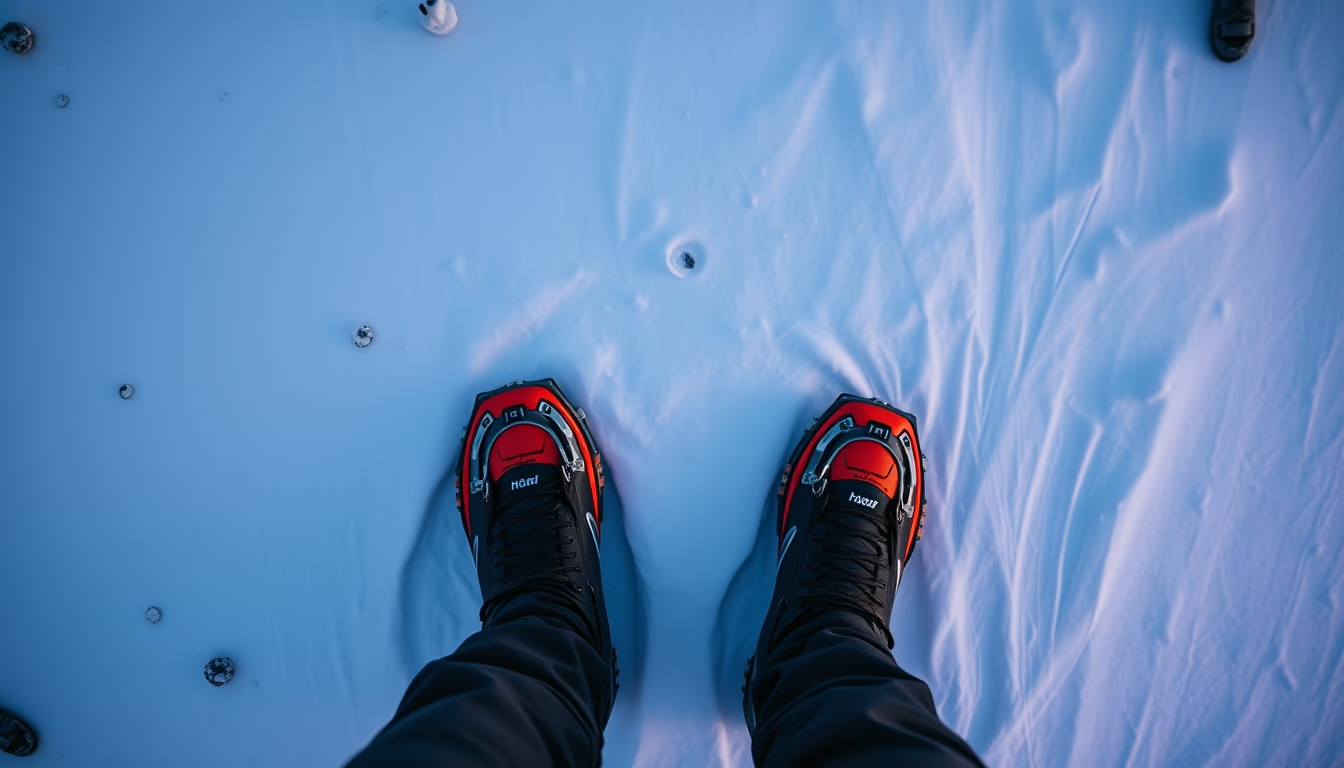
Crampons are essential gear for ice and snow climbing, providing traction on slippery surfaces. Learn more about their history and use.
About this subject
Crampons are metal devices attached to boots to enhance grip on frozen or snowy terrain. Their origins trace back to the 19th century, when European climbers adapted agricultural tools to tackle alpine slopes. Early models were rigid and made of wrought iron, but evolution to steel and aluminum alloys brought lightness and durability.
Two main types exist: rigid crampons, used with plastic boots for technical ice climbing, and articulated ones, more flexible, suitable for snow hiking and glaciers. The spikes vary in shape and length, with front points (two forward-facing spikes) essential for steep climbs. Proper fit is critical: strap, automatic, or hybrid systems ensure the crampon does not detach in critical moments.
In Brazil, crampon use is limited to high-altitude regions like Serra da Mantiqueira and Pico da Neblina, where snow and ice appear seasonally. In the Andes and Himalayas, they are indispensable. Techniques such as French step (flat-footing) and American step (front-pointing) determine progression efficiency. Maintenance includes sharpening spikes and lubricating joints to prevent rust.
Interestingly, during historic expeditions like the first ascent of Mount Everest in 1953, Tenzing Norgay and Edmund Hillary used 12-point steel crampons. Today, innovations like carbon crampons and anti-balling systems reduce snow accumulation, improving safety and performance at high altitudes.
Frequently Asked Questions
What is the difference between rigid and articulated crampons?
Rigid crampons are fixed, used with plastic boots for technical ice climbing. Articulated have hinges at the heel, allowing more flexibility for hiking on snow and glaciers.
Do crampons damage boots?
Yes, if poorly fitted or used without protection. Heel bails and straps can scratch footwear. Using overboots or rubber protectors minimizes wear.
Is training required to use crampons?
Yes, improper techniques can cause falls or injuries. Mountaineering courses teach walking, ascending, and descending with crampons, as well as self-arrest in case of a slip.
Direct URL
https://pub-c7d6a6ea828543ac903a74a341ccb2e1.r2.dev/imagens/crampons-mountaineering-aerial-drone-shot-fresh5.avifHow to credit
Include a visible link back to UtilizAí. Copy one of the snippets below:
<a href="https://xn--utiliza-eza.com/en/midia/imagens/crampons-mountaineering-aerial-drone-shot-fresh5">Crampons mountaineering</a> by <a href="https://xn--utiliza-eza.com">UtilizAí</a>, licensed under <a href="https://creativecommons.org/licenses/by/4.0/">CC BY 4.0</a>.
[Crampons mountaineering](https://xn--utiliza-eza.com/en/midia/imagens/crampons-mountaineering-aerial-drone-shot-fresh5) by [UtilizAí](https://xn--utiliza-eza.com), CC BY 4.0
License: CC-BY-4.0