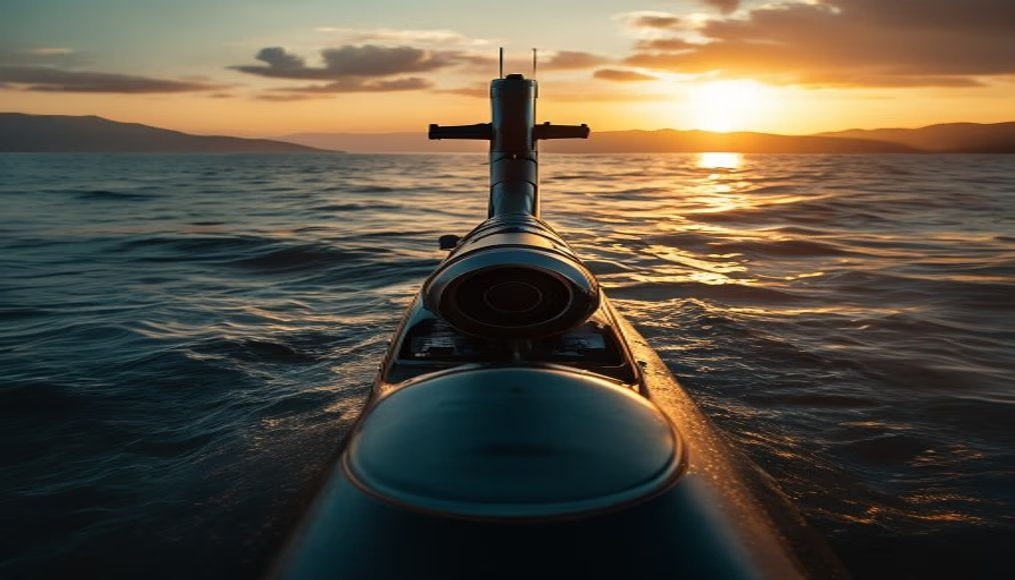
Container ship cargo ocean
1344×768 · AVIF · CC BY 4.0
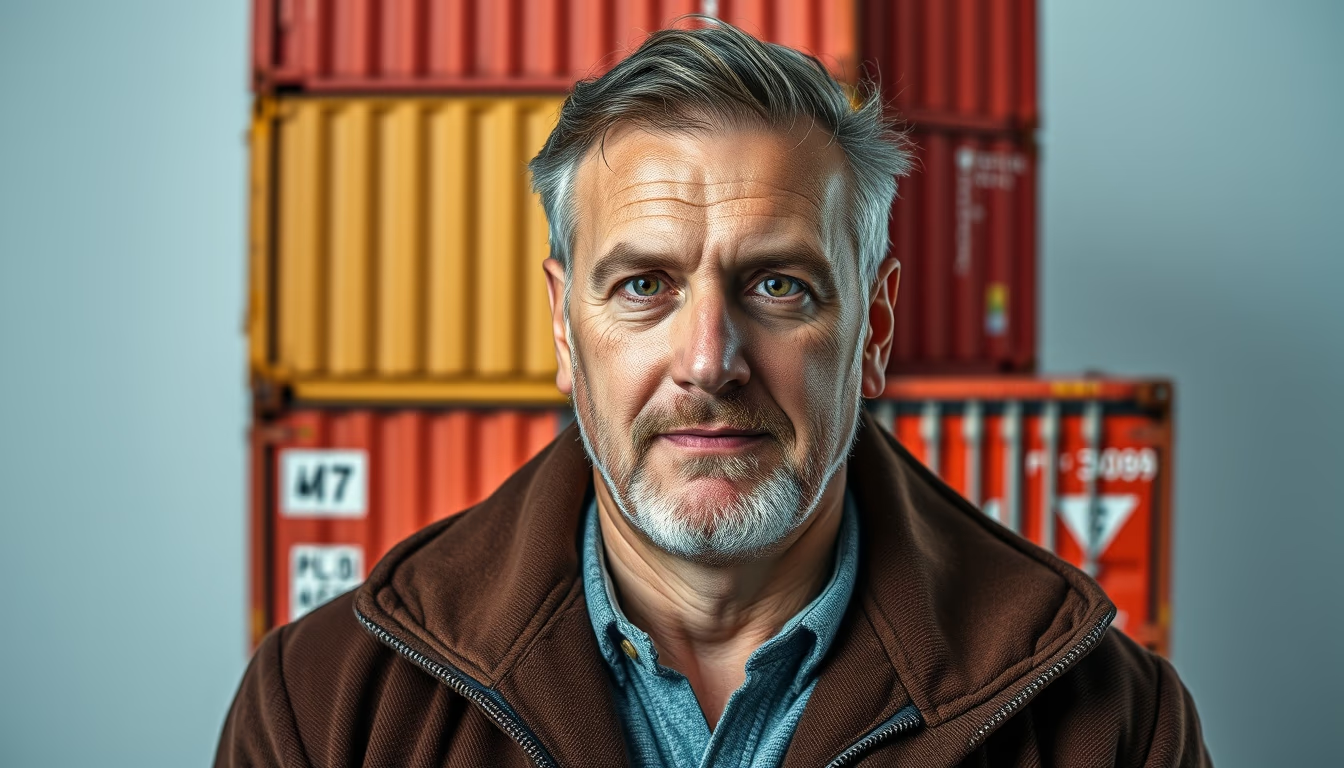
Container ships are the backbone of global trade, moving goods across continents with efficiency and scale.
About this subject
Container ships revolutionized maritime transport in the 1950s when entrepreneur Malcom McLean introduced standardized containers. Before that, cargo was loaded piece by piece, taking days in ports. With 20-foot and 40-foot container standardization, the process became extremely fast and efficient, allowing intermodal integration with trucks and trains.
Today, these vessels carry about 80% of world trade by volume. Major routes include Asia-Europe (via the Suez Canal) and Transpacific (Asia to the US West Coast). The ports of Shanghai, Singapore, and Rotterdam are the busiest in container throughput, handling millions of TEU (twenty-foot equivalent unit) annually.
The industry faces significant environmental challenges. Ships burn heavy fuel oil, emitting CO2, sulfur oxides, and particulate matter. The International Maritime Organization (IMO) has set emission reduction targets, such as the 0.5% sulfur cap from 2020 and a 50% greenhouse gas emission reduction by 2050. Solutions include using liquefied natural gas (LNG), green methanol, and even ammonia as alternative fuels.
The largest container ships, like the HMM Algeciras class, can carry up to 24,000 TEU. The Ever Given, which blocked the Suez Canal in 2021, had a capacity of 20,000 TEU and caused a global supply chain bottleneck. These giants are up to 400 meters long and have a draft of over 15 meters, limiting the ports that can accommodate them.
Frequently Asked Questions
What is the largest container ship in the world today?
The largest container ships by capacity are the HMM Algeciras class, with 24,000 TEU. MSC vessels like the MSC Gülsün are also in this range.
How many containers does a typical cargo ship carry?
Small feeder ships carry 1,000 to 3,000 TEU; medium Panamax ships up to 5,000 TEU; large Neopanamax up to 14,000 TEU; and mega ultra-large vessels up to 24,000 TEU.
How are containers tracked during transport?
Each container has a unique number and can be tracked via GPS, IoT sensors and integrated logistics platforms. Carriers and port operators monitor real-time location through cargo management systems.
Direct URL
https://pub-c7d6a6ea828543ac903a74a341ccb2e1.r2.dev/imagens/container-ship-cargo-ocean-studio-editorial-portrait-p3.avifHow to credit
Include a visible link back to UtilizAí. Copy one of the snippets below:
<a href="https://xn--utiliza-eza.com/en/midia/imagens/container-ship-cargo-ocean-studio-editorial-portrait-p3">Container ship cargo ocean</a> by <a href="https://xn--utiliza-eza.com">UtilizAí</a>, licensed under <a href="https://creativecommons.org/licenses/by/4.0/">CC BY 4.0</a>.
[Container ship cargo ocean](https://xn--utiliza-eza.com/en/midia/imagens/container-ship-cargo-ocean-studio-editorial-portrait-p3) by [UtilizAí](https://xn--utiliza-eza.com), CC BY 4.0
License: CC-BY-4.0