Container ship cargo ocean
1344×768 · AVIF · CC BY 4.0
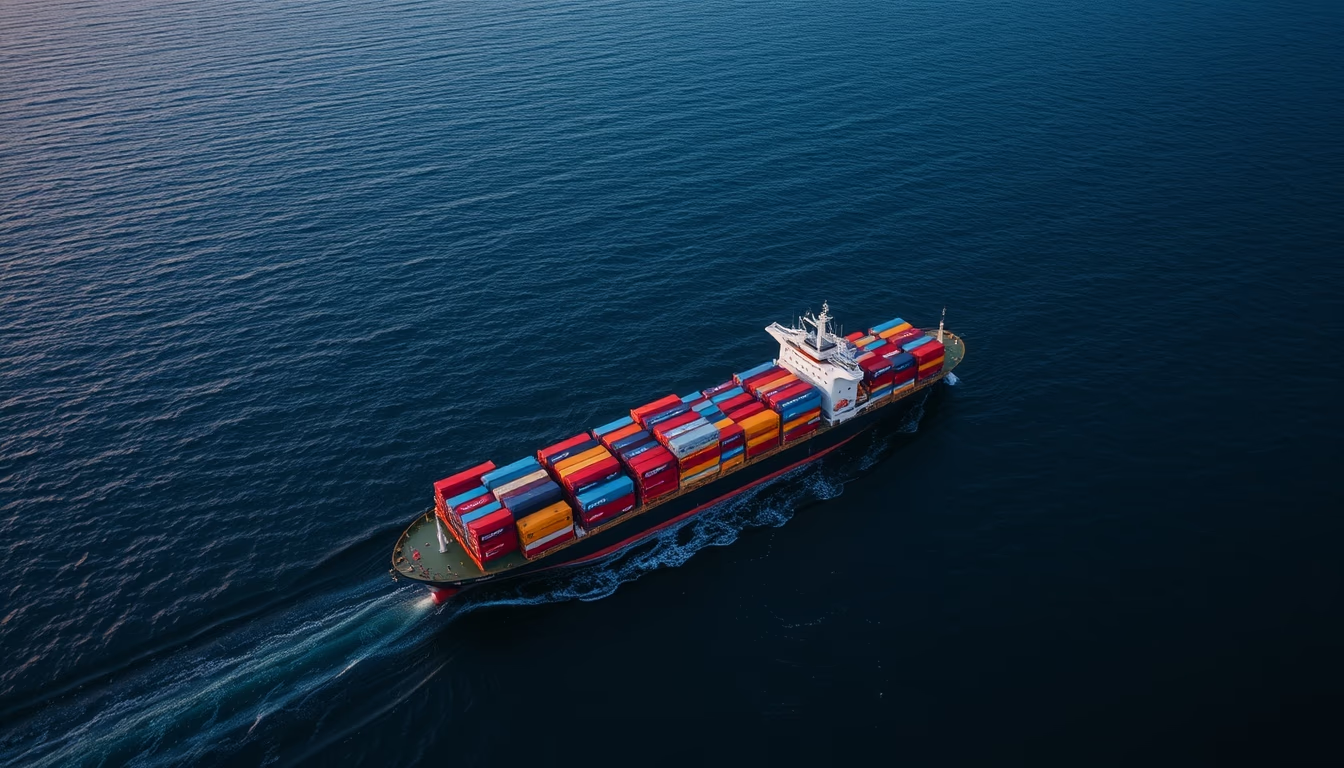
Cargo ships like this one carry about 90% of global trade, connecting continents through strategic ocean routes.
About this subject
Cargo ships, like the one depicted in this image, form the backbone of global trade. These massive vessels transport standardized containers holding everything from food to electronics, crossing oceans on routes connecting ports in Asia, Europe, the Americas, and Africa. The most common type is the container ship, which can carry over 20,000 TEUs (twenty-foot equivalent units). The largest, the MSC Irina, has a capacity of 24,346 TEUs and measures 399.9 meters in length.
The history of container ships began in the 1950s when American entrepreneur Malcolm McLean conceptualized intermodal transport. Before that, cargo was handled in a fragmented manner, increasing costs and delays. Standardized containers revolutionized logistics, reducing expenses and loading times. Today, routes like Asia-Europe and the Transpacific are among the busiest, with large ships taking about 20 to 30 days to cross.
The shipping industry faces significant environmental challenges. Cargo ships burn bunker fuel, a heavy and polluting oil responsible for about 3% of global CO2 emissions. Additionally, tank cleaning and ballast water discharge can introduce invasive species into ecosystems. To mitigate these impacts, new technologies such as LNG (liquefied natural gas) engines and rotor sails are being tested, along with AI-optimized routes to reduce fuel consumption.
Interestingly, the Suez Canal and Panama Canal are critical bottlenecks for cargo ship traffic. The grounding of the Ever Given in 2021 in the Suez Canal halted global trade for nearly a week, highlighting the fragility of supply chains. Conversely, the expansion of the Panama Canal in 2016 allowed larger ships, known as Neopanamax, to use this route between the Pacific and Atlantic oceans.
Frequently Asked Questions
What is the largest cargo ship in the world?
Currently, the largest is the MSC Irina, with a capacity of 24,346 TEUs and a length of 399.9 meters. It was launched in 2023 and primarily operates on the Asia-Europe route.
How are containers standardized?
Containers follow ISO standards, with standard dimensions of 20 or 40 feet in length. This allows them to be stacked and transported by ships, trains, and trucks without the need for repackaging.
What is cavitation in ships?
Cavitation occurs when the ship's propeller spins at high speed, forming vapor bubbles that implode, damaging the metal. This reduces efficiency and requires frequent maintenance.
Direct URL
https://pub-c7d6a6ea828543ac903a74a341ccb2e1.r2.dev/imagens/container-ship-cargo-ocean-aerial-drone-shot-p4.avifHow to credit
Include a visible link back to UtilizAí. Copy one of the snippets below:
<a href="https://xn--utiliza-eza.com/en/midia/imagens/container-ship-cargo-ocean-aerial-drone-shot-p4">Container ship cargo ocean</a> by <a href="https://xn--utiliza-eza.com">UtilizAí</a>, licensed under <a href="https://creativecommons.org/licenses/by/4.0/">CC BY 4.0</a>.
[Container ship cargo ocean](https://xn--utiliza-eza.com/en/midia/imagens/container-ship-cargo-ocean-aerial-drone-shot-p4) by [UtilizAí](https://xn--utiliza-eza.com), CC BY 4.0
License: CC-BY-4.0