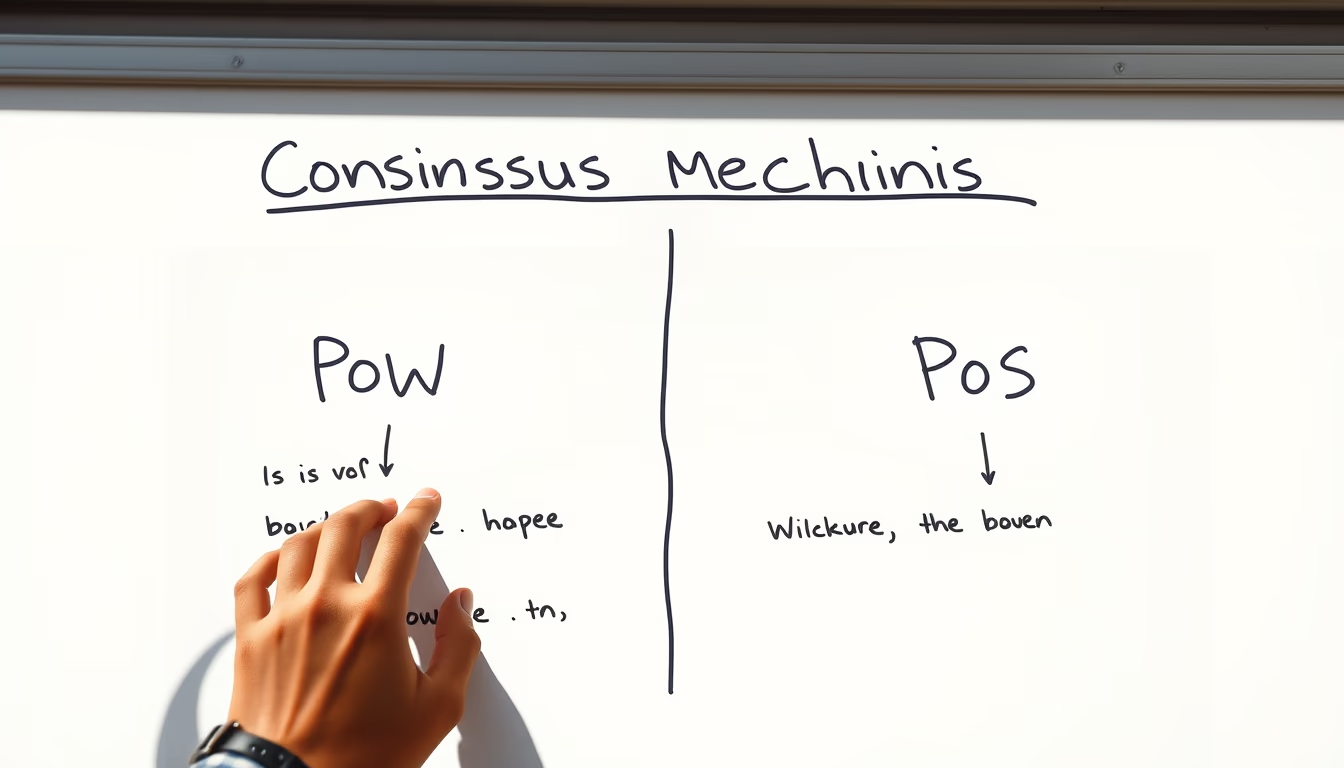
Consensus mechanism diagram on whiteboard showing PoW vs PoS
1344×768 · AVIF · CC BY 4.0

Whiteboard diagram comparing Proof of Work (PoW) and Proof of Stake (PoS), two core consensus mechanisms in blockchain technology.
About this subject
The whiteboard diagram contrasts Proof of Work (PoW) and Proof of Stake (PoS), two core consensus mechanisms in blockchain technology. PoW, used by Bitcoin since 2009, requires miners to solve complex mathematical puzzles to validate blocks, consuming massive amounts of electricity. Bitcoin mining alone uses more energy annually than countries like Argentina. PoS, adopted by Ethereum in 2022 (The Merge), selects validators based on the amount of cryptocurrency they 'stake' as collateral, reducing energy consumption by about 99.9%. The diagram likely highlights hash rates, rewards, security, and scalability. While PoW offers robust security through computational work, PoS prioritizes efficiency and democratic participation but faces criticism over centralization (wealthy validators accumulate more power). Ethereum's shift to PoS drastically reduced its carbon footprint, marking a milestone in blockchain sustainability. Other blockchains like Cardano, Solana, and Polkadot were born with PoS, while smaller chains still use PoW for simplicity. The choice between the two directly impacts transaction costs, speed, and network governance.
Frequently Asked Questions
What is the main difference between Proof of Work and Proof of Stake?
In PoW, miners compete to solve mathematical puzzles to validate blocks, consuming vast energy. In PoS, validators are chosen based on the amount of cryptocurrency they stake as collateral, requiring far less energy.
Why did Ethereum switch from PoW to PoS?
To drastically reduce energy consumption and improve scalability and sustainability. The transition, called The Merge, occurred in September 2022 and cut electricity usage by about 99.9%.
Is PoS more secure than PoW?
Both have vulnerabilities. PoW is secure due to high computational cost but is susceptible to 51% attacks. PoS faces risks like the 'nothing at stake' problem but uses penalties to deter malicious behavior.
Direct URL
https://pub-c7d6a6ea828543ac903a74a341ccb2e1.r2.dev/imagens/consensus-mechanism-diagram-on-whiteboard-showing-pow-vs-pos-cinematic-wide-shot-golden-hour-late-afternoon.avifHow to credit
Include a visible link back to UtilizAí. Copy one of the snippets below:
<a href="https://xn--utiliza-eza.com/en/midia/imagens/consensus-mechanism-diagram-on-whiteboard-showing-pow-vs-pos-cinematic-wide-shot-golden-hour-late-afternoon">Consensus mechanism diagram on whiteboard showing PoW vs PoS</a> by <a href="https://xn--utiliza-eza.com">UtilizAí</a>, licensed under <a href="https://creativecommons.org/licenses/by/4.0/">CC BY 4.0</a>.
[Consensus mechanism diagram on whiteboard showing PoW vs PoS](https://xn--utiliza-eza.com/en/midia/imagens/consensus-mechanism-diagram-on-whiteboard-showing-pow-vs-pos-cinematic-wide-shot-golden-hour-late-afternoon) by [UtilizAí](https://xn--utiliza-eza.com), CC BY 4.0
License: CC-BY-4.0
Tags
Related images
 Smart contract code on monitor with solidity syntax highlighted
 Consensus mechanism diagram on whiteboard showing PoW vs PoS
 Distributed ledger multiple servers in data center
 Hash function visualization cryptographic equations on glass screen
 Hash function visualization cryptographic equations on glass screen
 Hash function visualization cryptographic equations on glass screen