Cirrus high wispy
1344×768 · AVIF · CC BY 4.0

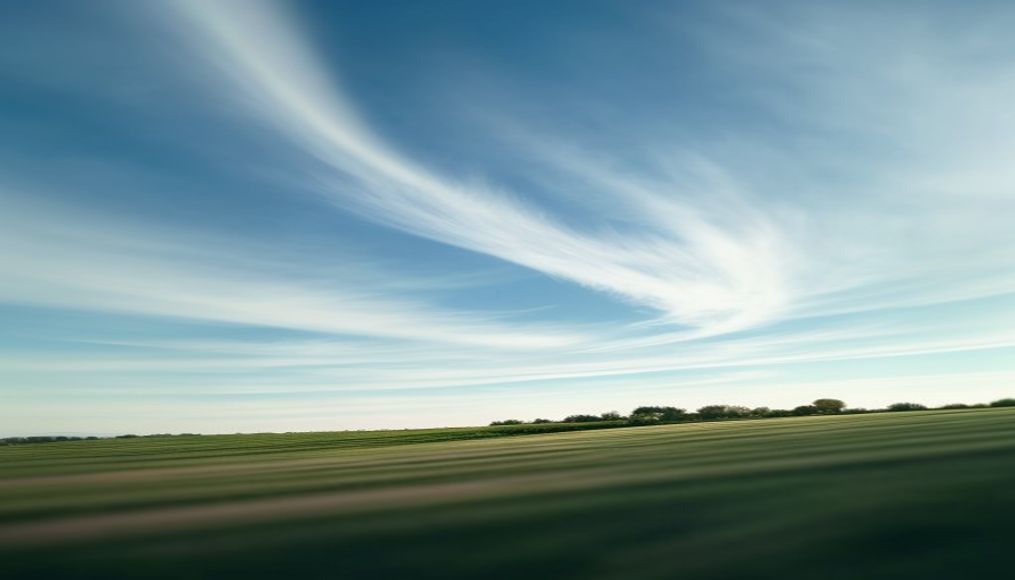
Cirrus are thin, wispy clouds composed of ice crystals, forming at altitudes above 6 km. They indicate fair weather but can foreshadow approaching warm fronts.
About this subject
Cirrus clouds are high-level clouds, typically found between 6 and 18 km in altitude. Composed entirely of ice crystals, they form when water vapor sublimates directly into solid form at temperatures below -40°C. Their fibrous and wispy appearance results from wind shear stretching the ice crystals into long streaks. The color is usually white, but they may appear silvery or orange at sunrise and sunset.
Meteorologically, cirrus are associated with fair weather, but increasing coverage can indicate an approaching warm front. When the sky transitions from clear to progressively covered with cirrus, followed by cirrostratus, rain or snow often arrives within 12 to 24 hours. They also produce optical phenomena such as halos and sundogs due to light refraction by hexagonal ice crystals.
Several subspecies exist: cirrus fibratus (flat, thin layers), cirrus uncinus (hook-shaped ends like commas), and cirrus spissatus (thicker, partially obscuring the Sun). Cirrus cover about 30% of the Earth's surface at any given time, with highest occurrence in the tropics where they can reach extreme altitudes. They are also important in Earth's energy balance, trapping infrared radiation and contributing to the greenhouse effect.
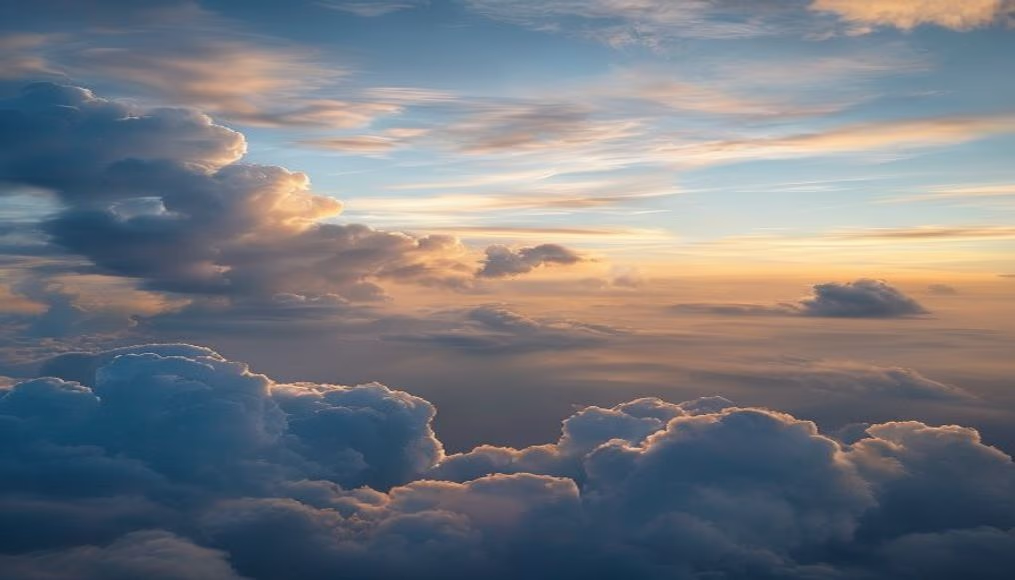
Wave-like patterns, as seen in satellite imagery or aerial views, can arise from gravity waves in the atmosphere. These formations, sometimes called 'cirrus ripples,' reveal the interaction between high-altitude winds and atmospheric disturbances. Cirrus are found globally and their observation aids weather forecasting and climate research.
Frequently Asked Questions
What are cirrus clouds?
They are high-altitude clouds (above 6 km) made of ice crystals, thin and fibrous in appearance. They indicate fair weather but can precede warm fronts.
How do cirrus clouds form?
Water vapor sublimates directly into ice at very low temperatures, and the crystals are stretched by wind into elongated filaments.
Do cirrus clouds affect climate?
Yes, they trap infrared radiation, warming the atmosphere, and also reflect sunlight, playing a role in Earth's energy balance.
Direct URL
https://pub-c7d6a6ea828543ac903a74a341ccb2e1.r2.dev/imagens/cirrus-high-wispy-isometric-flat-lay-p2.avifHow to credit
Include a visible link back to UtilizAí. Copy one of the snippets below:
<a href="https://xn--utiliza-eza.com/en/midia/imagens/cirrus-high-wispy-isometric-flat-lay-p2">Cirrus high wispy</a> by <a href="https://xn--utiliza-eza.com">UtilizAí</a>, licensed under <a href="https://creativecommons.org/licenses/by/4.0/">CC BY 4.0</a>.
[Cirrus high wispy](https://xn--utiliza-eza.com/en/midia/imagens/cirrus-high-wispy-isometric-flat-lay-p2) by [UtilizAí](https://xn--utiliza-eza.com), CC BY 4.0
License: CC-BY-4.0