Chinese calligraphy brush stroke
1344×768 · AVIF · CC BY 4.0
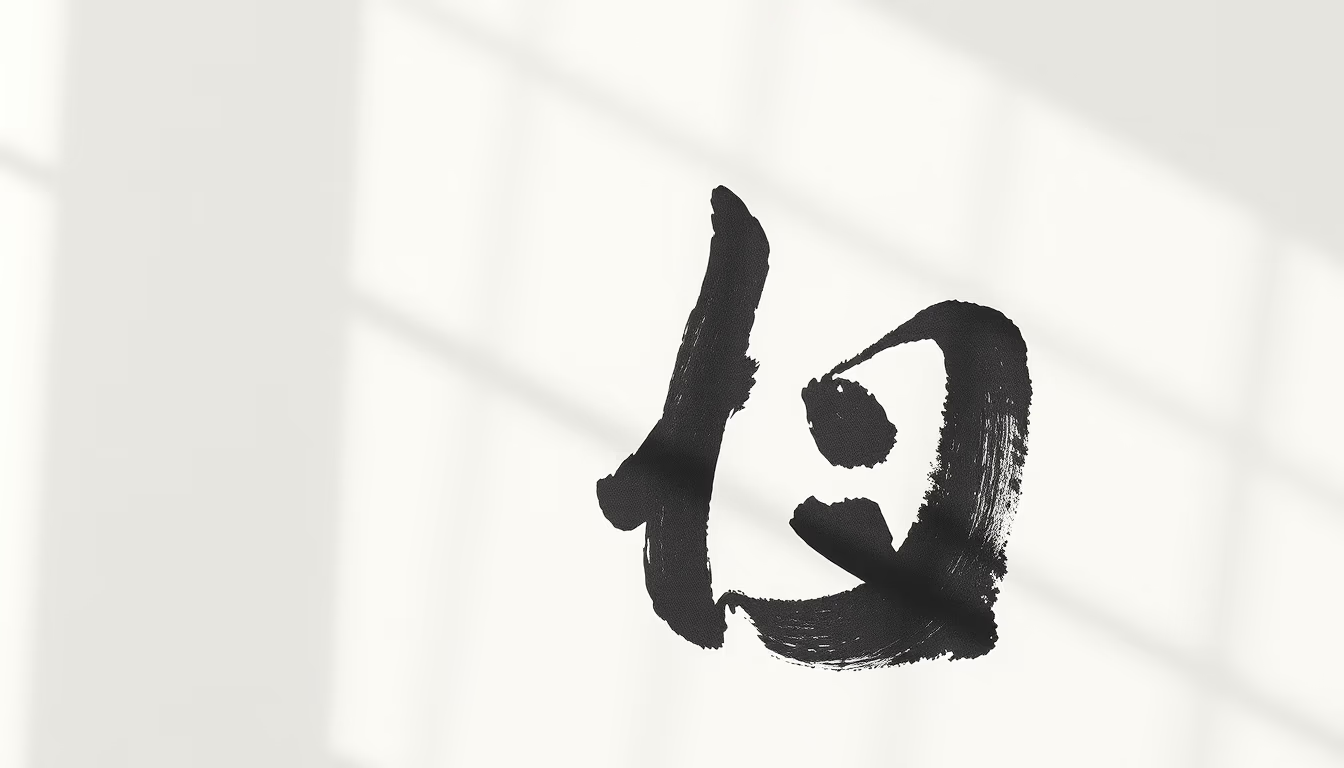
Chinese calligraphy brush strokes combine ancient technique and artistic expression, each brushstroke carrying cultural and aesthetic meaning.
About this subject
Chinese calligraphy, an ancient art form dating back over 3,000 years, uses natural-bristle brushes to create strokes that go beyond mere writing. Each brushstroke results from precise control of pressure, speed, and brush angle, elements that define the style and emotion conveyed. The basic strokes, known as the Eight Principles of Yong, include dots, horizontals, verticals, hooks, and curves, forming the foundation of all Chinese characters.
Different calligraphic styles, such as seal (zhuanshu), clerical (lishu), cursive (caoshu), and regular (kaishu), employ unique stroke variations. Cursive style, for instance, is known for its fluid and abbreviated brushwork, while regular style requires more defined and balanced strokes. The choice of style depends on the purpose of the work and the calligrapher's intent.
The calligraphy brush, typically made from goat, wolf, or rabbit hair, is held vertically and moved using the whole arm, not just the fingers. This technique allows ink, composed of pine soot and animal glue, to be applied with variations in thickness and intensity. Beyond writing, Chinese calligraphy is considered a form of abstract painting, valued for its ability to express the artist's state of mind.
In Chinese culture, calligraphy is one of the most revered arts, often associated with meditation and self-cultivation. Great calligraphers like Wang Xizhi (4th century) and Yan Zhenqing (8th century) are still revered today, and their works are studied as benchmarks of technique and elegance. Practicing calligraphy is also seen as a way to harmonize body and mind, requiring concentration and discipline.
Frequently Asked Questions
What are the main types of strokes in Chinese calligraphy?
The basic strokes are the Eight Principles of Yong: dot, horizontal, vertical, hook, rising, falling, left, and right. They combine to form all Chinese characters.
How does Chinese calligraphy differ from Western calligraphy?
Chinese calligraphy uses flexible brushes and soot-based ink, focusing on the expressiveness of each stroke, while Western often uses quills or pens with emphasis on letter shapes.
What is the cultural importance of Chinese calligraphy?
It is considered a refined art and form of meditation, reflecting the artist's character and emotion. Works by great calligraphers are national treasures in China.
Direct URL
https://pub-c7d6a6ea828543ac903a74a341ccb2e1.r2.dev/imagens/chinese-calligraphy-brush-stroke-minimalist-composition-fresh8.avifHow to credit
Include a visible link back to UtilizAí. Copy one of the snippets below:
<a href="https://xn--utiliza-eza.com/en/midia/imagens/chinese-calligraphy-brush-stroke-minimalist-composition-fresh8">Chinese calligraphy brush stroke</a> by <a href="https://xn--utiliza-eza.com">UtilizAí</a>, licensed under <a href="https://creativecommons.org/licenses/by/4.0/">CC BY 4.0</a>.
[Chinese calligraphy brush stroke](https://xn--utiliza-eza.com/en/midia/imagens/chinese-calligraphy-brush-stroke-minimalist-composition-fresh8) by [UtilizAí](https://xn--utiliza-eza.com), CC BY 4.0
License: CC-BY-4.0