Chinese calligraphy brush stroke
1344×768 · AVIF · CC BY 4.0
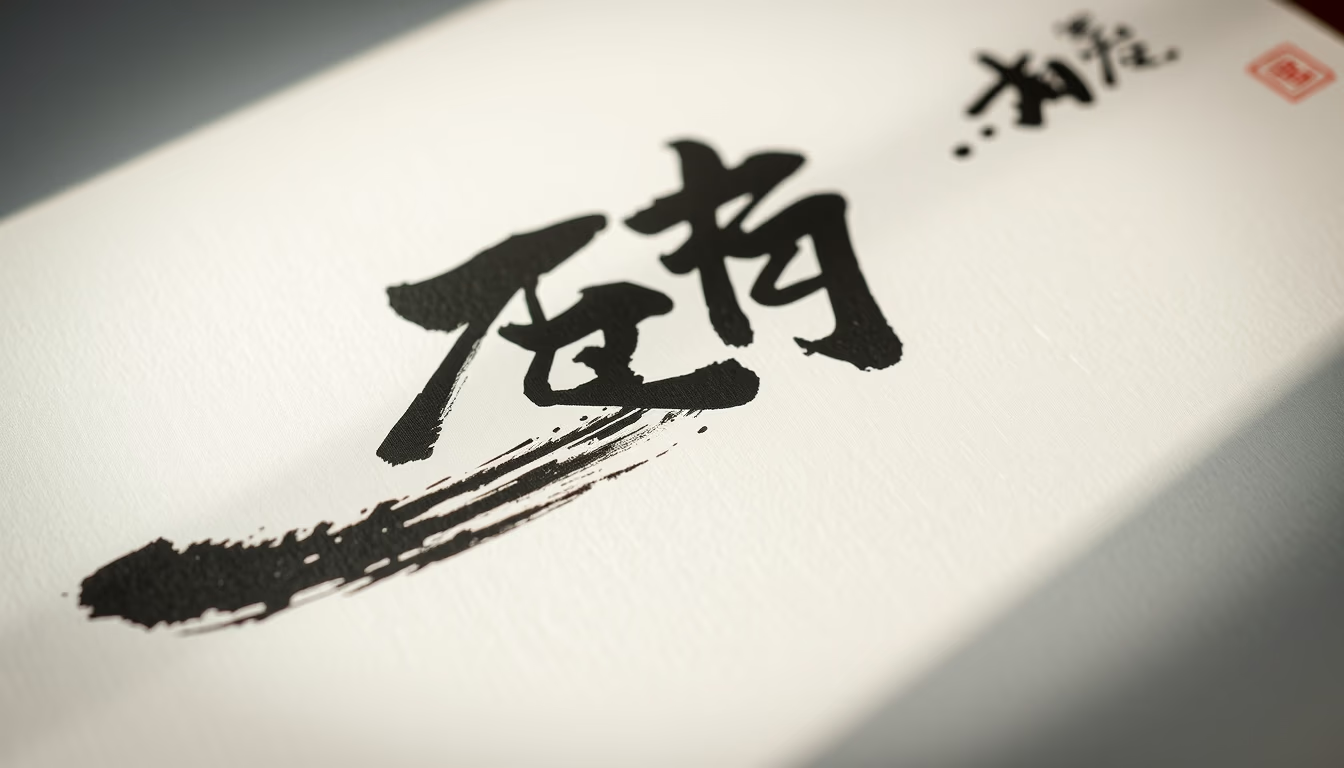
Chinese calligraphy brush strokes are the foundation of a millennia-old art that blends technique, philosophy, and aesthetic expression, deeply influencing East Asian culture.
About this subject
Chinese calligraphy, or shūfǎ (书法), is one of the most revered art forms in China, with a history spanning over 3,000 years. Brush strokes are the fundamental elements of this art, each carrying symbolic meanings and requiring precise control of hand, breath, and movement. Chinese characters are built from basic strokes such as the dot (diǎn), horizontal (héng), vertical (shù), hook (gōu), and down-left (nà). The masterpiece "Preface to the Poems Composed at the Orchid Pavilion" (Lanting Xu) by Wang Xizhi (303, 361 AD) is considered the pinnacle of cursive calligraphy, showcasing the fluidity and expressiveness of brush strokes.
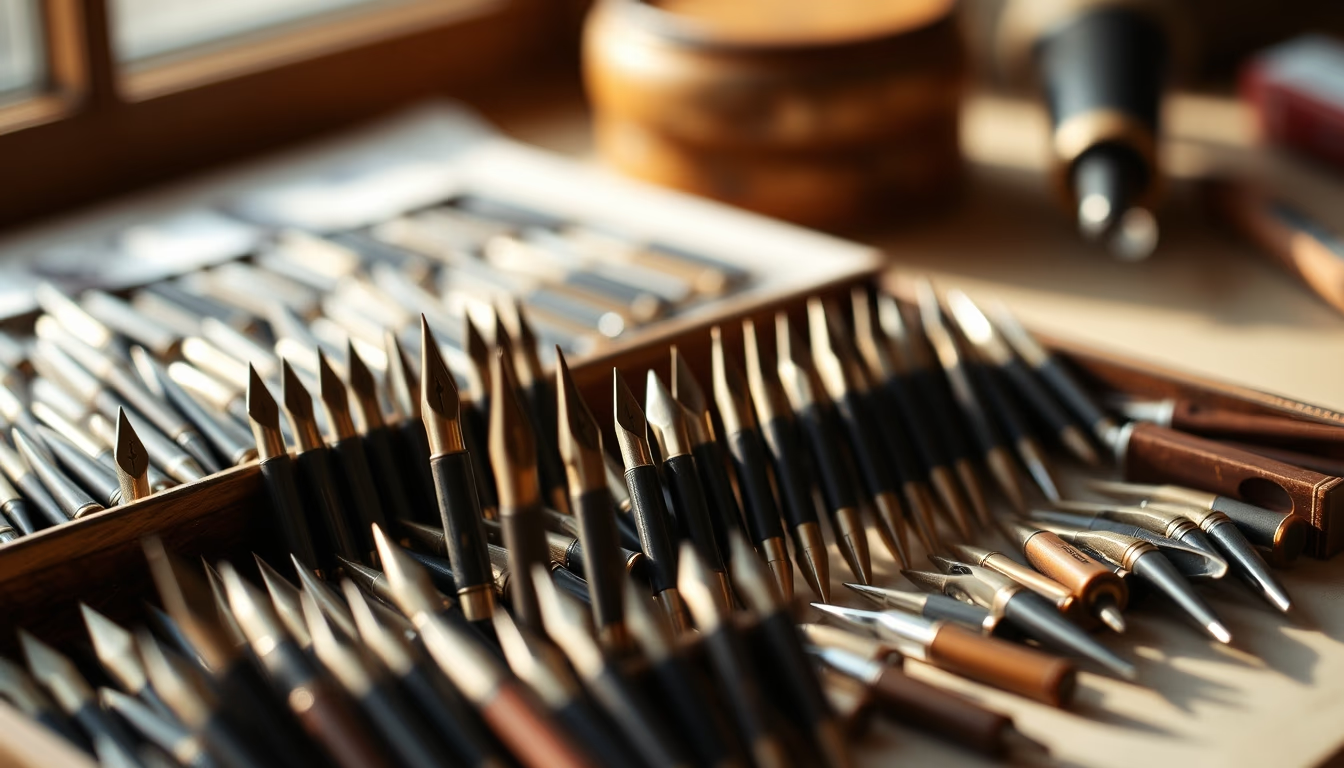
Practicing calligraphy is not merely technical but also spiritual. Calligraphers often meditate before starting, seeking harmony between mind, body, and brush. Strokes vary in thickness, speed, and pressure, reflecting the artist's emotional state. Essential tools include a soft-bristled brush, liquid ink (mò), rice paper (xuānzhǐ), and an inkstone (yàn). The Eight Principles of the character yǒng (永) teach fundamental stroke techniques and are a classic exercise for beginners.
Chinese calligraphy was inscribed on UNESCO's Representative List of the Intangible Cultural Heritage of Humanity in 2009. It permeates all aspects of Chinese culture, from art to traditional medicine, where calligraphy is used as therapy for relaxation and focus. Moreover, calligraphy has influenced painting, poetry, and graphic design. Contemporary artists continue to explore calligraphic strokes in new media, keeping this ancient tradition alive.
Frequently Asked Questions
What are the basic strokes in Chinese calligraphy?
The basic strokes include the dot (diǎn), horizontal (héng), vertical (shù), hook (gōu), rising (tí), left-falling (nà), and right-falling (piě). They are combined to form all Chinese characters.
How long does it take to learn Chinese calligraphy?
Learning the basics can take a few months, but mastering the art requires years of consistent practice. Calligraphers often dedicate a lifetime to perfecting their strokes.
What is the cultural significance of Chinese calligraphy?
Calligraphy is considered one of the highest art forms in China, valued for its ability to express emotion and personality. It is also linked to philosophy, meditation, and used in ceremonies, decoration, and education.
Direct URL
https://pub-c7d6a6ea828543ac903a74a341ccb2e1.r2.dev/imagens/chinese-calligraphy-brush-stroke-magazine-editorial-fresh10.avifHow to credit
Include a visible link back to UtilizAí. Copy one of the snippets below:
<a href="https://xn--utiliza-eza.com/en/midia/imagens/chinese-calligraphy-brush-stroke-magazine-editorial-fresh10">Chinese calligraphy brush stroke</a> by <a href="https://xn--utiliza-eza.com">UtilizAí</a>, licensed under <a href="https://creativecommons.org/licenses/by/4.0/">CC BY 4.0</a>.
[Chinese calligraphy brush stroke](https://xn--utiliza-eza.com/en/midia/imagens/chinese-calligraphy-brush-stroke-magazine-editorial-fresh10) by [UtilizAí](https://xn--utiliza-eza.com), CC BY 4.0
License: CC-BY-4.0