Chinese calligraphy brush stroke
1344×768 · AVIF · CC BY 4.0
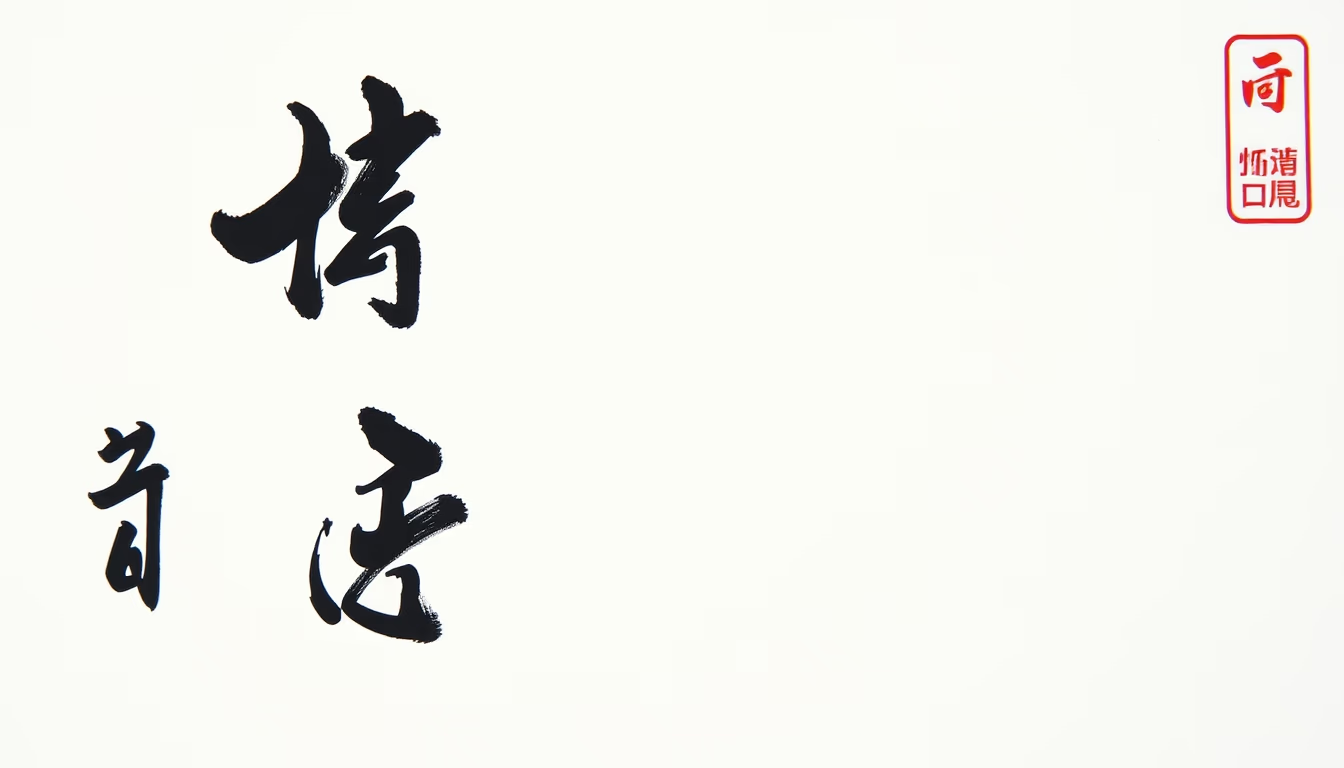
Chinese calligraphy is an ancient art that combines technique and expression through precise and fluid brush strokes.
About this subject
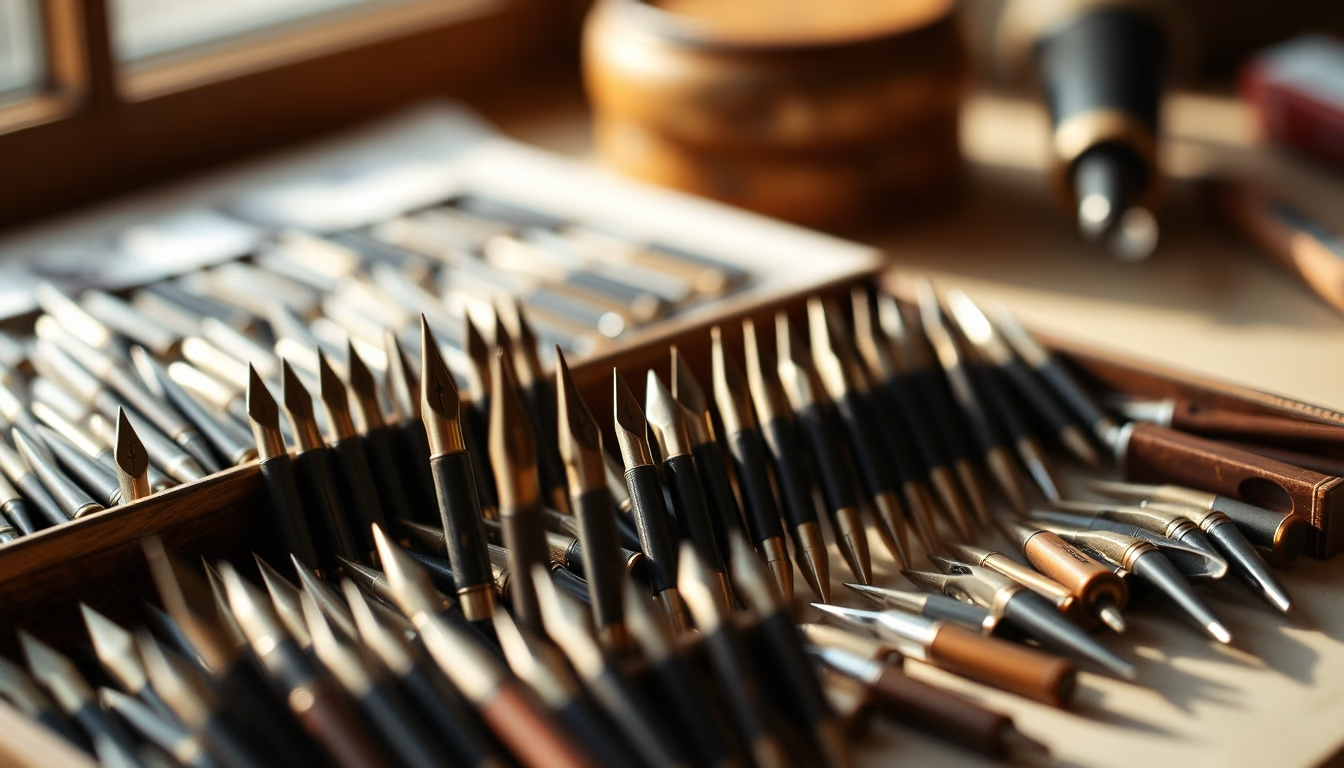
Chinese calligraphy, or shūfǎ, is one of China's most revered art forms, with origins dating back to the Shang dynasty (1600, 1046 BCE), when early characters were carved on oracle bones. However, it was during the Han dynasty (206 BCE, 220 CE) that calligraphy became established as an aesthetic and cultural practice. It employs the Four Treasures of the Study: brush, ink, rice paper, and inkstone. Each stroke carries meaning, not only in the character's form but also in the vital energy (qi) that the calligrapher imparts while moving the brush.
There are five main styles: seal (zhuànshū), clerical (lìshū), regular (kǎishū), cursive (cǎoshū), and running (xíngshū). Regular script is the most taught in schools, while cursive is a free expression requiring absolute mastery. Brushstroke technique depends on pressure, speed, and angle, as well as the amount of ink. A poorly executed stroke can ruin an entire character, and an experienced calligrapher may spend years perfecting a single movement.
Chinese calligraphy has deeply influenced painting, poetry, and even architecture. In painting, the same brushes and techniques are used to depict landscapes and figures. Today, the practice remains alive in schools and competitions, and has also found a place in graphic design and contemporary art, blending tradition with new media. A technical curiosity is the 'fei bai' (flying white) effect, where a dry brush creates strokes with white gaps, adding texture and movement.
Masters like Wang Xizhi (303, 361 CE), known as the 'Sage of Calligraphy', left masterpieces that have been copied for centuries. Chinese calligraphy is not merely writing: it is meditation in motion, a dance between brush and paper. Each stroke reflects the author's state of mind, making it highly valued as both artistic and philosophical expression.
Frequently Asked Questions
What are the main styles of Chinese calligraphy?
The five main styles are: seal (zhuànshū), clerical (lìshū), regular (kǎishū), cursive (cǎoshū), and running (xíngshū). Each has distinct stroke characteristics and is used in different historical and artistic contexts.
Why is brush direction and pressure important in Chinese calligraphy?
Brush direction and pressure determine the stroke's thickness, angle, and fluidity. Subtle pressure changes create variations in tone and texture, essential for conveying energy (qi) and emotion. Mistakes are hard to correct because ink dries quickly on rice paper.
How has Chinese calligraphy influenced other art forms?
Calligraphy directly influenced Chinese painting, sharing brushes and techniques. It also inspired poetry, architecture (with temple inscriptions), and even modern global art, being incorporated into design, tattoos, and digital media.
Direct URL
https://pub-c7d6a6ea828543ac903a74a341ccb2e1.r2.dev/imagens/chinese-calligraphy-brush-stroke-lo-fi-disposable-camera-fresh16.avifHow to credit
Include a visible link back to UtilizAí. Copy one of the snippets below:
<a href="https://xn--utiliza-eza.com/en/midia/imagens/chinese-calligraphy-brush-stroke-lo-fi-disposable-camera-fresh16">Chinese calligraphy brush stroke</a> by <a href="https://xn--utiliza-eza.com">UtilizAí</a>, licensed under <a href="https://creativecommons.org/licenses/by/4.0/">CC BY 4.0</a>.
[Chinese calligraphy brush stroke](https://xn--utiliza-eza.com/en/midia/imagens/chinese-calligraphy-brush-stroke-lo-fi-disposable-camera-fresh16) by [UtilizAí](https://xn--utiliza-eza.com), CC BY 4.0
License: CC-BY-4.0