Chinese calligraphy brush stroke
1344×768 · AVIF · CC BY 4.0
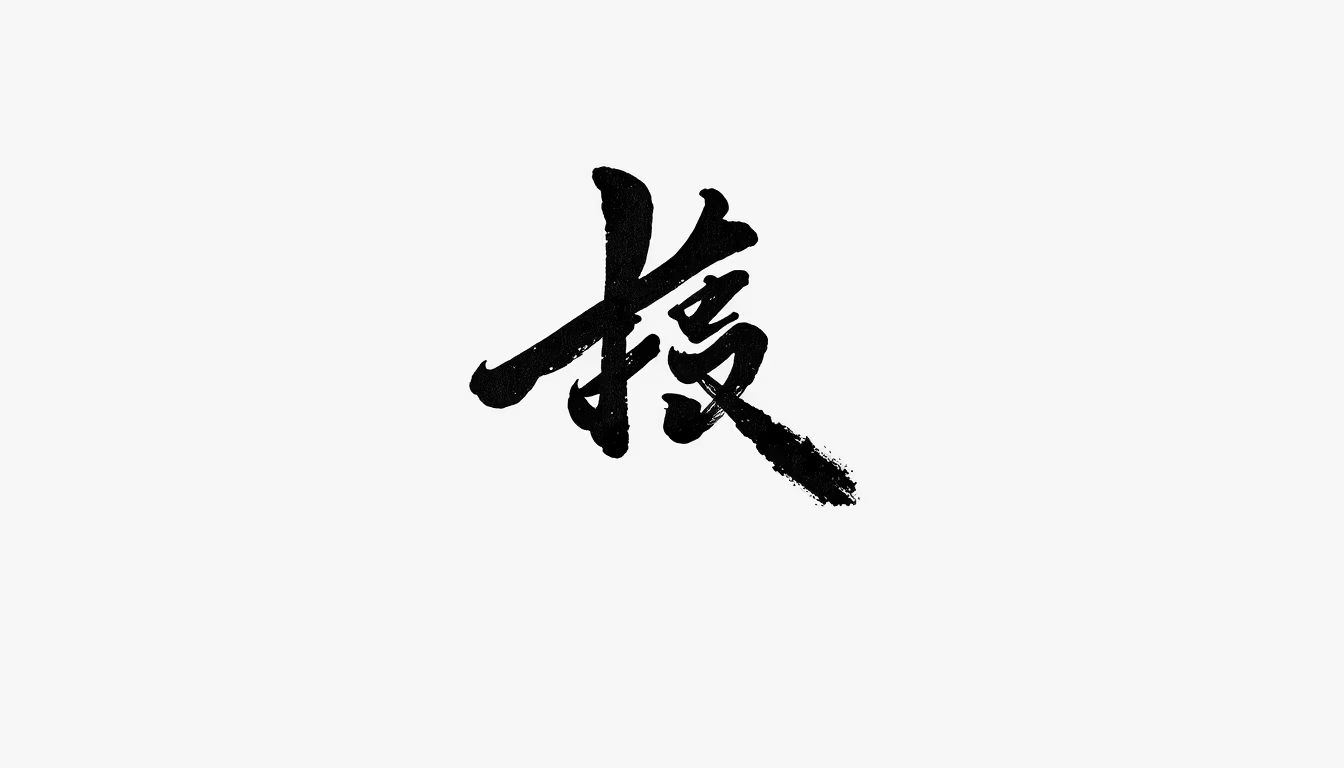
The Chinese calligraphy brush stroke is the fundamental expression of this ancient art, combining technique, rhythm, and cultural meaning.
About this subject
In Chinese calligraphy, each character is built from basic strokes that follow precise execution rules. The eight fundamental strokes (heng, shu, pie, na, dian, ti, zhe, gou) form the foundation for thousands of characters. Each stroke has a sequence of movements: start with the brush tip, develop with varying pressure, and finish with a return. The thickness and curvature depend on the brush angle and speed, creating a unique visual rhythm.
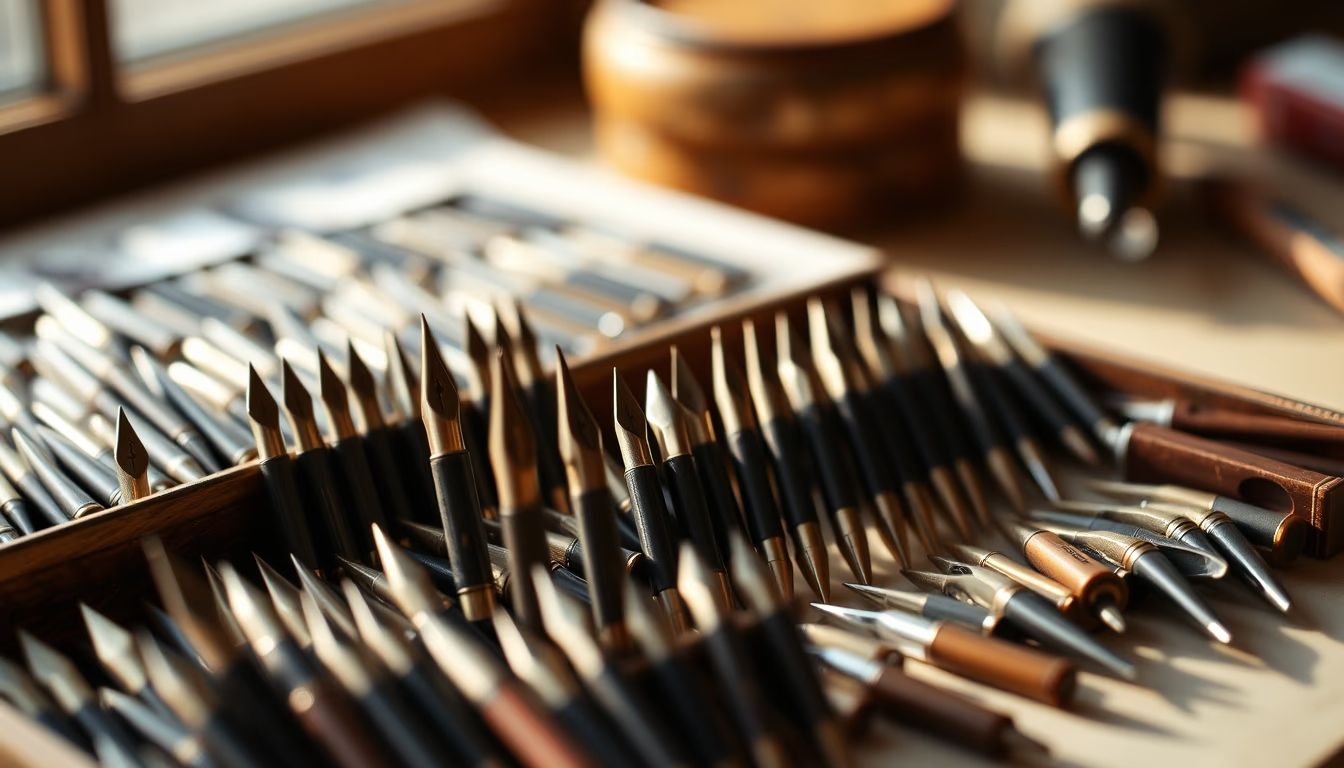
The technique requires years of practice. The calligrapher controls breathing and energy flow (qi) to convey vitality to the stroke. Rice paper, ink from soot, and brushes made from animal hair are the traditional tools. Pressure determines whether the stroke is thin or thick, and speed influences fluidity. A well-executed stroke looks organic, as if it has inner movement.
Historically, Chinese calligraphy evolved into styles: seal (zhuanshu), clerical (lishu), cursive (caoshu), regular (kaishu), and running (xingshu). Masters like Wang Xizhi (4th century) elevated the stroke to an independent art form. During the Tang dynasty, calligraphy became an imperial examination subject for officials. Each stroke carries the writer's personality, it is said that calligraphy reveals character.
Interestingly, strokes incorporate Taoist principles of yin and yang: the empty space between strokes is as important as the ink. In contemporary practice, calligraphy is used in tattoos, graphic design, and as active meditation. The brush stroke is also a metaphor for spontaneity and discipline, an art that balances control and freedom.
Frequently Asked Questions
What are the main types of strokes in Chinese calligraphy?
The eight basic strokes are heng (horizontal), shu (vertical), pie (descending left), na (descending right), dian (dot), ti (rising hook), zhe (bend), and gou (hook). Each has variations depending on style.
What distinguishes an experienced calligrapher's stroke?
Fluidity, natural variation in thickness, and continuous energy (qi) demonstrate mastery. Beginners produce rigid strokes, while experienced calligraphers create organic movements with subtle pauses.
How has Chinese calligraphy influenced other arts?
It has influenced landscape painting (shan shui), garden architecture, and logo design. Its principles of balance and rhythm are applied in martial arts and meditation.
Direct URL
https://pub-c7d6a6ea828543ac903a74a341ccb2e1.r2.dev/imagens/chinese-calligraphy-brush-stroke-commercial-product-photography-fresh11.avifHow to credit
Include a visible link back to UtilizAí. Copy one of the snippets below:
<a href="https://xn--utiliza-eza.com/en/midia/imagens/chinese-calligraphy-brush-stroke-commercial-product-photography-fresh11">Chinese calligraphy brush stroke</a> by <a href="https://xn--utiliza-eza.com">UtilizAí</a>, licensed under <a href="https://creativecommons.org/licenses/by/4.0/">CC BY 4.0</a>.
[Chinese calligraphy brush stroke](https://xn--utiliza-eza.com/en/midia/imagens/chinese-calligraphy-brush-stroke-commercial-product-photography-fresh11) by [UtilizAí](https://xn--utiliza-eza.com), CC BY 4.0
License: CC-BY-4.0