Chinese calligraphy brush stroke
1344×768 · AVIF · CC BY 4.0
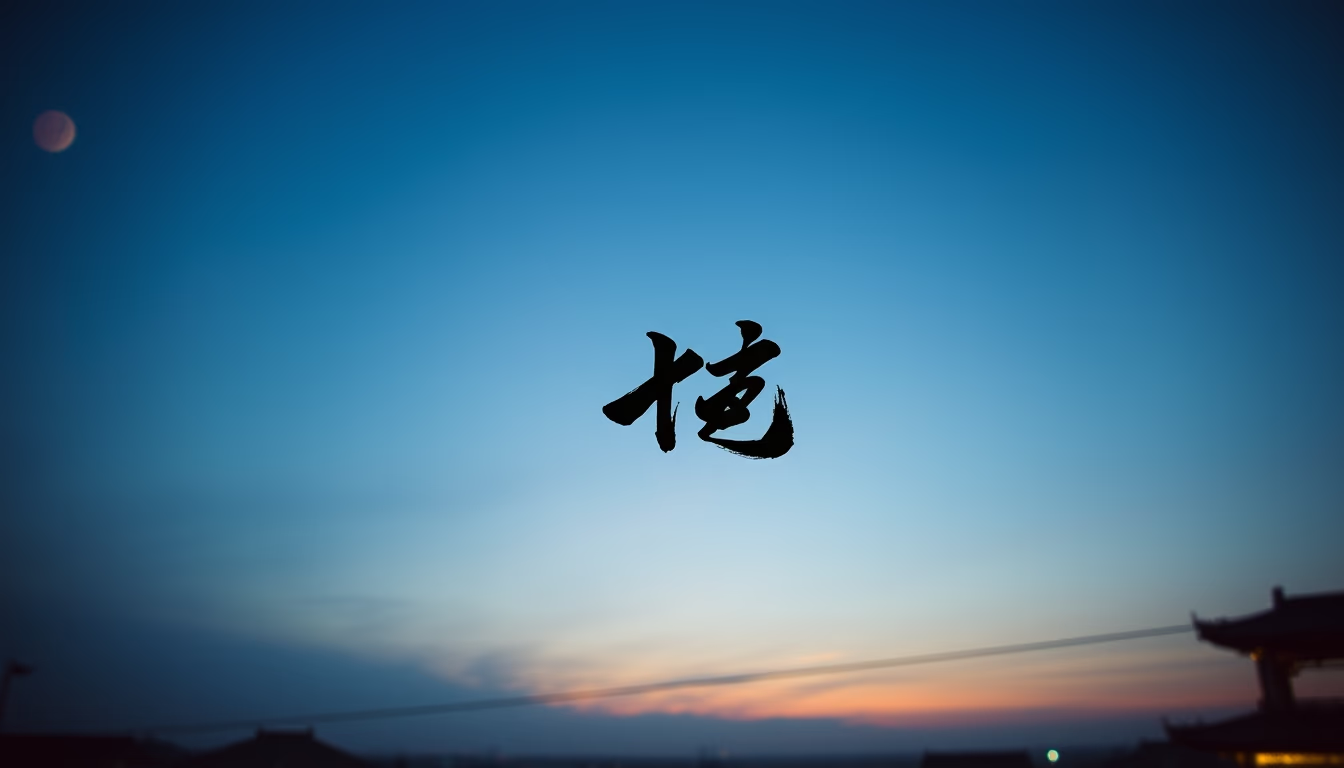
The Chinese calligraphy brush stroke is the essence of a millennia-old art, blending technique, rhythm, and personal expression in every stroke.
About this subject
Chinese calligraphy (书, shū) is one of the most refined arts of East Asian culture, practiced for over three millennia. Each brush stroke is not just a character but a visual composition reflecting the artist's state of mind, hand pressure, and ink fluidity. The fundamental strokes are organized in the Eight Principles of Yong (永字八法), which serve as the foundation for learning all others.
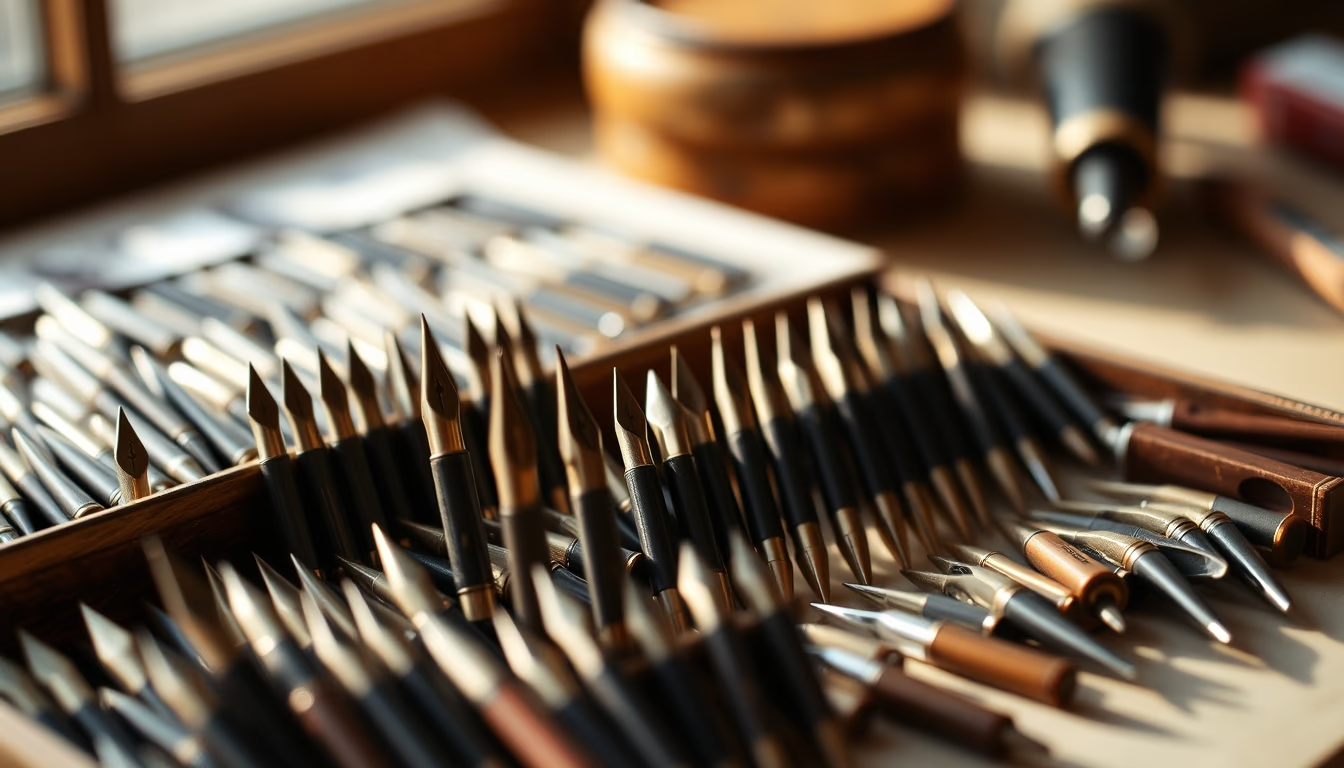
The traditional tools, known as the Four Treasures of the Study (文房四宝), include the brush (笔), ink (墨), paper (纸), and inkstone (砚). Ink is prepared by grinding a solid ink stick with water on the stone until the desired consistency is achieved. Technique varies: a stroke can be executed with speed and lightness to create a 'dry' effect, or with pressure and slowness to deposit more ink, generating contrasts in thickness and texture.
Great masters such as Wang Xizhi (303, 361 AD) of the Jin dynasty and Yan Zhenqing (709, 785 AD) of the Tang dynasty elevated calligraphy to a level of artistic expression comparable to poetry and painting. The brush stroke 'runs' like a horse or 'rests' like a stone, according to classical aesthetics. Today, calligraphy continues to thrive in competitions, exhibitions, and contemporary design, remaining a symbol of Chinese cultural heritage.
Interestingly, Chinese calligraphy influenced modern Western art, especially Abstract Expressionism. Artists like Mark Rothko and Cy Twombly studied the rhythms and gestures of Eastern brushwork. Moreover, the practice of calligraphy is considered a form of active meditation, requiring intense concentration and breath control.
Frequently Asked Questions
What does the brush stroke mean in Chinese calligraphy?
The brush stroke is the basic element of Chinese calligraphy, where each stroke carries aesthetic and expressive meaning. Thickness, angle, and pressure define the character's style, ranging from formal to cursive.
What are the types of brush strokes in the Yong system?
The Eight Principles of Yong (永字八法) define eight fundamental strokes: dot (点), horizontal (横), vertical (竖), hook (钩), rising (提), turning (折), left-falling (撇), and right-falling (捺). These strokes combine to form all characters.
How did Chinese calligraphy influence Western art?
In the 20th century, Western artists like Mark Rothko and Cy Twombly were inspired by Chinese calligraphy to develop Abstract Expressionism, incorporating spontaneous gestures and ink fluidity into their works.
Direct URL
https://pub-c7d6a6ea828543ac903a74a341ccb2e1.r2.dev/imagens/chinese-calligraphy-brush-stroke-aerial-drone-shot-fresh6.avifHow to credit
Include a visible link back to UtilizAí. Copy one of the snippets below:
<a href="https://xn--utiliza-eza.com/en/midia/imagens/chinese-calligraphy-brush-stroke-aerial-drone-shot-fresh6">Chinese calligraphy brush stroke</a> by <a href="https://xn--utiliza-eza.com">UtilizAí</a>, licensed under <a href="https://creativecommons.org/licenses/by/4.0/">CC BY 4.0</a>.
[Chinese calligraphy brush stroke](https://xn--utiliza-eza.com/en/midia/imagens/chinese-calligraphy-brush-stroke-aerial-drone-shot-fresh6) by [UtilizAí](https://xn--utiliza-eza.com), CC BY 4.0
License: CC-BY-4.0