Chess board mid game
1344×768 · AVIF · CC BY 4.0
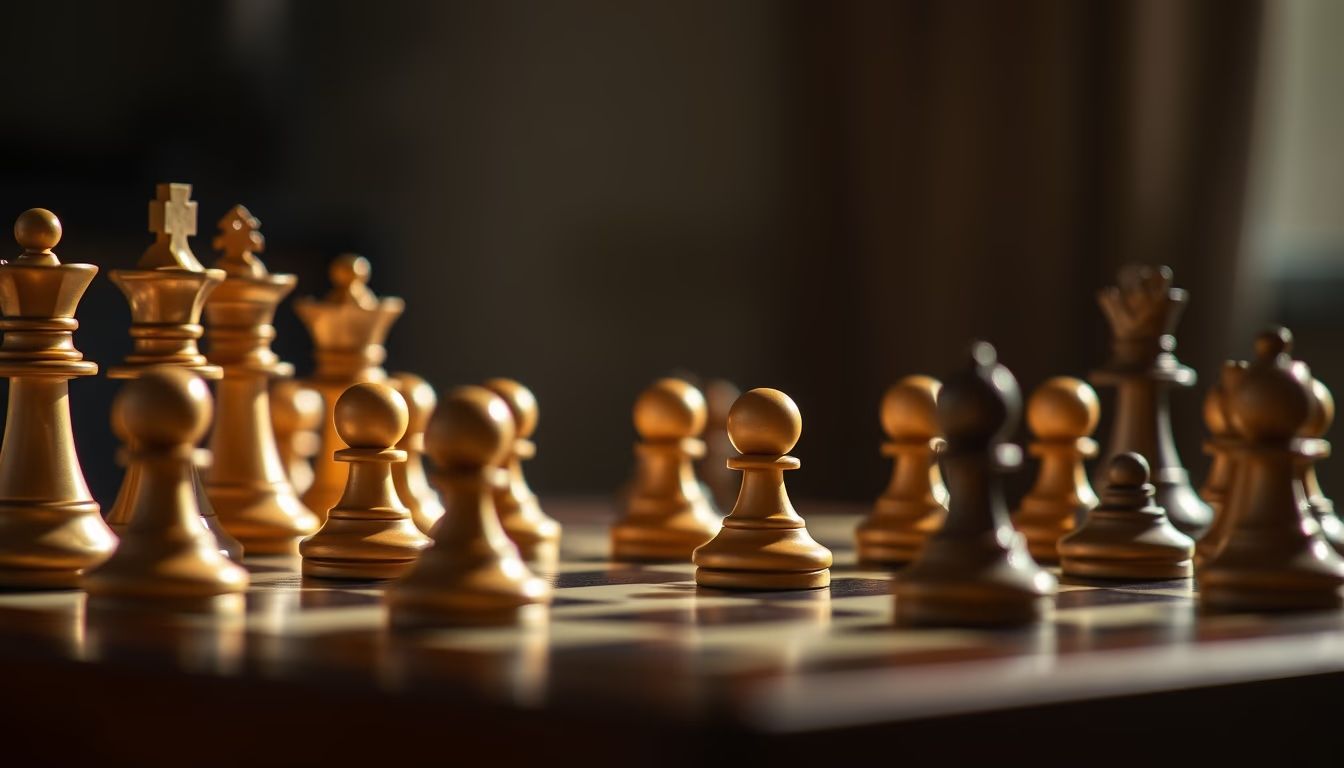
The middlegame in chess is the most complex phase, where strategies unfold and tactics decide the course of the game.
About this subject
The middlegame is the chess phase that follows the opening, when pawns and major pieces are already developed and ready for combat. This is where the real fight intensifies: each move can open gaps or create direct threats to the opponent's king. Chess theory dedicates hundreds of pages to tactical patterns such as forks, pins, double attacks, and positional sacrifices. Grandmasters like Garry Kasparov and Magnus Carlsen are known for their ability to turn small positional advantages into devastating attacks during this phase.
Historically, the middlegame has been the stage for memorable games. The 'Immortal Game' (Anderssen vs. Kieseritzky, 1851) and the 'Evergreen Game' (Anderssen vs. Dufresne, 1852) are classic examples of daring combinations that started in the opening and culminated in the middlegame. In the 20th century, the Fischer vs. Spassky match (1972) showed how central control and piece mobility can gradually suffocate the opponent. Each middlegame position is unique, relying not only on theory but on creativity and calculation of variations.
In Brazil, chess has grown with the popularity of online platforms and the success of players like Rafael Leitão and Luis Paulo Supi. The middlegame is where amateur players most often err, either due to lack of planning or underestimating a tactical threat. Therefore, studying endgames and tactics is essential, but the middlegame also requires understanding concepts such as pawn structure weaknesses, open lines, and piece coordination. A seemingly balanced position can collapse quickly with a single mistake.
Interesting fact: the term 'middlegame' was popularized by world champion José Raúl Capablanca, who wrote one of the first manuals dedicated to this phase. Today, artificial intelligence programs like Stockfish analyze millions of middlegame positions in seconds, but the beauty of the phase lies in human unpredictability. Each move carries history and psychology, transforming a board into an intellectual battlefield.
Frequently Asked Questions
What characterizes the middlegame in chess?
It is the phase after the opening, when pieces are developed and tactical and strategic combat intensifies. Key concerns are king safety, central control, and piece mobility.
What are common middlegame mistakes for beginners?
Beginners often neglect king safety, leave pieces unprotected (hanging pieces), or fail to calculate basic tactics like forks and pins. Playing without a clear plan is also frequent.
Is there a 'theory' of the middlegame like there is for openings?
There is no closed theory, as each position is unique. However, general principles (piece activity, pawn structure, weaknesses) and tactical patterns can be studied and applied.
Direct URL
https://pub-c7d6a6ea828543ac903a74a341ccb2e1.r2.dev/imagens/chess-board-mid-game-fine-art-photography-p1.avifHow to credit
Include a visible link back to UtilizAí. Copy one of the snippets below:
<a href="https://xn--utiliza-eza.com/en/midia/imagens/chess-board-mid-game-fine-art-photography-p1">Chess board mid game</a> by <a href="https://xn--utiliza-eza.com">UtilizAí</a>, licensed under <a href="https://creativecommons.org/licenses/by/4.0/">CC BY 4.0</a>.
[Chess board mid game](https://xn--utiliza-eza.com/en/midia/imagens/chess-board-mid-game-fine-art-photography-p1) by [UtilizAí](https://xn--utiliza-eza.com), CC BY 4.0
License: CC-BY-4.0