Centrifuge tubes spinning
1344×768 · AVIF · CC BY 4.0
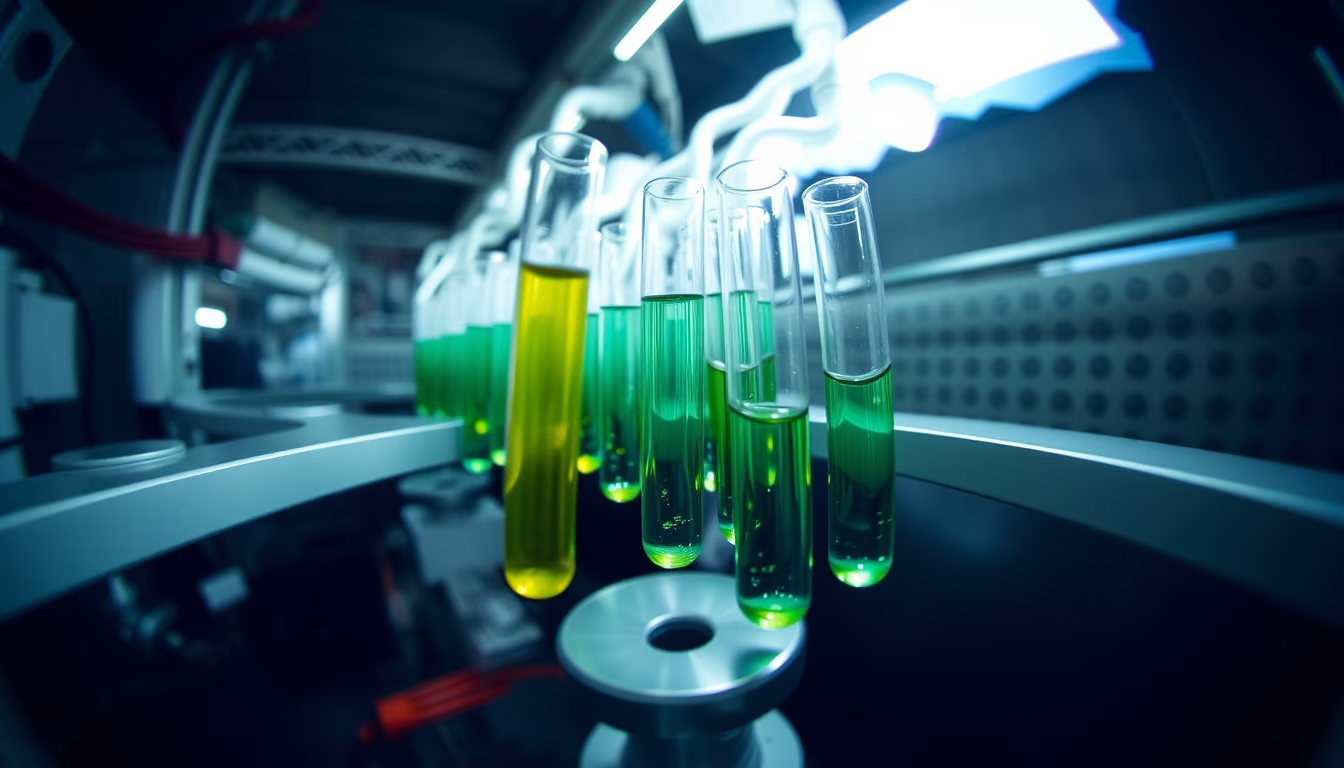
Spinning centrifuge tubes are essential in laboratories to separate components of biological, chemical, or clinical samples.
About this subject
Centrifugation is a fundamental technique in laboratories worldwide, used to separate particles of different densities within a liquid. The principle relies on applying centrifugal force to accelerate the natural sedimentation of particles. Centrifuge tubes, typically made of polypropylene or glass, are placed in rotors that spin at high speeds, often reaching tens of thousands of revolutions per minute (rpm).
Various types of laboratory centrifuges exist: microcentrifuges for small volumes (up to 2 mL), clinical centrifuges for blood tubes (up to 15 mL), and ultracentrifuges for molecular-level separations, capable of operating at over 100,000 rpm. In clinical labs, centrifuges are widely used to process blood samples, separating plasma or serum for biochemical and immunological tests. They are also essential in molecular biology for DNA and RNA extraction, where density gradient centrifugation isolates nucleic acids.
Safety is critical: unbalanced tubes can cause intense vibrations and damage the equipment. Therefore, tubes must always be arranged symmetrically in the rotor. Additionally, some tubes require sealed lids to prevent leaks of hazardous aerosols. Centrifugation is fast and efficient but requires careful selection of speed and time for each sample type to avoid damaging cellular components.
Interestingly, centrifuges are also used in the food industry, for example, in clarifying juices or separating cream from milk. The principle remains the same: rotation to accelerate density-based separation. Since the early 20th century, when Carl Gustav de Laval invented the centrifuge, it has evolved into an indispensable tool for research and diagnostics.
Frequently Asked Questions
How does a laboratory centrifuge work?
A centrifuge uses high-speed rotation to generate centrifugal force, which pushes denser particles to the bottom of the tube, accelerating the separation of liquid-solid or liquid-liquid mixtures.
What is blood centrifugation used for?
Blood centrifugation separates components such as plasma, serum, red and white blood cells. This enables biochemical analyses, coagulation tests, and preparation of cell concentrates for transfusions.
What are the main types of centrifuges used in laboratories?
Main types include microcentrifuges for 0.5-2 mL tubes, clinical centrifuges for 5-15 mL tubes, refrigerated centrifuges for sensitive samples, and ultracentrifuges for macromolecule separation.
Direct URL
https://pub-c7d6a6ea828543ac903a74a341ccb2e1.r2.dev/imagens/centrifuge-tubes-spinning-fish-eye-wide-angle-fresh12.avifHow to credit
Include a visible link back to UtilizAí. Copy one of the snippets below:
<a href="https://xn--utiliza-eza.com/en/midia/imagens/centrifuge-tubes-spinning-fish-eye-wide-angle-fresh12">Centrifuge tubes spinning</a> by <a href="https://xn--utiliza-eza.com">UtilizAí</a>, licensed under <a href="https://creativecommons.org/licenses/by/4.0/">CC BY 4.0</a>.
[Centrifuge tubes spinning](https://xn--utiliza-eza.com/en/midia/imagens/centrifuge-tubes-spinning-fish-eye-wide-angle-fresh12) by [UtilizAí](https://xn--utiliza-eza.com), CC BY 4.0
License: CC-BY-4.0