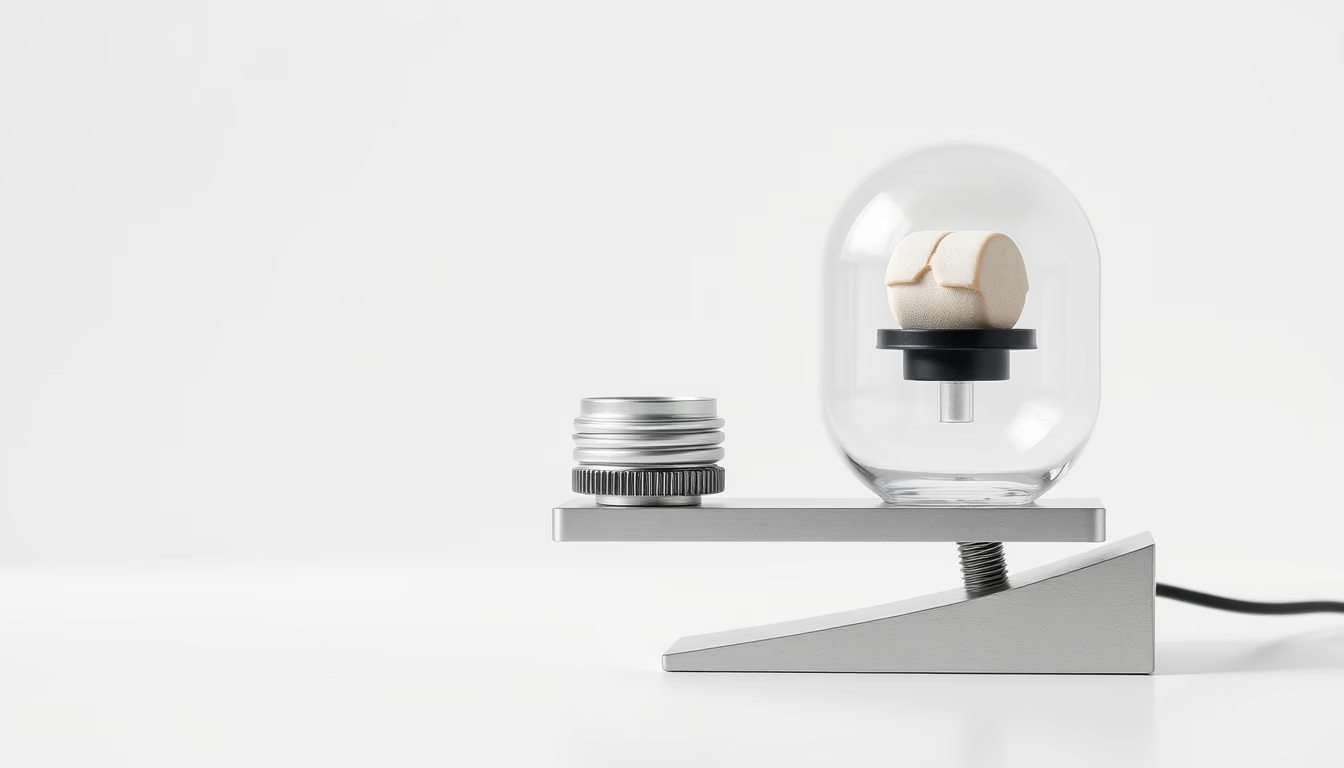
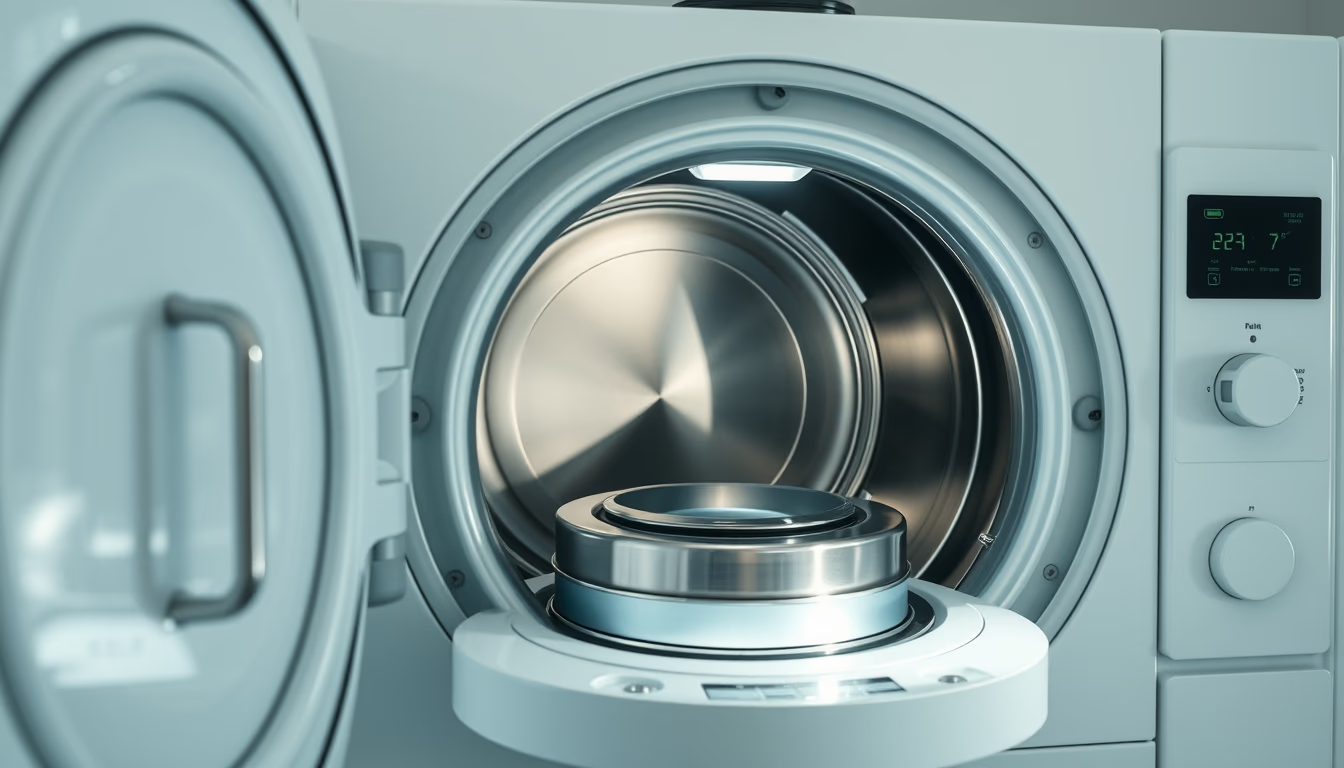
Centrifuge tubes spinning
1344×768 · AVIF · CC BY 4.0

Spinning centrifuge tubes demonstrate the separation of biological components, a critical process in clinical analysis and laboratory research.
About this subject
Centrifuges are vital equipment in laboratories worldwide. They use centrifugal force to separate mixtures of different densities, such as blood, urine, or cell cultures. Centrifuge tubes, typically made of polypropylene or glass, withstand high rotational speeds (thousands of RPM) while maintaining sample integrity. During the process, denser particles sediment at the bottom of the tube, forming a pellet, while the supernatant remains on top.
There are various types of centrifuge tubes, categorized by capacity (from 0.5 mL microtubes to 50 mL tubes) and shape (conical or round bottom). Microtubes are used in molecular biology for quick spins of DNA or RNA. Larger tubes are common in clinical analysis to separate serum or plasma. Many tubes have airtight caps that prevent leaks and contamination, essential for infectious or volatile samples.
Centrifugation is a century-old technique, but modern automation allows processing dozens of samples simultaneously. In hospitals, centrifuges prepare blood samples before biochemical tests. In the pharmaceutical industry, they help purify proteins and vaccines. Safety is crucial: imbalance can damage the rotor or cause accidents. Therefore, tubes must be loaded symmetrically and with caps tightly closed.
Among curiosities, centrifuge tubes are used beyond biology: in geology to separate sediments, and even in cosmetics labs to test emulsion stability. Recent innovations include microtubes with integrated filter membranes, simplifying nucleic acid purification. With the rise of automation, laboratory robots now handle centrifuge tubes in high-throughput processes, accelerating scientific discoveries.
Frequently Asked Questions
What is the difference between conical and round-bottom centrifuge tubes?
Conical tubes allow better pellet sedimentation in fixed-angle rotors, while round-bottom tubes are more common in swing-bucket rotors to avoid excessive compaction. The choice depends on the sample type and protocol.
Can centrifuge tubes be reused?
Disposable polypropylene tubes should not be reused due to contamination risks and chemical degradation. Glass tubes can be sterilized but are more fragile and heavier, making them less common in modern labs.
Why is it important to balance tubes in a centrifuge?
Imbalance causes excessive vibration that can damage the rotor, break tubes, or even cause an explosion. Always load opposite tubes with equal weights (same volume/mass) and use safety caps.
Direct URL
https://pub-c7d6a6ea828543ac903a74a341ccb2e1.r2.dev/imagens/centrifuge-tubes-spinning-commercial-product-photography-fresh3.avifHow to credit
Include a visible link back to UtilizAí. Copy one of the snippets below:
<a href="https://xn--utiliza-eza.com/en/midia/imagens/centrifuge-tubes-spinning-commercial-product-photography-fresh3">Centrifuge tubes spinning</a> by <a href="https://xn--utiliza-eza.com">UtilizAí</a>, licensed under <a href="https://creativecommons.org/licenses/by/4.0/">CC BY 4.0</a>.
[Centrifuge tubes spinning](https://xn--utiliza-eza.com/en/midia/imagens/centrifuge-tubes-spinning-commercial-product-photography-fresh3) by [UtilizAí](https://xn--utiliza-eza.com), CC BY 4.0
License: CC-BY-4.0