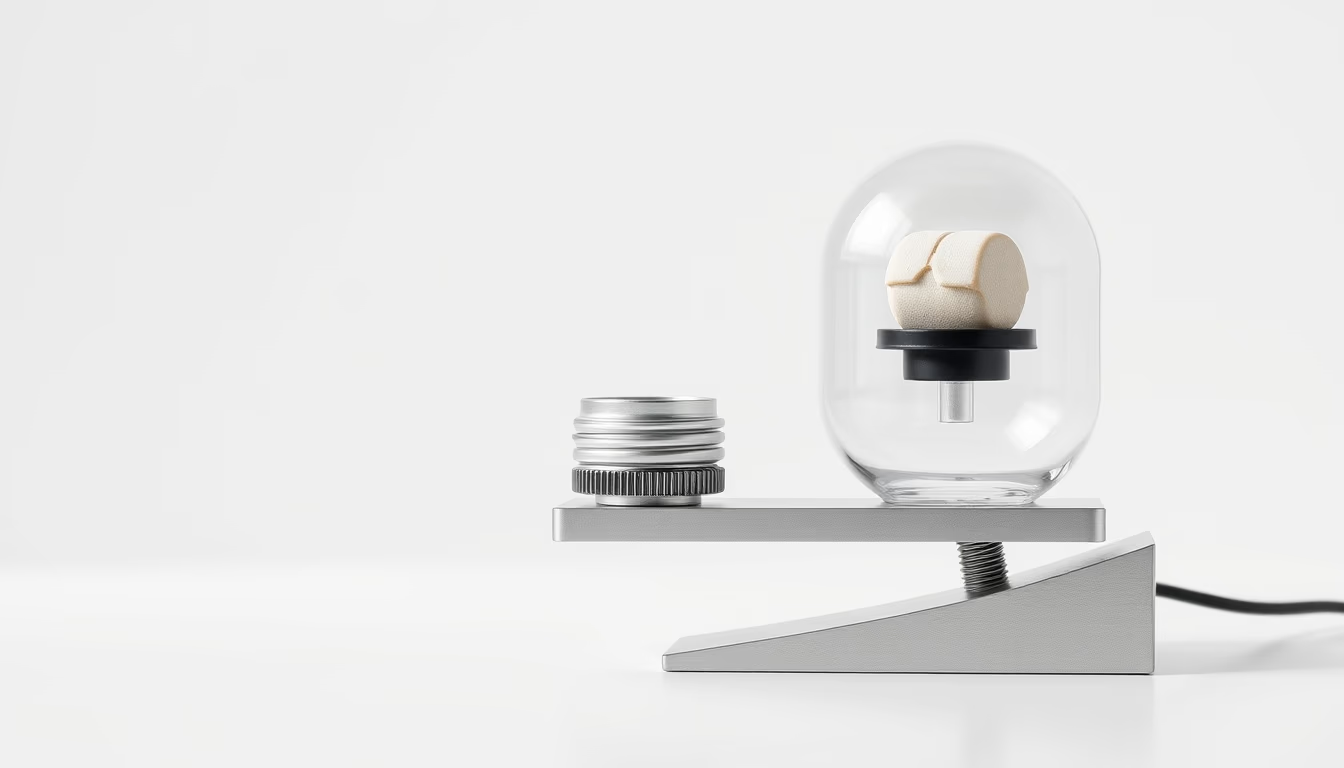
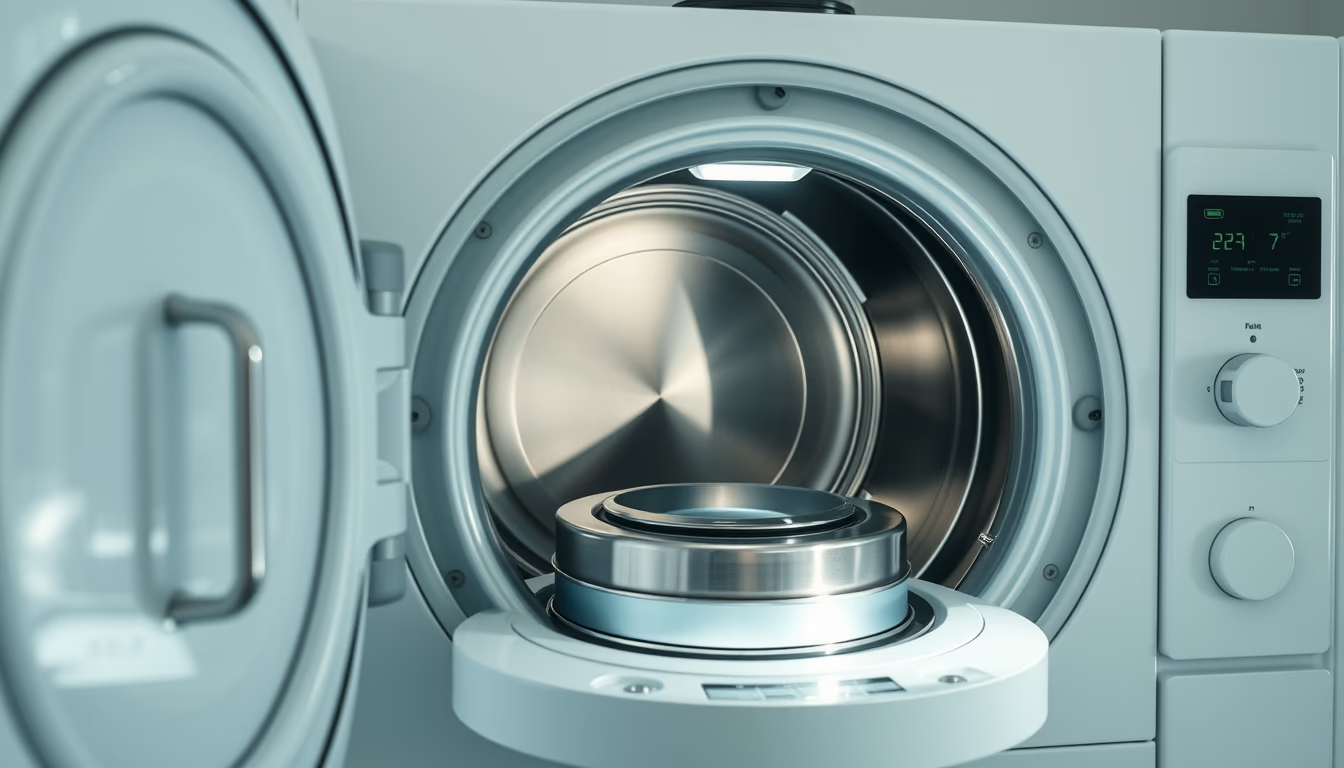
Centrifuge tubes spinning
1344×768 · AVIF · CC BY 4.0

Laboratory centrifuges separate fluid components by density, essential in clinical analyses and scientific research.
About this subject
A laboratory centrifuge is a device that uses centrifugal force to separate substances of different densities within a liquid mixture. The basic principle is to spin tubes at high speeds, causing denser particles to migrate to the bottom of the tube, forming a pellet, while the supernatant remains on top. This process is fundamental in many fields, such as molecular biology, biochemistry, and medical diagnostics.
There are various types of centrifuges, from small benchtop microcentrifuges reaching up to 15,000 revolutions per minute (rpm) to ultracentrifuges that exceed 100,000 rpm, used to separate cellular organelles or macromolecules like DNA and proteins. The choice of rotor and speed depends on the application: microcentrifuge tubes for small volumes (up to 2 mL) or larger bottles for up to 500 mL.
Proper use of a centrifuge requires essential precautions. Tubes must be precisely balanced, as an imbalance can damage the equipment or cause accidents. It is also important to check tube compatibility with the maximum speed and never open the lid during operation. Centrifugation is a routine technique in hospitals to separate serum or plasma from blood, and in research labs to purify samples.
Historically, the first centrifuges appeared in the 19th century, but Antonin Prandtl developed a version to separate cream from milk. Today, they are indispensable in any modern laboratory. Technological evolution has brought refrigerated models, vacuum systems, and digital controls for time and speed, increasing precision and safety in experiments.
Frequently Asked Questions
What is the function of a laboratory centrifuge?
To separate components of a liquid mixture based on their densities using centrifugal force. It is used to sediment cells, precipitate proteins, isolate DNA, among other applications.
How to prepare tubes for centrifugation?
Tubes should be filled with equal volumes and placed in opposite positions in the rotor for balancing. It is essential to use proper caps and check the maximum speed supported by the tube.
What are the risks of using a centrifuge?
Main risks are imbalance, which can cause vibration and rotor failure, and premature lid opening, which may expose the user to hazardous aerosols. Always use protective equipment and follow the manufacturer's instructions.
Direct URL
https://pub-c7d6a6ea828543ac903a74a341ccb2e1.r2.dev/imagens/centrifuge-tubes-spinning-cinematic-wide-shot-fresh16.avifHow to credit
Include a visible link back to UtilizAí. Copy one of the snippets below:
<a href="https://xn--utiliza-eza.com/en/midia/imagens/centrifuge-tubes-spinning-cinematic-wide-shot-fresh16">Centrifuge tubes spinning</a> by <a href="https://xn--utiliza-eza.com">UtilizAí</a>, licensed under <a href="https://creativecommons.org/licenses/by/4.0/">CC BY 4.0</a>.
[Centrifuge tubes spinning](https://xn--utiliza-eza.com/en/midia/imagens/centrifuge-tubes-spinning-cinematic-wide-shot-fresh16) by [UtilizAí](https://xn--utiliza-eza.com), CC BY 4.0
License: CC-BY-4.0