Catamaran tropical
1344×768 · AVIF · CC BY 4.0
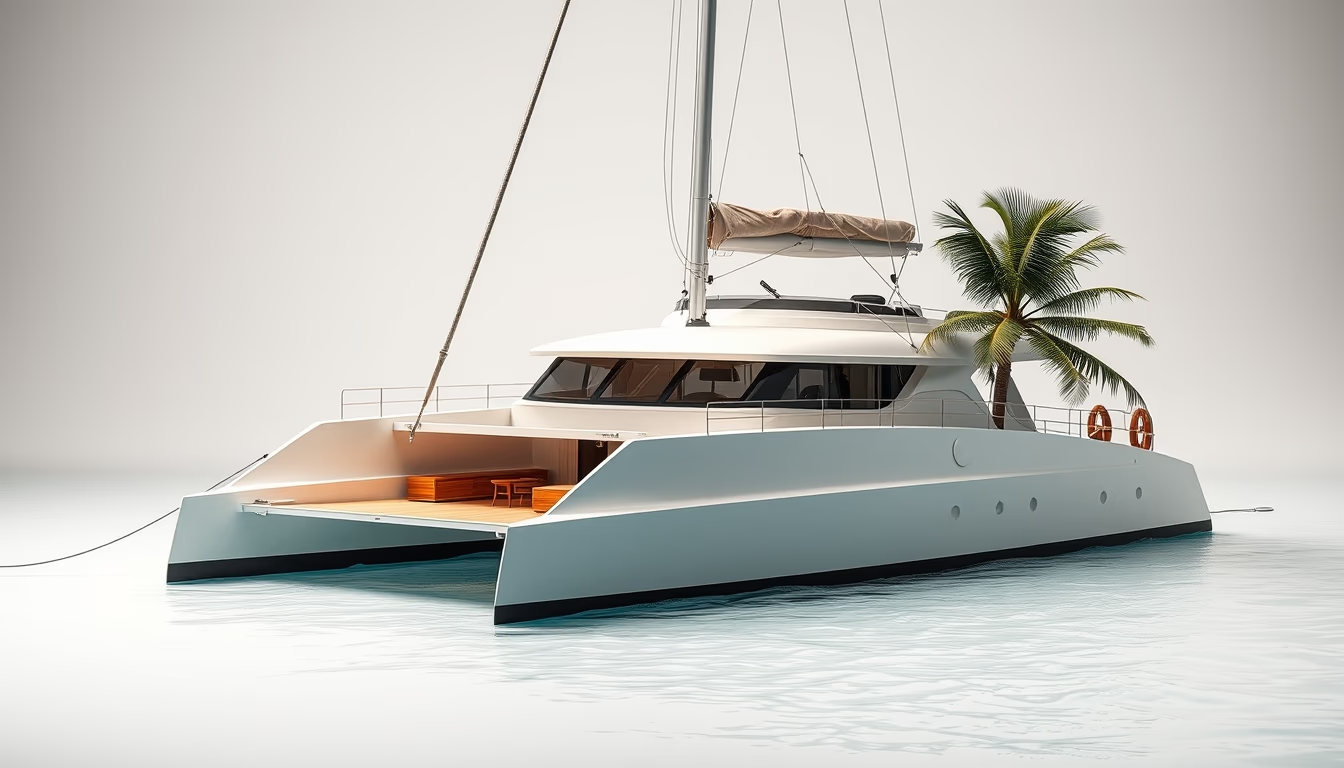
Catamarans are twin-hulled vessels known for stability and speed, widely used in tropical regions for leisure and tourist transportation.
About this subject
A catamaran is a vessel with two parallel hulls connected by a central structure, offering greater lateral stability, shallower draft, and improved fuel efficiency compared to monohulls of similar length. In tropical regions, such as the coast of northeastern Brazil, catamarans are commonly used for tourist excursions, coastal transport, and sailing competitions. The absence of a deep single hull allows navigation in shallow waters, ideal for reefs and bays.
In Brazil, catamarans are particularly prominent in Fernando de Noronha, where they carry visitors to diving spots and hard-to-reach beaches. Both motorized and sailing models are available, typically accommodating small to medium groups. The stability reduces seasickness, a key benefit for tourist itineraries. Catamarans are also popular in destinations like the Caribbean, South Pacific, and Mediterranean, often offered as private charters.
Historically, twin-hulled vessels originated in Polynesian culture over a thousand years ago, used for long ocean voyages. The term 'catamaran' derives from the Tamil 'kattumaram', meaning 'tied logs'. Modern designs can achieve high speeds, especially with sail or powerful engines. Luxury models feature amenities such as swim platforms, trampolines between hulls, and spacious cockpits, blending tropical comfort with nautical performance.
Technical note: passenger catamarans often employ outboard or sterndrive engines, while sailing models use tall masts to harness trade winds. Maneuverability requires practice, as turning radius is larger than that of monohulls. However, safety in rough seas is superior, with low risk of capsizing. For these reasons, the fleet of catamarans for maritime tourism in tropical regions continues to grow.
Frequently Asked Questions
What is the main advantage of a catamaran over a monohull boat?
The main advantage is lateral stability due to the twin hulls, which reduces rolling and seasickness. Additionally, the shallower draft allows navigation in shallow waters.
Are catamarans safe for open-ocean sailing?
Yes, modern catamarans are designed for ocean crossings. They provide excellent stability and a low risk of capsizing, making them popular for long-distance voyages.
Where can I rent a catamaran for a tour in Brazil?
Destinations like Fernando de Noronha, Salvador, and Rio de Janeiro offer catamaran rentals for tourist excursions. Companies operate half-day or full-day itineraries with stops for snorkeling.
Direct URL
https://pub-c7d6a6ea828543ac903a74a341ccb2e1.r2.dev/imagens/catamaran-tropical-studio-still-life-p10.avifHow to credit
Include a visible link back to UtilizAí. Copy one of the snippets below:
<a href="https://xn--utiliza-eza.com/en/midia/imagens/catamaran-tropical-studio-still-life-p10">Catamaran tropical</a> by <a href="https://xn--utiliza-eza.com">UtilizAí</a>, licensed under <a href="https://creativecommons.org/licenses/by/4.0/">CC BY 4.0</a>.
[Catamaran tropical](https://xn--utiliza-eza.com/en/midia/imagens/catamaran-tropical-studio-still-life-p10) by [UtilizAí](https://xn--utiliza-eza.com), CC BY 4.0
License: CC-BY-4.0