Calligraphy nibs collection
1344×768 · AVIF · CC BY 4.0
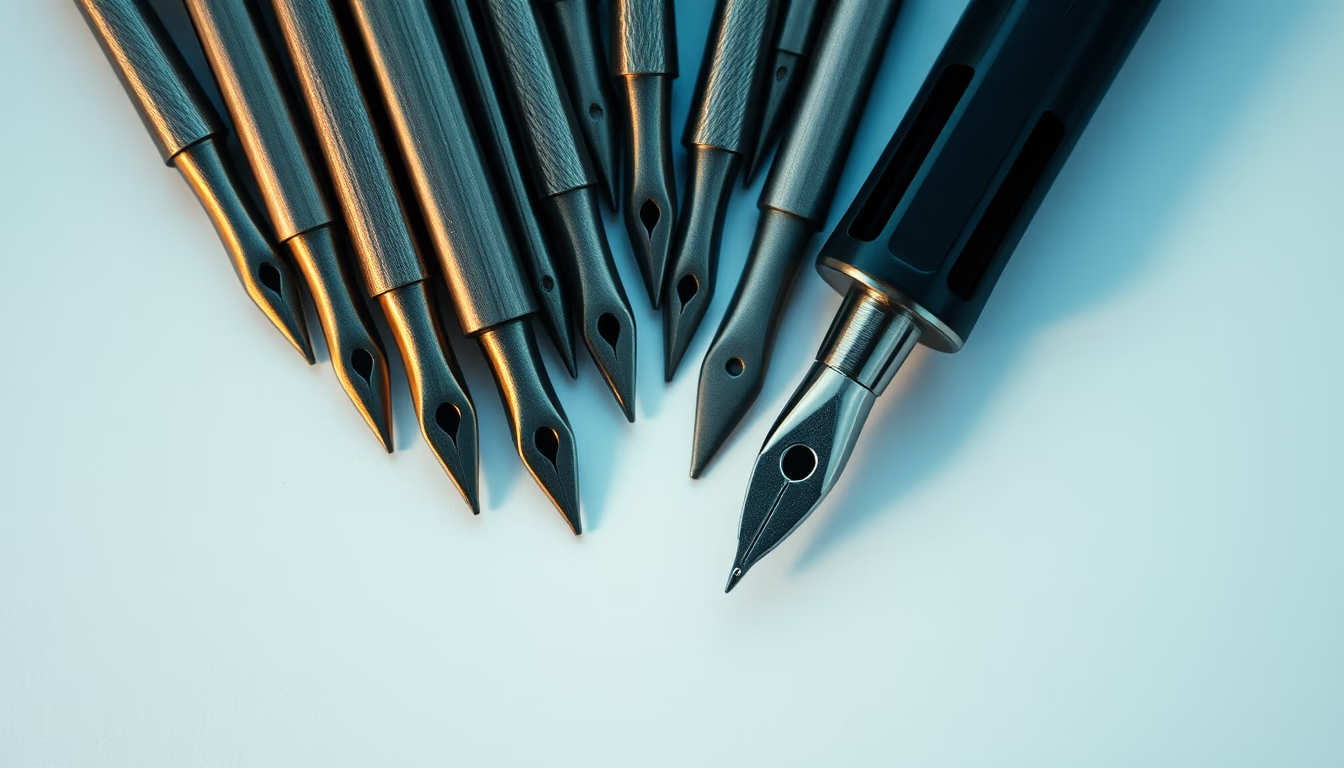
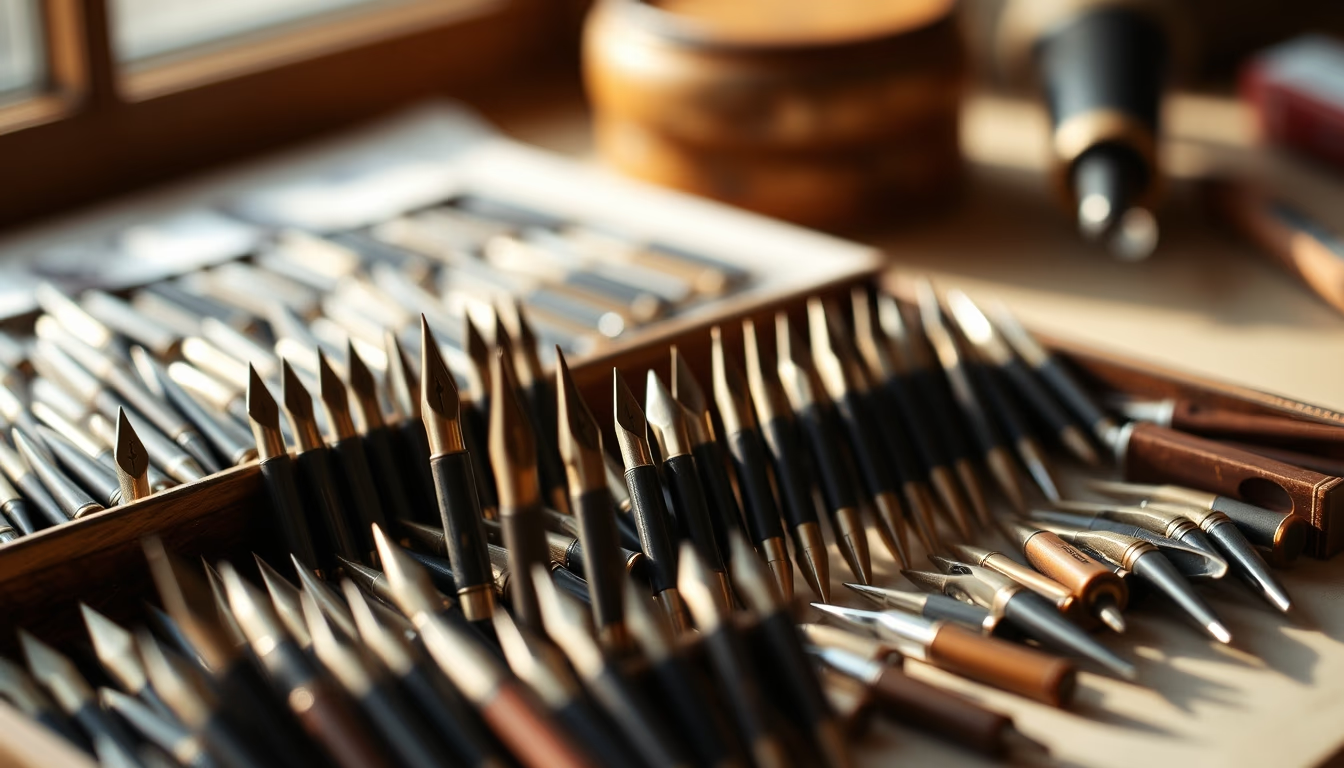
A collection of calligraphy nibs showcases the variety of shapes and materials used in the art of writing.
About this subject
Calligraphy nibs, also called nibs, are the metal tips that contact the paper and define the stroke. Traditionally made from steel, gold, or special alloys, they vary in flexibility, width, and shape, directly influencing the calligraphy style. Pointed nibs suit cursive scripts like Copperplate, while broad-edge nibs are used for Gothic and Italic scripts. The nib choice determines line thickness, ink flow, and response to hand movement.
The history of nibs dates back to ancient reed pens and bird feathers, but mass production of metal nibs in the 19th century revolutionized calligraphy. The invention of laminated steel and the press allowed durable, standardized tips, popularizing handwriting. Brands like Gillott, Hunt, and Brause became references, with models tailored to each technique. In the 20th century, the decline of everyday calligraphy was offset by an artistic revival, and nibs regained value among artists and designers.
Today, collecting nibs reveals a fascinating universe. There are left-handed and right-handed nibs, often oblique-cut for angle assistance. Flexible nibs enable pressure variation, creating contrast between hairlines and swells, while rigid nibs provide uniform strokes. Some models feature an ink reservoir, called reservoir nibs, extending writing without constant dipping. Maintenance is essential: rinse with water and dry after each use to prevent corrosion and clogging.
For beginners, a moderately flexible steel nib like the Nikko G or Brause Steno is recommended. Professionals may invest in gold nibs, offering greater durability and sensitivity. The diversity of nibs today reflects the richness of calligraphy as an expressive art, where every stroke is both a technical and aesthetic choice.
Frequently Asked Questions
What is the best calligraphy nib for beginners?
A moderately flexible steel nib like the Nikko G or Brause Steno is recommended. They offer a good balance of control and stroke variation.
How to clean calligraphy nibs properly?
Rinse the nib under running water after each use to remove ink residues. Dry with a soft cloth or paper towel. Avoid letting ink dry on the nib, as it can clog and corrode the metal.
What is the difference between pointed and broad-edge nibs?
Pointed nibs produce thin and thick lines depending on pressure, ideal for cursive scripts like Copperplate. Broad-edge nibs create uniform strokes with fixed width, used in Gothic and Italic styles.
Direct URL
https://pub-c7d6a6ea828543ac903a74a341ccb2e1.r2.dev/imagens/calligraphy-nibs-collection-aerial-drone-shot-fresh1.avifHow to credit
Include a visible link back to UtilizAí. Copy one of the snippets below:
<a href="https://xn--utiliza-eza.com/en/midia/imagens/calligraphy-nibs-collection-aerial-drone-shot-fresh1">Calligraphy nibs collection</a> by <a href="https://xn--utiliza-eza.com">UtilizAí</a>, licensed under <a href="https://creativecommons.org/licenses/by/4.0/">CC BY 4.0</a>.
[Calligraphy nibs collection](https://xn--utiliza-eza.com/en/midia/imagens/calligraphy-nibs-collection-aerial-drone-shot-fresh1) by [UtilizAí](https://xn--utiliza-eza.com), CC BY 4.0
License: CC-BY-4.0