Blockchain network visualization glowing nodes connected by lines on dark background
1344×768 · AVIF · CC BY 4.0

Abstract visualization of a blockchain network with glowing nodes and luminous connections on a dark background, representing decentralized infrastructure.
About this subject
Blockchain is a distributed ledger technology that originated as the backbone of Bitcoin in 2008, proposed by an entity under the pseudonym Satoshi Nakamoto. Unlike centralized databases, blockchain operates on a peer-to-peer network where each participant (node) maintains an identical copy of the ledger. Connections between nodes represent transactions validated by consensus mechanisms such as Proof of Work or Proof of Stake.
Each block in the chain contains a set of transactions, a timestamp, and a cryptographic hash of the previous block, ensuring immutability. The decentralized nature makes blockchain resistant to censorship and fraud, with applications beyond cryptocurrencies in supply chains, electronic voting, and smart contracts. Ethereum, for instance, popularized self-executing smart contracts.
In Brazil, blockchain technology has been explored by startups and financial institutions. The Central Bank of Brazil is developing Drex (Digital Real), a blockchain-based digital currency for interbank transactions. Additionally, initiatives like Serpro's digital certification platform use blockchain to guarantee document authenticity.
Visualizations like the one in the image are common in educational materials and corporate presentations to illustrate the complexity and security of blockchain networks. The symmetry and professional lighting in the representation convey order and reliability, contrasting with the initial skepticism about the technology.
Frequently Asked Questions
What is a node in a blockchain?
A node is any computer that maintains a full or partial copy of the blockchain ledger and participates in transaction validation. Each node is an active part of the network.
How are transactions validated on a blockchain?
Transactions are validated through consensus mechanisms like Proof of Work (mining) or Proof of Stake (staking), where nodes agree on the validity of transactions before adding them to a block.
Is blockchain secure?
Yes, security comes from decentralization and cryptography. Altering a block would require modifying all subsequent blocks on more than half of the nodes, which is computationally infeasible on large networks.
Direct URL
https://pub-c7d6a6ea828543ac903a74a341ccb2e1.r2.dev/imagens/blockchain-network-visualization-glowing-nodes-connected-by-lines-on-dark-backgr-symmetric-composition-studio-professional-lighting.avifHow to credit
Include a visible link back to UtilizAí. Copy one of the snippets below:
<a href="https://xn--utiliza-eza.com/en/midia/imagens/blockchain-network-visualization-glowing-nodes-connected-by-lines-on-dark-backgr-symmetric-composition-studio-professional-lighting">Blockchain network visualization glowing nodes connected by lines on dark background</a> by <a href="https://xn--utiliza-eza.com">UtilizAí</a>, licensed under <a href="https://creativecommons.org/licenses/by/4.0/">CC BY 4.0</a>.
[Blockchain network visualization glowing nodes connected by lines on dark background](https://xn--utiliza-eza.com/en/midia/imagens/blockchain-network-visualization-glowing-nodes-connected-by-lines-on-dark-backgr-symmetric-composition-studio-professional-lighting) by [UtilizAí](https://xn--utiliza-eza.com), CC BY 4.0
License: CC-BY-4.0
Tags
Related images
 Smart contract code on monitor with solidity syntax highlighted
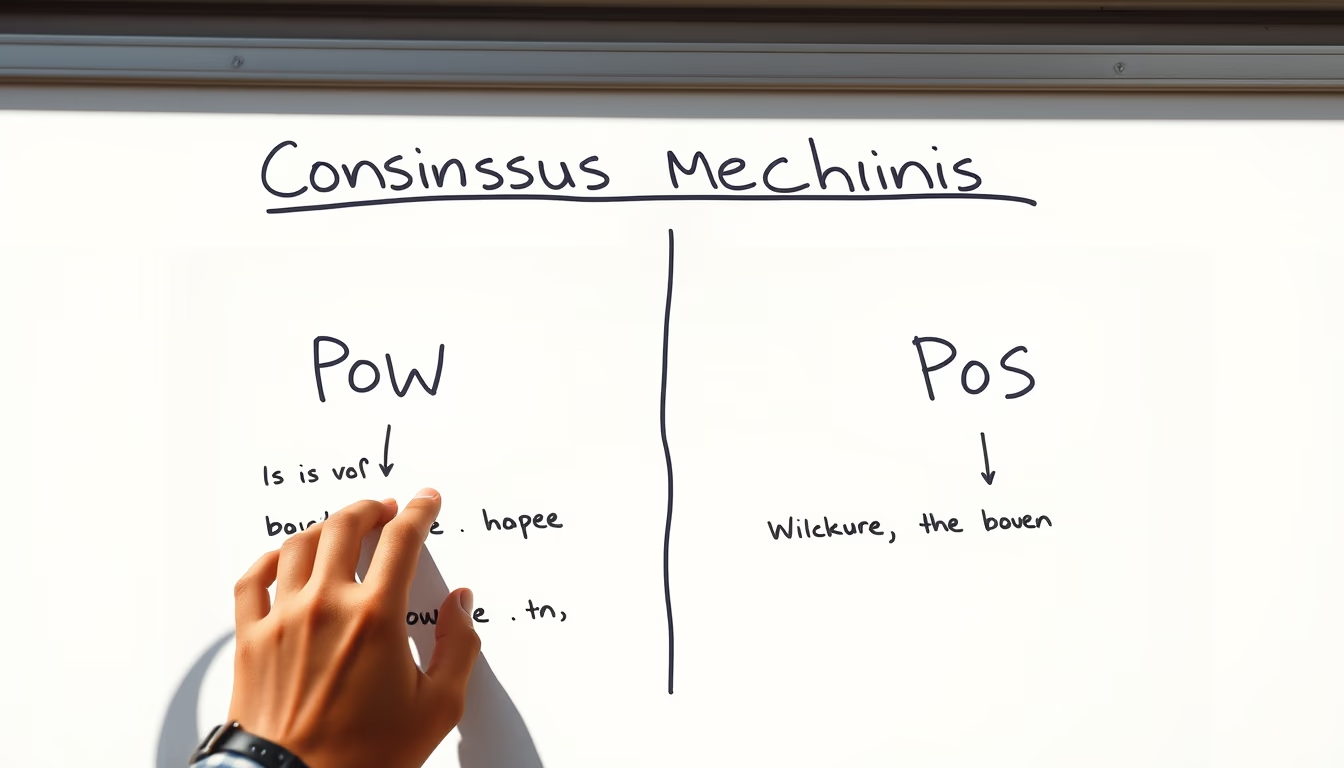 Consensus mechanism diagram on whiteboard showing PoW vs PoS
 Distributed ledger multiple servers in data center
 Hash function visualization cryptographic equations on glass screen
 Hash function visualization cryptographic equations on glass screen
 Hash function visualization cryptographic equations on glass screen