Blockchain network visualization glowing nodes connected by lines on dark background
1344×768 · AVIF · CC BY 4.0

Visualization of a blockchain network with glowing nodes and connections on a dark background, representing the decentralized infrastructure of cryptocurrencies and smart contracts.
About this subject
Blockchain technology, originally conceived for Bitcoin in 2008 by an entity under the pseudonym Satoshi Nakamoto, revolutionized how data is stored and transacted. A blockchain network consists of a chain of blocks, where each block contains a set of verified transactions. Nodes, represented as glowing points in the image, are computers that maintain a full or partial copy of the distributed ledger. These nodes communicate via a consensus protocol, such as Proof of Work (PoW) or Proof of Stake (PoS), ensuring data integrity and security.
In Brazil, blockchain adoption has grown in sectors like finance, agribusiness, and logistics. Companies such as the Brazilian startup OriginalMy use blockchain for document authentication, while the Central Bank of Brazil develops Drex, a digital currency that utilizes distributed ledger technology. Visualizations of blockchain networks are often used in educational materials and presentations to illustrate concepts like decentralization, immutability, and transparency.
The image shows a network with dozens of interconnected nodes, simulating the topology of a public blockchain like Ethereum or Solana. The lines represent peer-to-peer connections between nodes, through which information about transactions and blocks travels. The blue color and glow effects suggest activity and data flow, common in visualizations of active networks. Although the image is an artistic representation, it reflects the complexity and beauty of the underlying infrastructure behind cryptocurrencies and decentralized applications.
Frequently Asked Questions
What is a node in a blockchain network?
A node is a computer or server that maintains a copy of the blockchain's distributed ledger. It participates in validating and propagating transactions, ensuring the network's security and decentralization.
How do connections between nodes work?
Connections are established peer-to-peer, without a central server. Each node connects to several others, forming a mesh. Information is transmitted through these connections using protocols like the gossip protocol.
Why is decentralization important for blockchain?
Decentralization prevents a single entity from controlling the network, increasing security against censorship and fraud. It also allows anyone to participate as a node, promoting transparency and resilience.
Direct URL
https://pub-c7d6a6ea828543ac903a74a341ccb2e1.r2.dev/imagens/blockchain-network-visualization-glowing-nodes-connected-by-lines-on-dark-backgr-editorial-portrait-twilight-blue-hour.avifHow to credit
Include a visible link back to UtilizAí. Copy one of the snippets below:
<a href="https://xn--utiliza-eza.com/en/midia/imagens/blockchain-network-visualization-glowing-nodes-connected-by-lines-on-dark-backgr-editorial-portrait-twilight-blue-hour">Blockchain network visualization glowing nodes connected by lines on dark background</a> by <a href="https://xn--utiliza-eza.com">UtilizAí</a>, licensed under <a href="https://creativecommons.org/licenses/by/4.0/">CC BY 4.0</a>.
[Blockchain network visualization glowing nodes connected by lines on dark background](https://xn--utiliza-eza.com/en/midia/imagens/blockchain-network-visualization-glowing-nodes-connected-by-lines-on-dark-backgr-editorial-portrait-twilight-blue-hour) by [UtilizAí](https://xn--utiliza-eza.com), CC BY 4.0
License: CC-BY-4.0
Tags
Related images
 Smart contract code on monitor with solidity syntax highlighted
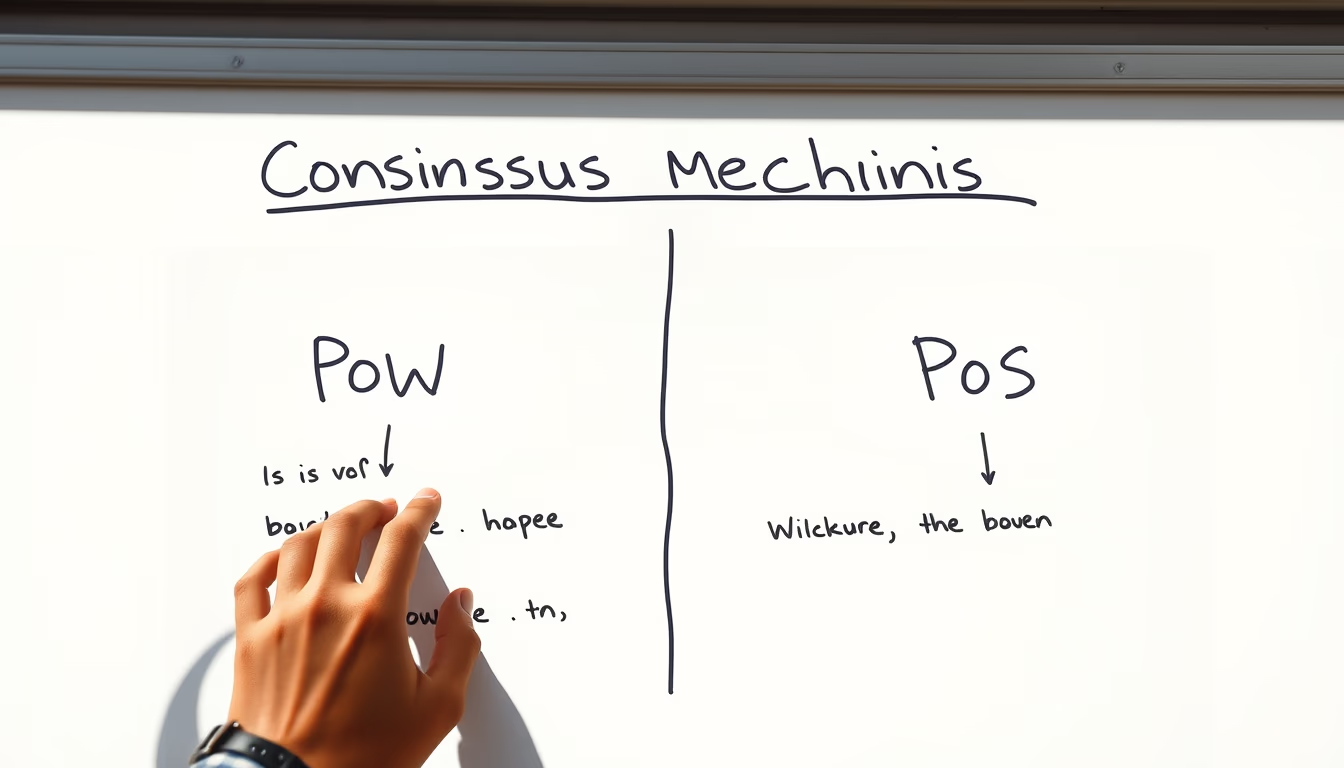 Consensus mechanism diagram on whiteboard showing PoW vs PoS
 Distributed ledger multiple servers in data center
 Hash function visualization cryptographic equations on glass screen
 Hash function visualization cryptographic equations on glass screen
 Hash function visualization cryptographic equations on glass screen