Blockchain network visualization glowing nodes connected by lines on dark background
1344×768 · AVIF · CC BY 4.0

Blockchain network visualization with glowing nodes and luminous connections on a dark background, representing the decentralized infrastructure of cryptocurrencies.
About this subject
Blockchain is the underlying technology of cryptocurrencies like Bitcoin and Ethereum, functioning as a distributed and immutable ledger. Each node in the network represents a computer that maintains a full copy of the blockchain, validating and recording transactions. The connecting lines symbolize peer-to-peer communications between nodes, essential for decentralized consensus.
Blockchain networks can be public, like Bitcoin's, or private, used in enterprise consortia. The visualization of glowing nodes on a dark background is common in graphical representations, highlighting the system's complexity and interconnection. Bitcoin, launched in 2009, was the first blockchain application, and thousands of other blockchains have since emerged.
Blockchain security relies on cryptography and consensus mechanisms. In Proof of Work (PoW), used by Bitcoin, miners compete to solve mathematical problems, consuming significant energy. Proof of Stake (PoS), adopted by Ethereum in 2022, reduces energy consumption by selecting validators based on the amount of cryptocurrency they hold. Decentralization makes blockchain resistant to censorship and fraud, but challenges like scalability and governance persist.
Beyond cryptocurrencies, blockchain is used in supply chains, electronic voting, smart contracts, and non-fungible tokens (NFTs). Companies like IBM and Microsoft offer blockchain solutions for traceability and automation. Brazil has initiatives such as a bill regulating cryptocurrencies and the use of blockchain in government systems.
Frequently Asked Questions
What is a node in a blockchain network?
A node is a computer connected to the blockchain network that maintains a full copy of the ledger and participates in transaction validation. More nodes mean a more decentralized and secure network.
How are transactions validated on the blockchain?
Transactions are grouped into blocks and validated by nodes through consensus mechanisms like Proof of Work or Proof of Stake. Once validated, the block is permanently added to the chain.
Is blockchain only used for cryptocurrencies?
No. Blockchain has applications in supply chains, smart contracts, electronic voting, property records, and NFTs, among others.
Direct URL
https://pub-c7d6a6ea828543ac903a74a341ccb2e1.r2.dev/imagens/blockchain-network-visualization-glowing-nodes-connected-by-lines-on-dark-backgr-closeup-macro-shot-golden-hour-late-afternoon.avifHow to credit
Include a visible link back to UtilizAí. Copy one of the snippets below:
<a href="https://xn--utiliza-eza.com/en/midia/imagens/blockchain-network-visualization-glowing-nodes-connected-by-lines-on-dark-backgr-closeup-macro-shot-golden-hour-late-afternoon">Blockchain network visualization glowing nodes connected by lines on dark background</a> by <a href="https://xn--utiliza-eza.com">UtilizAí</a>, licensed under <a href="https://creativecommons.org/licenses/by/4.0/">CC BY 4.0</a>.
[Blockchain network visualization glowing nodes connected by lines on dark background](https://xn--utiliza-eza.com/en/midia/imagens/blockchain-network-visualization-glowing-nodes-connected-by-lines-on-dark-backgr-closeup-macro-shot-golden-hour-late-afternoon) by [UtilizAí](https://xn--utiliza-eza.com), CC BY 4.0
License: CC-BY-4.0
Tags
Related images
 Smart contract code on monitor with solidity syntax highlighted
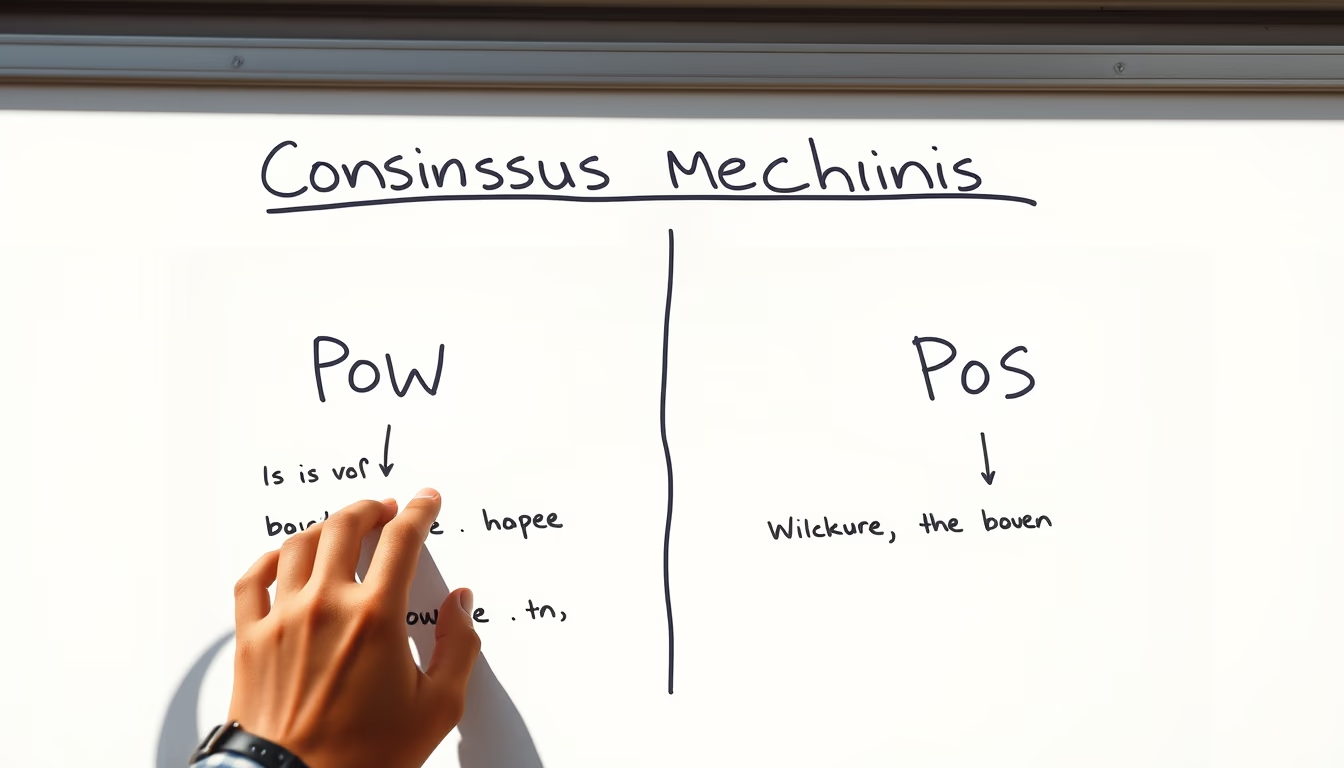 Consensus mechanism diagram on whiteboard showing PoW vs PoS
 Distributed ledger multiple servers in data center
 Hash function visualization cryptographic equations on glass screen
 Hash function visualization cryptographic equations on glass screen
 Hash function visualization cryptographic equations on glass screen