Blockchain network visualization glowing nodes connected by lines on dark background
1344×768 · AVIF · CC BY 4.0

Visualization of a blockchain network with glowing nodes and connections on a dark background, highlighting decentralized data interconnection.
About this subject
Blockchain is a distributed ledger technology that stores data in blocks interconnected by cryptography. Each block contains a set of transactions, a timestamp, and the hash of the previous block, forming an immutable chain. The visualization of glowing nodes represents network participants (nodes) that validate and record transactions. The larger the number of nodes, the more secure and decentralized the network becomes.
In Brazil, blockchain has gained prominence in sectors such as finance, agribusiness, and logistics. For example, the Brazilian blockchain platform for grain tracking allows verifying the origin and path of food, increasing transparency and consumer trust. Additionally, the Central Bank of Brazil is developing the Digital Real, a digital currency that uses blockchain technology.
Interestingly, the first practical application of blockchain was Bitcoin, created in 2009 by Satoshi Nakamoto. Since then, the technology has evolved into smart contracts (Ethereum), non-fungible tokens (NFTs), and digital identity systems. The visualization of connections between nodes symbolizes distributed consensus, where each node maintains a copy of the ledger, ensuring that no central entity controls the data.
The choice of a dark background and glowing nodes in the image reflects the common aesthetic in blockchain representations, emphasizing the clarity and security of the network. This visual metaphor helps communicate technical complexity in an accessible way, showing how data flows transparently and reliably among participants.
Frequently Asked Questions
What are nodes in a blockchain network?
Nodes are computers or servers that maintain a complete copy of the blockchain ledger. They validate and propagate transactions, ensuring the network's integrity and decentralization.
How does blockchain ensure data security?
Security comes from cryptography and distributed consensus. Each block is linked to the previous one by a hash, and altering a block would require modifying all subsequent blocks, which is computationally infeasible.
What are the applications of blockchain beyond cryptocurrencies?
Blockchain is used in smart contracts, supply chain tracking, digital identity, electronic voting, healthcare systems, and property registration, among others.
Direct URL
https://pub-c7d6a6ea828543ac903a74a341ccb2e1.r2.dev/imagens/blockchain-network-visualization-glowing-nodes-connected-by-lines-on-dark-backgr-cinematic-wide-shot-bright-midday-sun.avifHow to credit
Include a visible link back to UtilizAí. Copy one of the snippets below:
<a href="https://xn--utiliza-eza.com/en/midia/imagens/blockchain-network-visualization-glowing-nodes-connected-by-lines-on-dark-backgr-cinematic-wide-shot-bright-midday-sun">Blockchain network visualization glowing nodes connected by lines on dark background</a> by <a href="https://xn--utiliza-eza.com">UtilizAí</a>, licensed under <a href="https://creativecommons.org/licenses/by/4.0/">CC BY 4.0</a>.
[Blockchain network visualization glowing nodes connected by lines on dark background](https://xn--utiliza-eza.com/en/midia/imagens/blockchain-network-visualization-glowing-nodes-connected-by-lines-on-dark-backgr-cinematic-wide-shot-bright-midday-sun) by [UtilizAí](https://xn--utiliza-eza.com), CC BY 4.0
License: CC-BY-4.0
Tags
Related images
 Smart contract code on monitor with solidity syntax highlighted
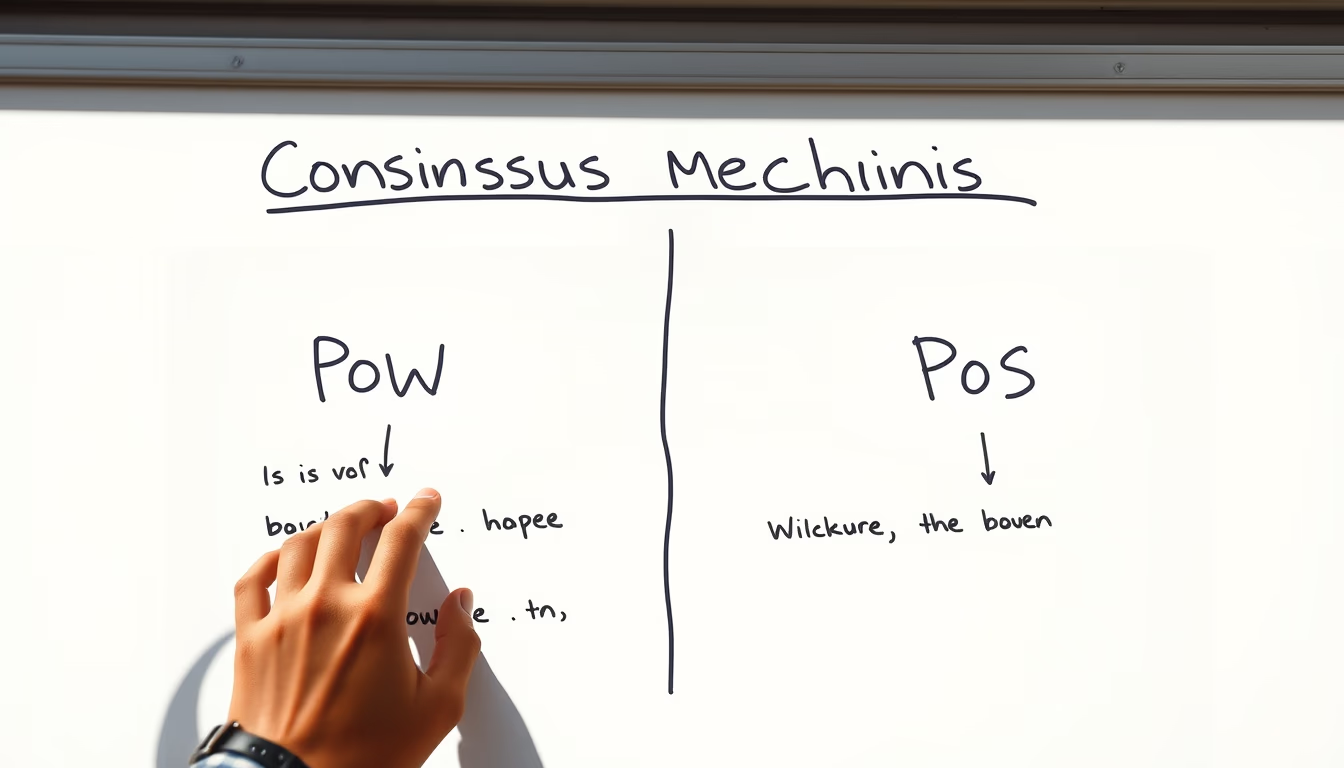 Consensus mechanism diagram on whiteboard showing PoW vs PoS
 Distributed ledger multiple servers in data center
 Hash function visualization cryptographic equations on glass screen
 Hash function visualization cryptographic equations on glass screen
 Hash function visualization cryptographic equations on glass screen