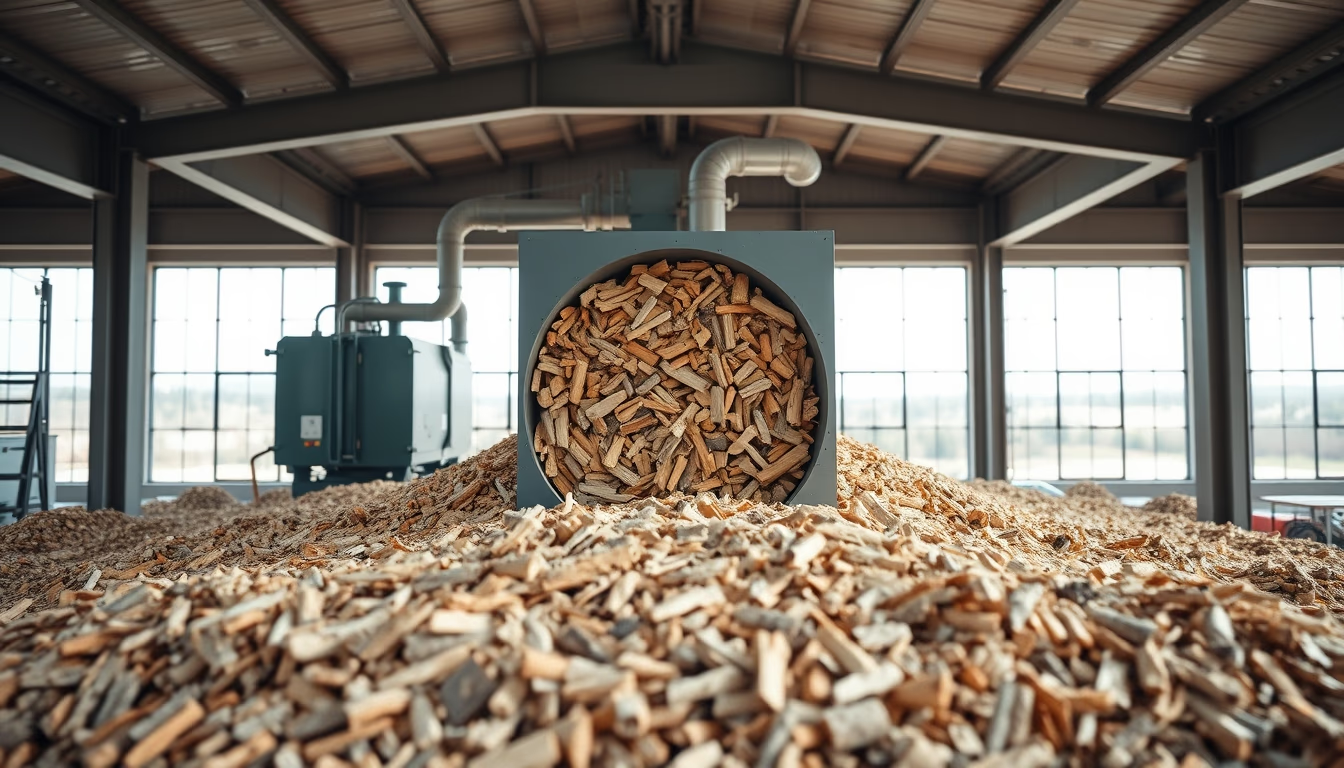
Biomass plant wood chips
1344×768 · AVIF · CC BY 4.0
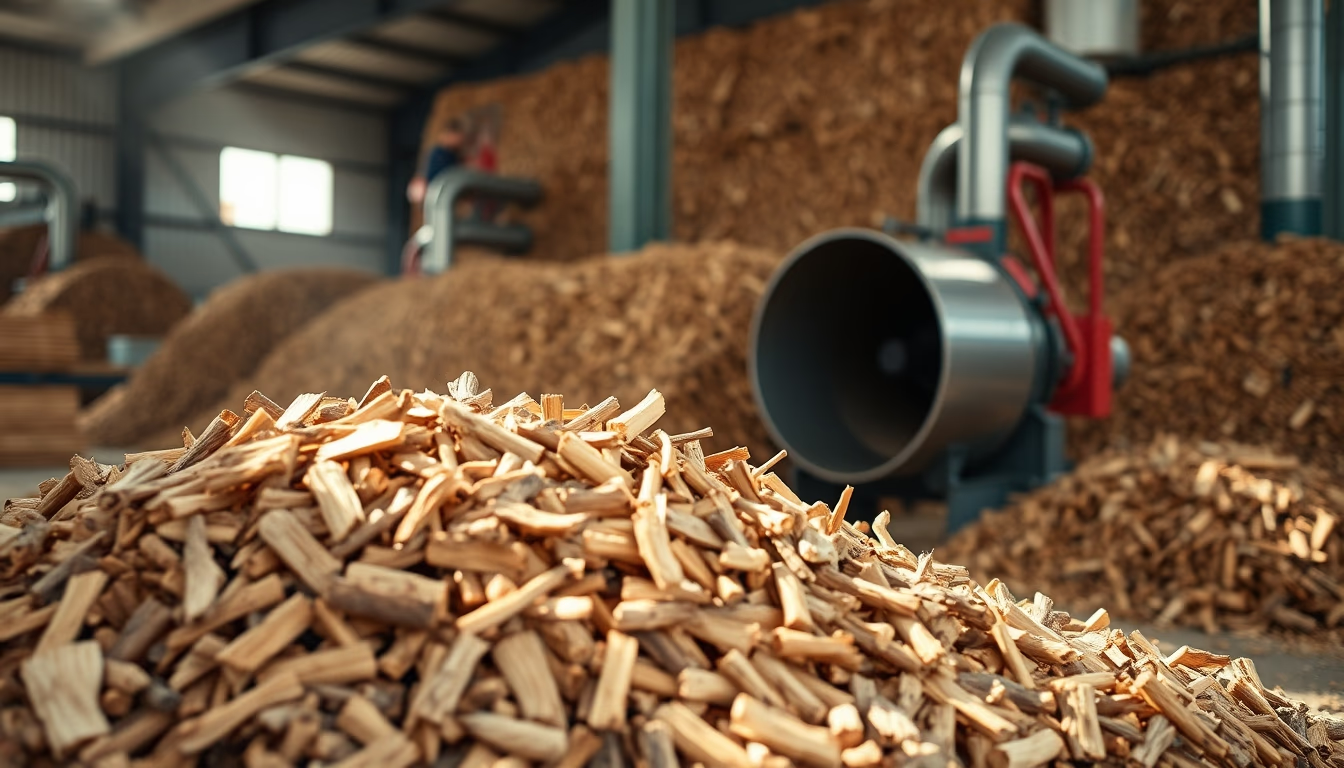
Biomass power plants use wood chips as a renewable fuel for electricity and heat generation, with low environmental impact.
About this subject
Wood chips are small pieces of wood typically sourced from forest residues or dedicated plantations such as eucalyptus and pine. In Brazil, forest biomass accounts for about 8 GW of installed capacity in thermoelectric plants, according to data from the Brazilian Electricity Regulatory Agency (ANEEL). These plants burn the chips in boilers to produce steam that drives turbines generating electricity. The process is considered carbon neutral because the CO2 released during combustion equals the amount absorbed by tree growth, provided replanting and sustainable management are practiced.
Unlike coal, wood biomass emits less sulfur and mercury, reducing air pollution. Moreover, combustion ashes can be reused as fertilizer in agriculture, closing the nutrient cycle. Globally, countries like Sweden and Finland are leaders in using wood chips for cogeneration, while Brazil’s largest units are located in Mato Grosso do Sul, São Paulo, and Paraná states, where the pulp and paper industry generates large amounts of residues.
Logistics of wood chips pose a challenge: truck transport is costly, and moisture content must be below 30% for efficiency. Therefore, plants are often located close to the raw material sources. Modern technologies such as gasification and co-combustion with coal expand the energy potential. Although not a complete substitute for the predominant hydroelectric power in Brazil, wood biomass is a flexible and decentralized alternative, especially in regions without grid access.
Frequently Asked Questions
Are wood chips considered a renewable energy source?
Yes, as long as they come from sustainably managed forests with continuous replanting. The CO2 emitted during combustion is reabsorbed by new trees, making the cycle carbon neutral.
What is the difference between wood biomass and coal?
Wood biomass emits fewer pollutants like sulfur and heavy metals. It is renewable and its ash can be used as fertilizer, while coal is fossil-based and contributes to global warming.
What are the main logistical challenges of wood chip power plants?
Transporting wood chips by truck is expensive, and moisture content must be controlled for efficiency. Therefore, plants need to be located near raw material sources, such as pulp mills or forest plantations.
Direct URL
https://pub-c7d6a6ea828543ac903a74a341ccb2e1.r2.dev/imagens/biomass-plant-wood-chips-magazine-editorial-p0.avifHow to credit
Include a visible link back to UtilizAí. Copy one of the snippets below:
<a href="https://xn--utiliza-eza.com/en/midia/imagens/biomass-plant-wood-chips-magazine-editorial-p0">Biomass plant wood chips</a> by <a href="https://xn--utiliza-eza.com">UtilizAí</a>, licensed under <a href="https://creativecommons.org/licenses/by/4.0/">CC BY 4.0</a>.
[Biomass plant wood chips](https://xn--utiliza-eza.com/en/midia/imagens/biomass-plant-wood-chips-magazine-editorial-p0) by [UtilizAí](https://xn--utiliza-eza.com), CC BY 4.0
License: CC-BY-4.0