Basalt columnar formations
1344×768 · AVIF · CC BY 4.0

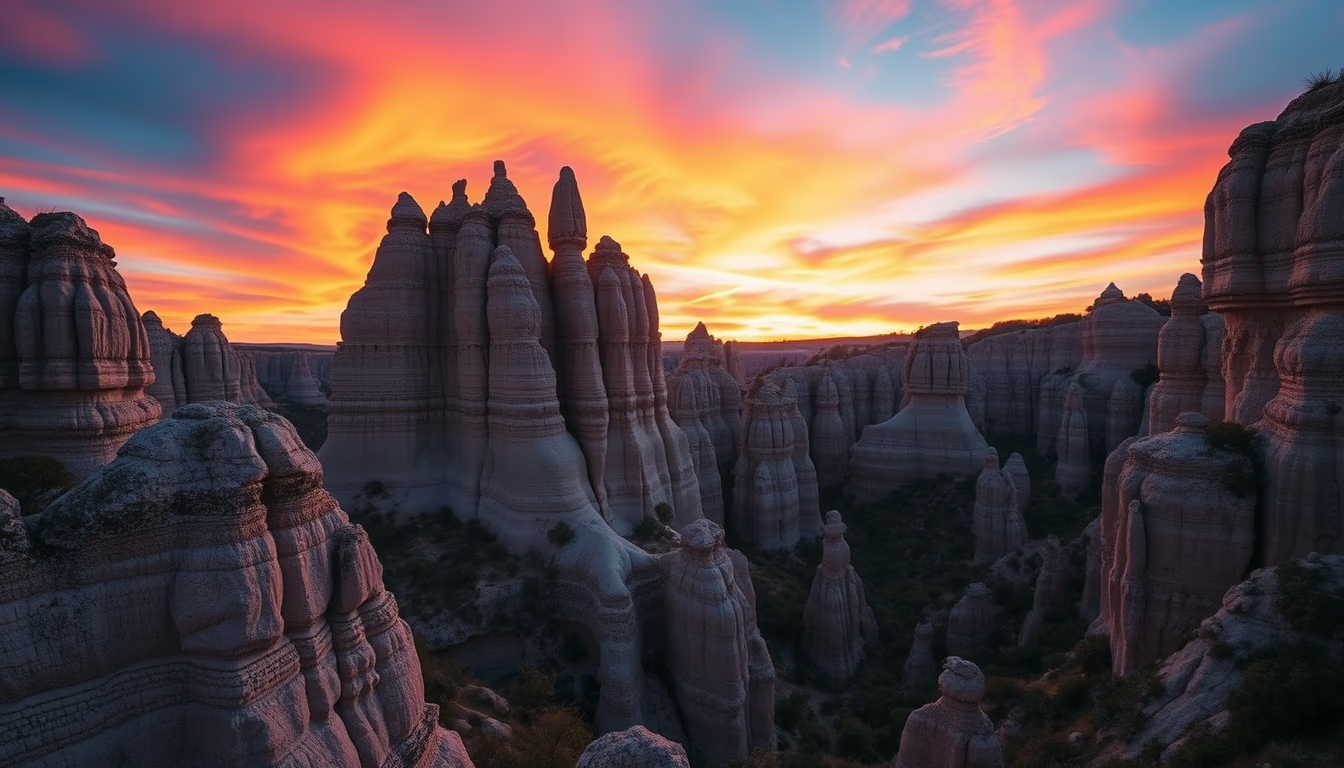
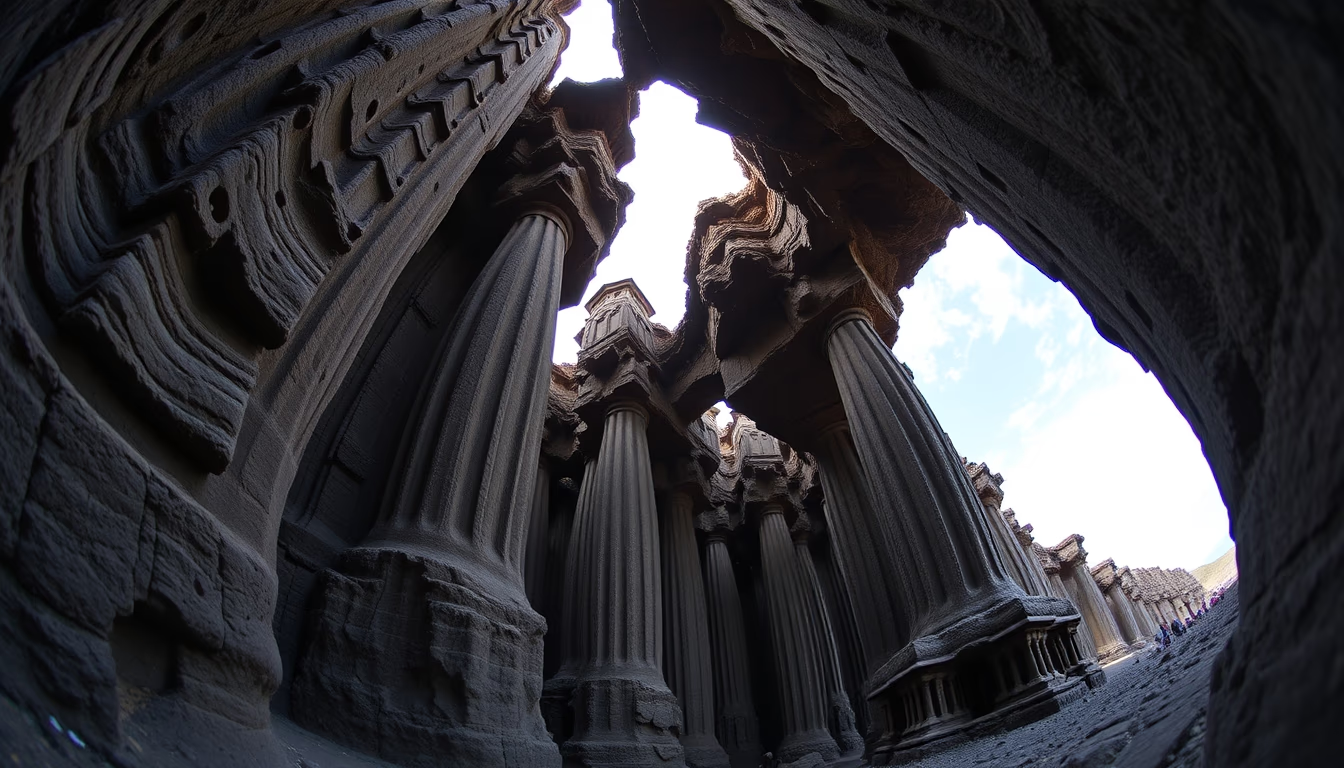
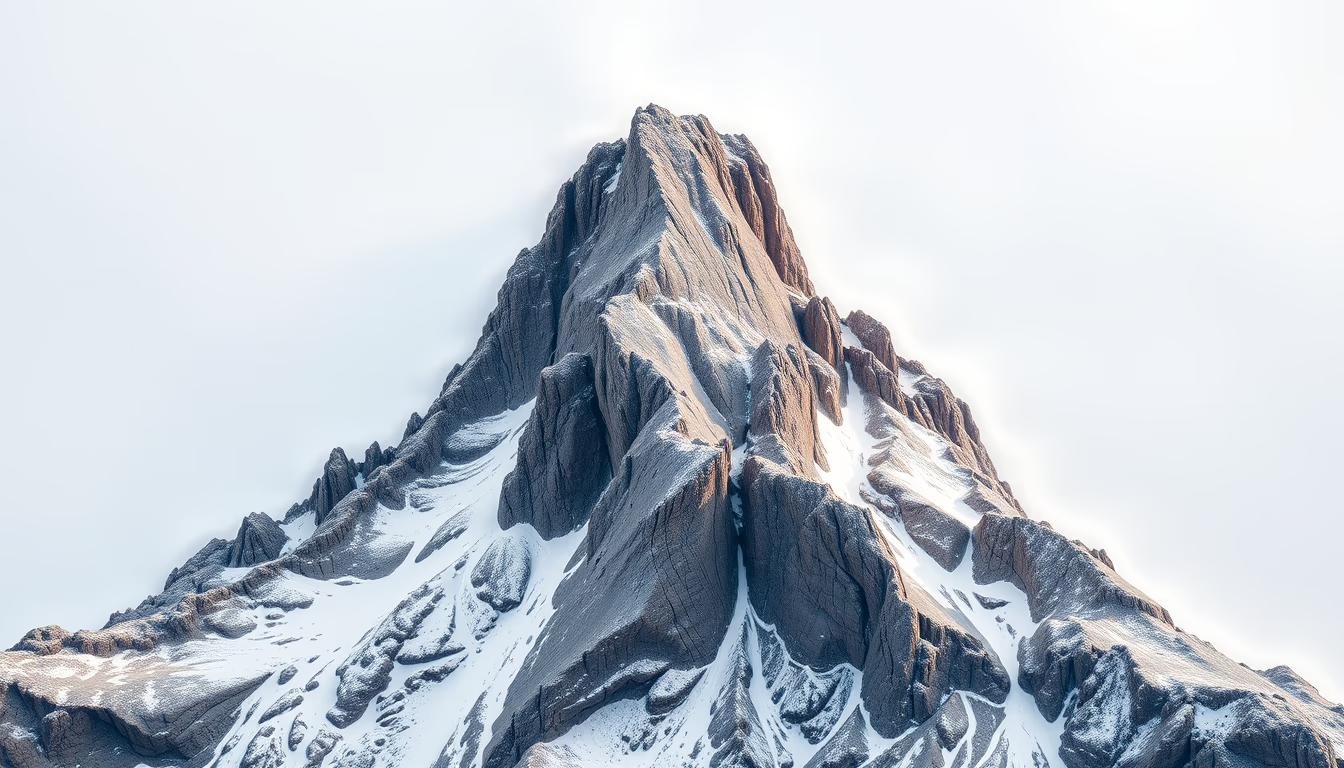
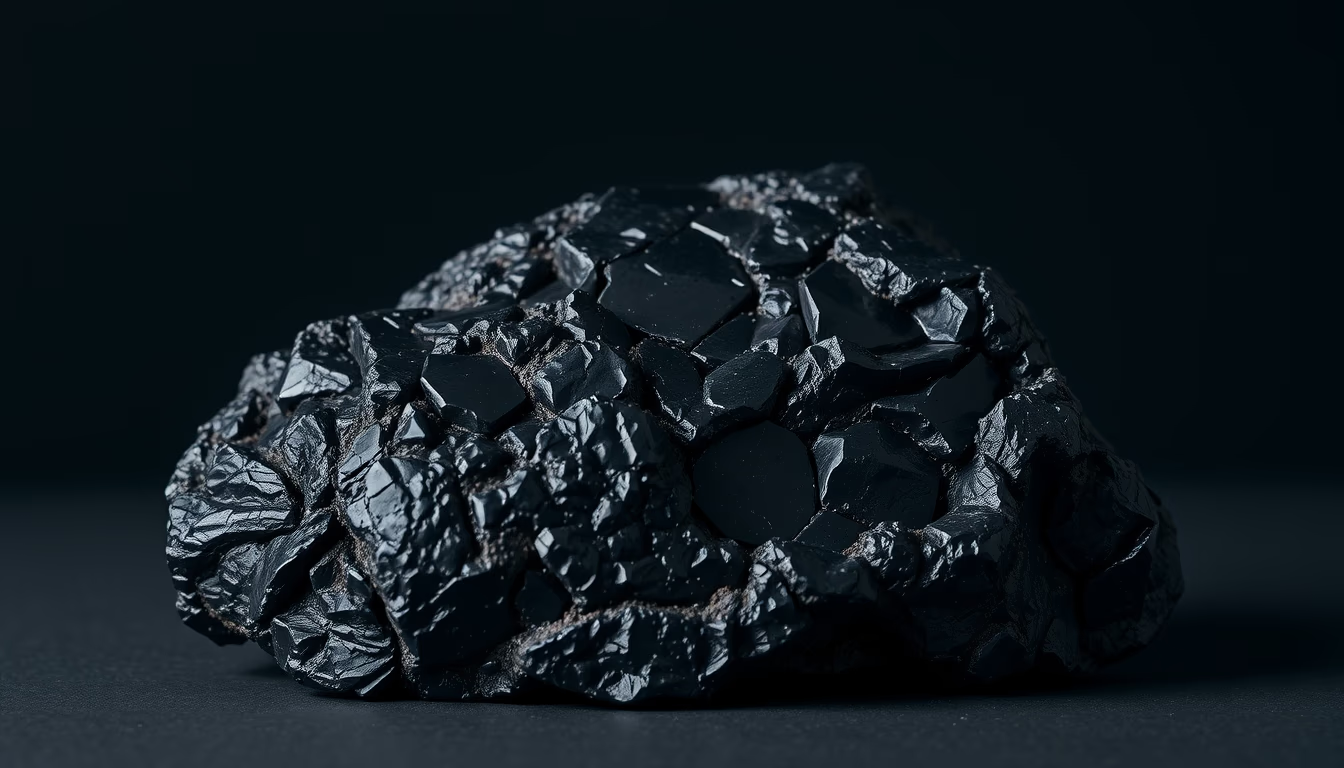
Basalt columnar formations are stunning geological structures formed by the slow cooling of volcanic lava. Discover their features, famous examples, and scientific significance.
About this subject
Basalt columnar formations are a captivating geological phenomenon resulting from the cooling and contraction of basaltic lava flows, which produce polygonal pillars, most commonly hexagonal, but ranging from 4 to 8 sides. This process, called columnar jointing, occurs as lava cools uniformly and internal stresses cause cracks perpendicular to the cooling surface. Column heights vary from a few centimeters to tens of meters, as seen at the Giant's Causeway in Northern Ireland, with about 40,000 basalt columns, or the Devil's Postpile in California, USA.
The most famous example is the Giant's Causeway, a UNESCO World Heritage Site on the Antrim coast. Legend says it was built by an Irish giant to fight a Scottish rival. Geologically, it formed about 50 to 60 million years ago during the Paleogene, when intense volcanic activity covered the region with lava. Other notable sites include Grimsvötn in Iceland, Torres del Paine in Chile, and the Organ Pipes in Namibia. In Brazil, occurrences are found in the South and Southeast regions, such as in Vila Velha State Park in Paraná and Serra Geral in Santa Catarina, linked to the Paraná Basin volcanism.
Beyond their aesthetic appeal, these formations are scientifically important for understanding ancient volcanic processes and Earth's geological history. They also aid in fracture mechanics studies. Culturally, they inspire art, literature, and geotourism. Due to their resistance to erosion, they often create dramatic landscapes and support unique ecosystems. Preserving these natural monuments is vital for research and recreation.
Frequently Asked Questions
How do basalt columns form?
They form when basaltic lava cools slowly and contracts, creating fractures that produce polygonal pillars, usually hexagonal. Uniform cooling causes internal stresses leading to columnar joints.
Where are the most famous basalt column formations?
The Giant's Causeway in Northern Ireland is the most iconic. Other notable sites include Devil's Postpile in the USA, the Devil's Columns in California, and Torres del Paine in Chile. In Brazil, Vila Velha State Park (PR) and Serra Geral (SC) are well-known.
What is the scientific importance of these formations?
They help understand ancient volcanic processes, Earth's geological history, and fracture mechanics in materials. They also serve as markers of large-scale volcanic events.
Direct URL
https://pub-c7d6a6ea828543ac903a74a341ccb2e1.r2.dev/imagens/basalt-columnar-formations-studio-still-life-fresh15.avifHow to credit
Include a visible link back to UtilizAí. Copy one of the snippets below:
<a href="https://xn--utiliza-eza.com/en/midia/imagens/basalt-columnar-formations-studio-still-life-fresh15">Basalt columnar formations</a> by <a href="https://xn--utiliza-eza.com">UtilizAí</a>, licensed under <a href="https://creativecommons.org/licenses/by/4.0/">CC BY 4.0</a>.
[Basalt columnar formations](https://xn--utiliza-eza.com/en/midia/imagens/basalt-columnar-formations-studio-still-life-fresh15) by [UtilizAí](https://xn--utiliza-eza.com), CC BY 4.0
License: CC-BY-4.0