Baobab tree madagascar
1344×768 · AVIF · CC BY 4.0
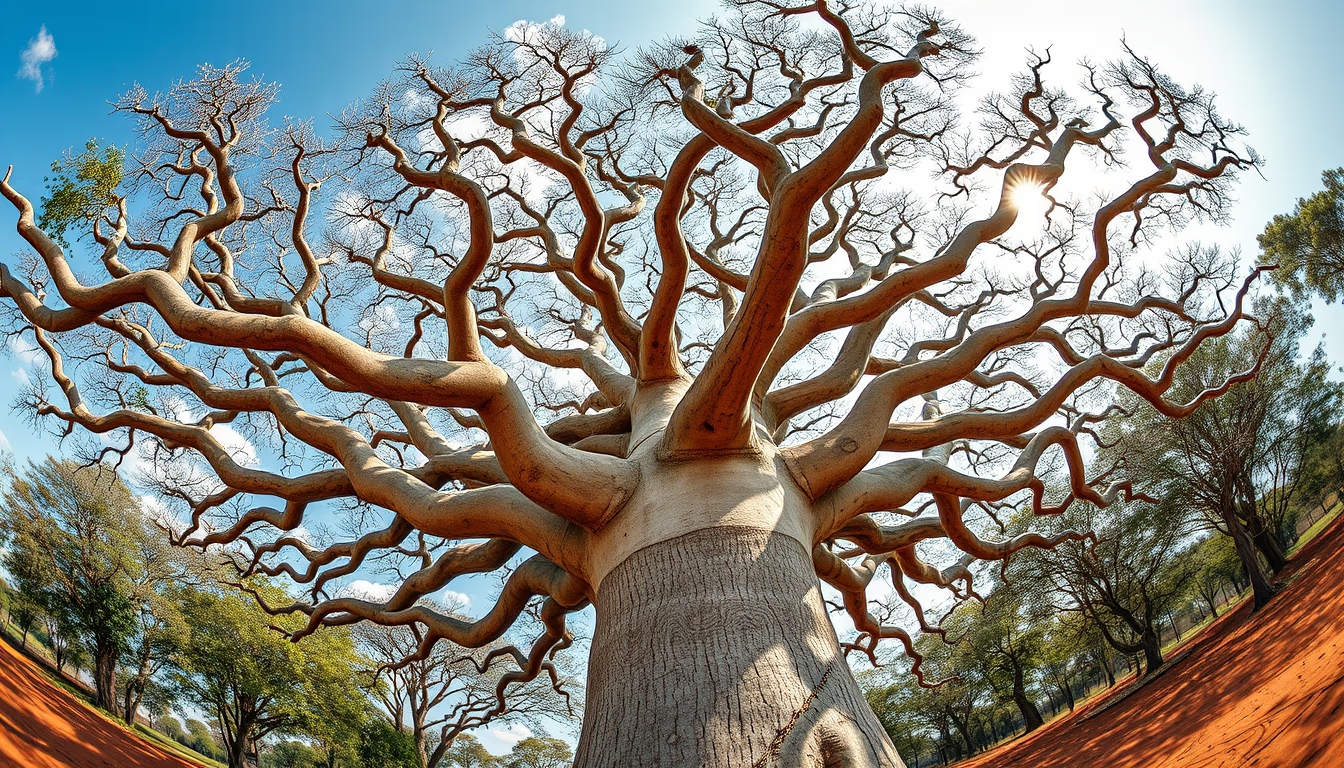
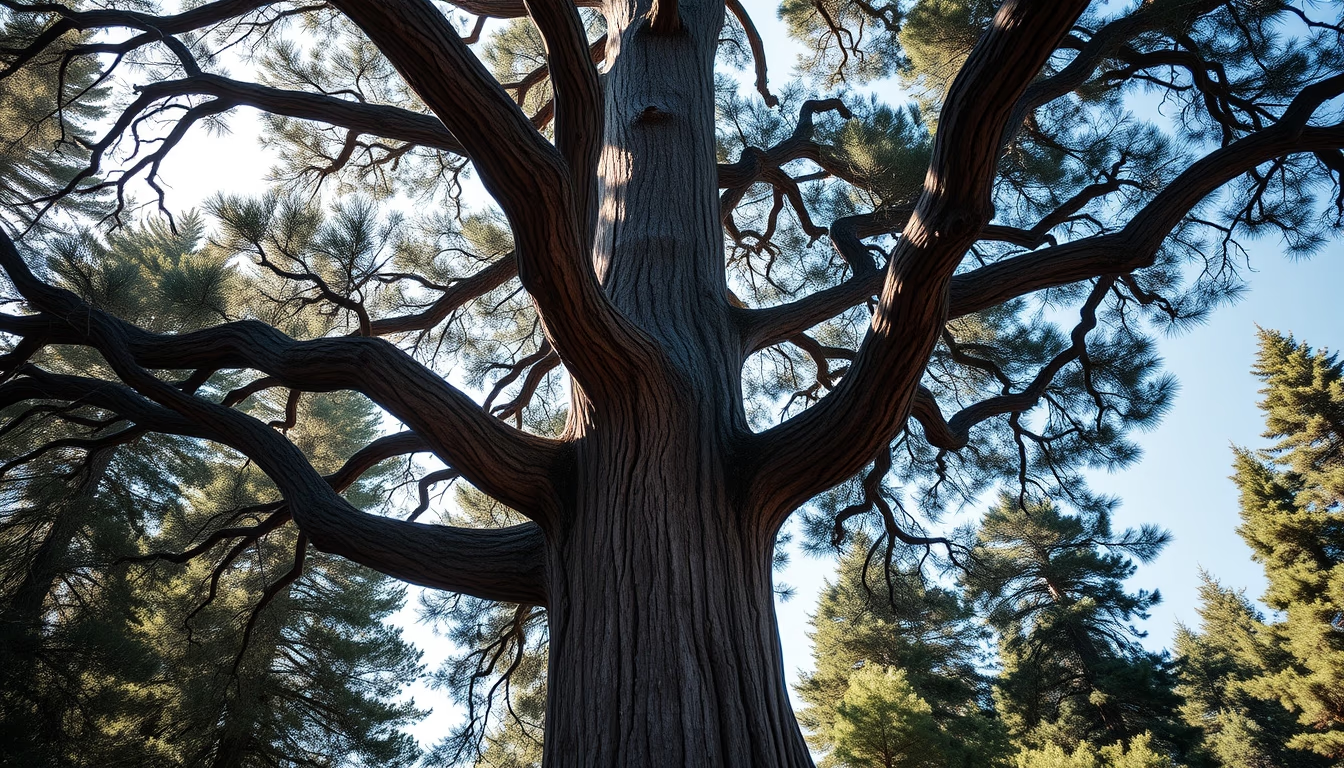
The baobabs of Madagascar are iconic trees that store water in their trunks and can live for thousands of years, with six species endemic to the island.
About this subject
Baobabs belong to the genus Adansonia, which includes eight species worldwide, six of which are endemic to Madagascar. These surreal-looking trees, often called 'upside-down trees' because their branches resemble roots, are a symbol of the Malagasy landscape. The best-known species is Adansonia grandidieri, which forms the iconic Avenue of the Baobabs near Morondava. These giants can reach 30 meters in height and 10 meters in trunk diameter.
Culturally, baobabs are considered sacred by many local communities. They are believed to house ancestral spirits, and their bark and fruit are used in traditional medicine. The fruit, known as 'monkey bread' for its high vitamin C content, is also eaten and exported as a superfood. Ecologically, their swollen trunks act as natural water reservoirs, vital for wildlife during the dry season.
Despite their resilience, baobabs face threats. Climate change brings more intense droughts, and deforestation for agriculture reduces their habitat. Two-thirds of Madagascar's baobab forests have already disappeared. The oldest trees are estimated to be over 2,000 years old, but natural regeneration is slow. Conservation efforts, such as planting seedlings and protecting the Avenue of the Baobabs, aim to preserve these living monuments for future generations.
Frequently Asked Questions
How many baobab species are found in Madagascar?
There are six baobab species endemic to Madagascar: Adansonia grandidieri, A. suarezensis, A. za, A. rubrostipa, A. madagascariensis, and A. perrieri.
Where is the Avenue of the Baobabs located?
The Avenue of the Baobabs is located in the Menabe region, near the city of Morondava in western Madagascar.
Why are baobabs called upside-down trees?
Local folklore says gods planted baobabs upside down because their bare branches resemble roots. During the dry season, they lose their leaves, reinforcing this appearance.
Direct URL
https://pub-c7d6a6ea828543ac903a74a341ccb2e1.r2.dev/imagens/baobab-tree-madagascar-fish-eye-wide-angle-p1.avifHow to credit
Include a visible link back to UtilizAí. Copy one of the snippets below:
<a href="https://xn--utiliza-eza.com/en/midia/imagens/baobab-tree-madagascar-fish-eye-wide-angle-p1">Baobab tree madagascar</a> by <a href="https://xn--utiliza-eza.com">UtilizAí</a>, licensed under <a href="https://creativecommons.org/licenses/by/4.0/">CC BY 4.0</a>.
[Baobab tree madagascar](https://xn--utiliza-eza.com/en/midia/imagens/baobab-tree-madagascar-fish-eye-wide-angle-p1) by [UtilizAí](https://xn--utiliza-eza.com), CC BY 4.0
License: CC-BY-4.0