Badlands south dakota
1344×768 · AVIF · CC BY 4.0

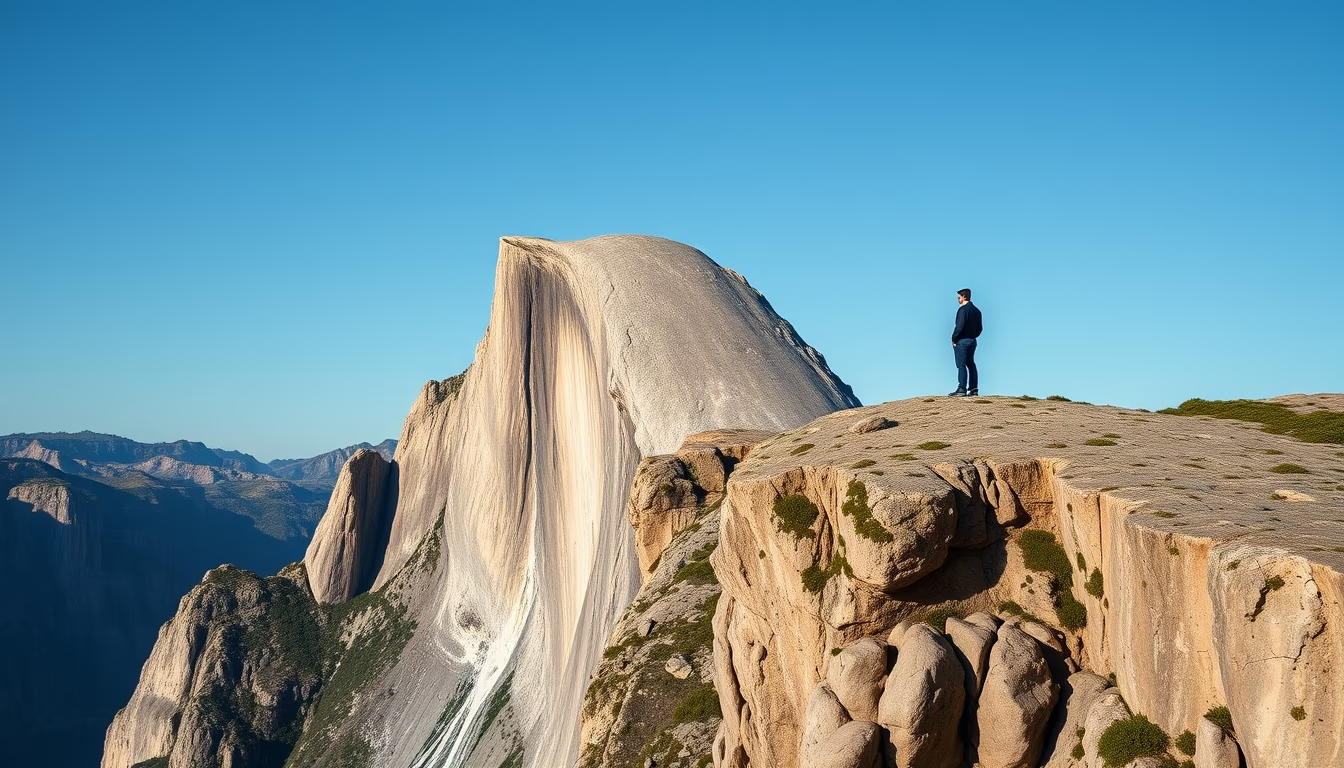
The Badlands of South Dakota are an arid, eroded landscape famous for colorful rock layers and Oligocene fossils.
About this subject
The Badlands of South Dakota, located in the southwestern part of the state, form a national park that preserves one of the richest fossil sequences from the Oligocene epoch (about 33 to 23 million years ago). The area was once a seabed, then an alluvial plain, and continuous erosion exposes layers of mudstone, sandstone, and volcanic ash, creating a landscape of spires, canyons, and colorful hills in shades of red, orange, yellow, and gray. The name "Badlands" comes from the Lakota people, who called the area "mako sica" (bad lands), and from early French trappers who termed it "mauvaises terres à traverser" (bad lands to cross).
The park holds fossils of prehistoric animals such as the brontothere (a primitive rhino), the oreodont (a pig-like mammal), and the saber-tooth tiger. Over 40 species of fossil mammals have been identified, making the Badlands one of North America's most important paleontological sites. Additionally, the area is habitat for modern species like the prairie dog, black-footed ferret, and bison. The national park was established in 1978, but the area had been a national monument since 1939.
The climate is semi-arid, with hot, dry summers and cold winters. Sudden storms can cause flash floods that continue carving the landscape. The most famous formation is the Wall, a steep escarpment stretching over 160 km. Visitors can drive the Badlands Loop Road, a 63 km scenic highway offering spectacular views and trail access. The region also holds cultural significance for the Lakota, whose traditional lands include part of the park.
Frequently Asked Questions
What causes the colors in the Badlands rock layers?
The vibrant colors come from different minerals and organic matter in the sediments: reds and oranges from iron oxide, yellows from limonite, grays from clay and carbonates, and dark tones from organic matter or manganese.
Can you find fossils in Badlands National Park?
Yes, fossils are abundant, but collecting is prohibited. Visitors can see exhibits at the Ben Reifel Visitor Center and join guided programs with paleontologists.
What is the best time to visit the Badlands?
Spring (April to May) and fall (September to October) offer mild temperatures. Summers are very hot, and winters bring snow and strong winds.
Direct URL
https://pub-c7d6a6ea828543ac903a74a341ccb2e1.r2.dev/imagens/badlands-south-dakota-documentary-photography-p9.avifHow to credit
Include a visible link back to UtilizAí. Copy one of the snippets below:
<a href="https://xn--utiliza-eza.com/en/midia/imagens/badlands-south-dakota-documentary-photography-p9">Badlands south dakota</a> by <a href="https://xn--utiliza-eza.com">UtilizAí</a>, licensed under <a href="https://creativecommons.org/licenses/by/4.0/">CC BY 4.0</a>.
[Badlands south dakota](https://xn--utiliza-eza.com/en/midia/imagens/badlands-south-dakota-documentary-photography-p9) by [UtilizAí](https://xn--utiliza-eza.com), CC BY 4.0
License: CC-BY-4.0