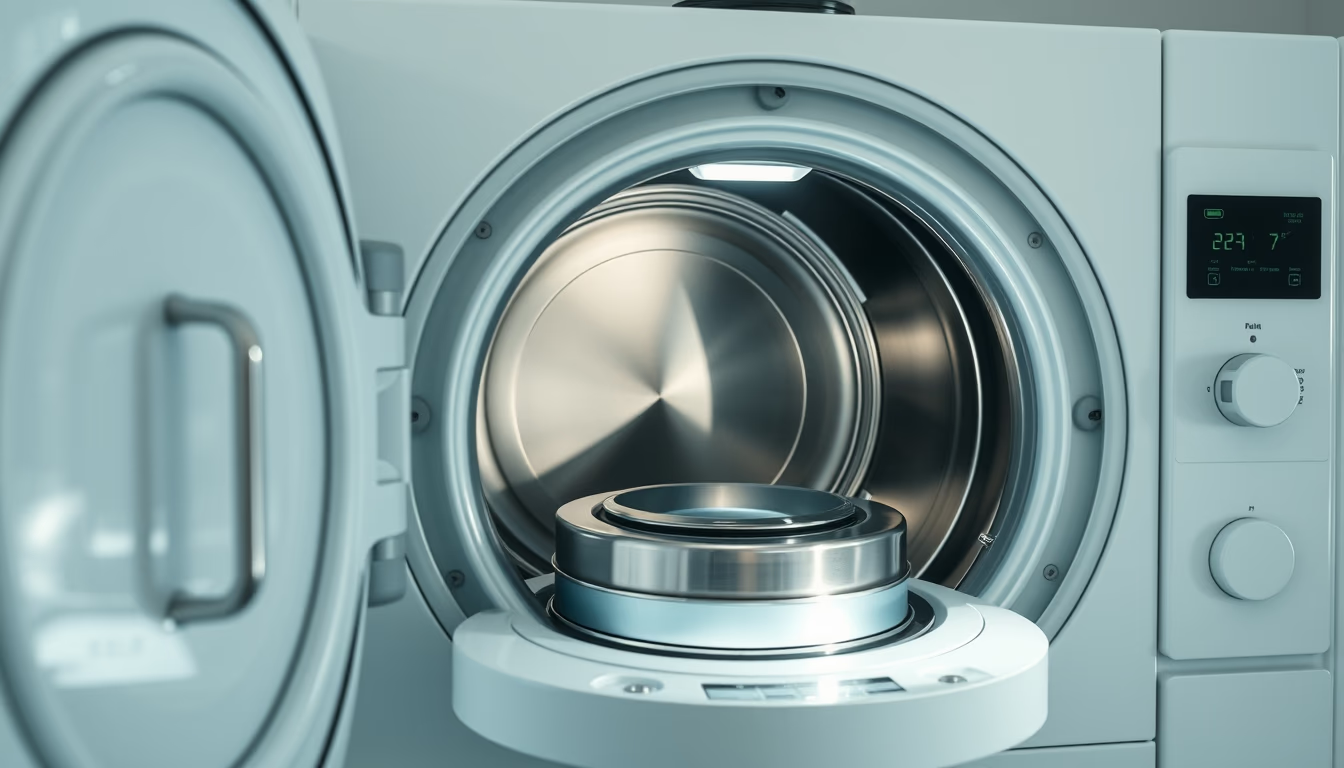
Autoclave sterilizer
1344×768 · AVIF · CC BY 4.0
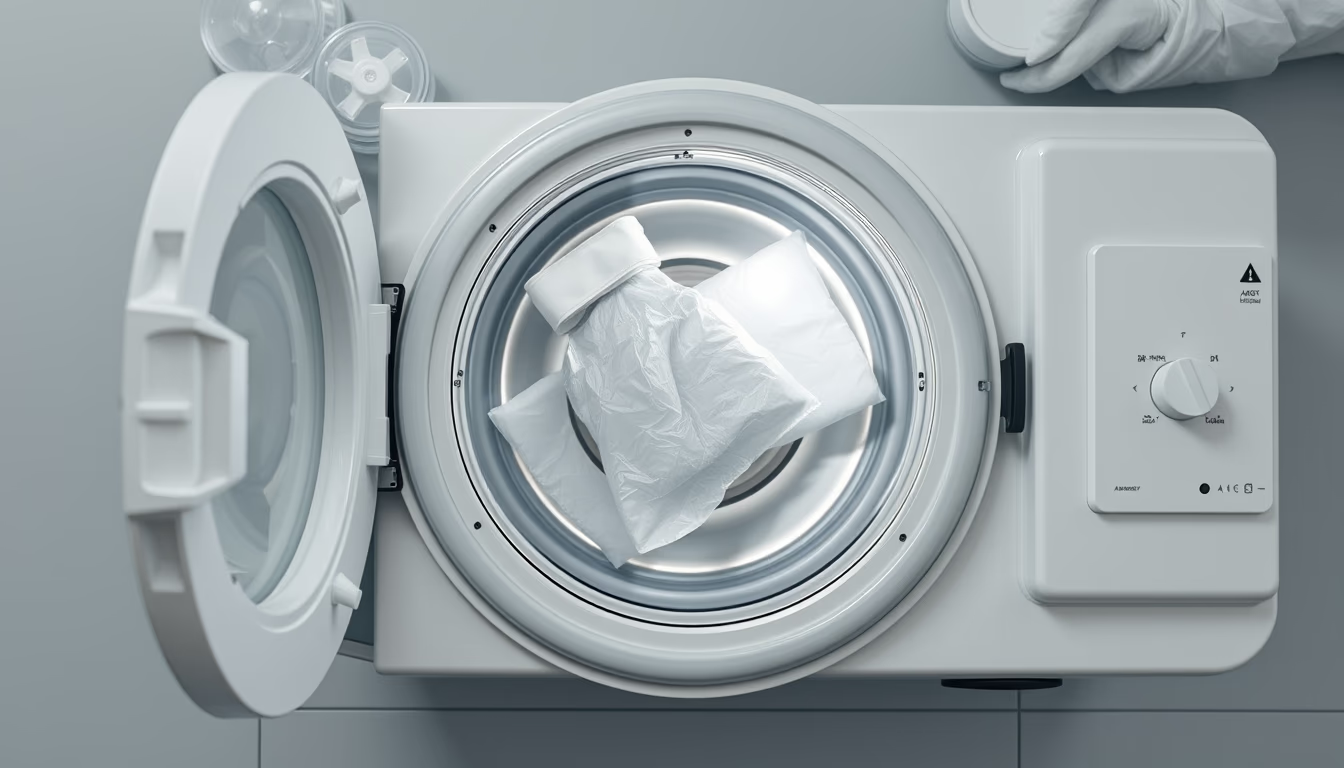
The autoclave is essential equipment for steam sterilization under pressure, widely used in laboratories, hospitals, and industries.
About this subject
An autoclave is a device that uses pressurized steam at high temperatures (typically 121°C or 134°C) to kill microorganisms, including bacterial spores. Invented in 1879 by French microbiologist Charles Chamberland, a collaborator of Louis Pasteur, the autoclave revolutionized asepsis in medicine and scientific research. The operating principle involves heating water to generate saturated steam, which penetrates materials and denatures microbial proteins, ensuring complete sterilization.
In laboratory settings, autoclaves are indispensable for sterilizing culture media, glassware, surgical instruments, and biological waste. They range from benchtop models for small volumes to large industrial units with hundreds of liters capacity, used in hospitals and pharmaceutical industries. Typical cycles last 15 to 60 minutes, depending on load and temperature. Efficacy is monitored via chemical and biological indicators, such as spore strips of Geobacillus stearothermophilus.
Notably, autoclaving is considered the gold standard method for sterilization, compared to ethylene oxide, gamma radiation, or dry heat. In Brazil, ANVISA regulates use in healthcare facilities, requiring periodic validation. Beyond healthcare, autoclaves are used in food canning and cosmetics production. The image shows an isometric flat lay model, typical of modern technical illustrations, highlighting its cylindrical shape with lid and control panel.
Additional facts: internal pressure reaches about 1.5 kgf/cm² (15 psi) at 121°C, and steam is generated by electric heating or an external source. Safety features include relief valves and door locks. Preventive maintenance involves drain cleaning and seal integrity tests. For microbiologists, mastering autoclave use is critical to avoid cross-contamination.
Frequently Asked Questions
What is the difference between an autoclave and dry heat sterilization?
An autoclave uses pressurized steam, which is more effective for moist-heat-tolerant materials. Dry heat requires higher temperatures (160-180°C) and longer exposure, suitable for glassware and non-corrodible metals.
How do you know if an autoclave has sterilized correctly?
Chemical indicators (color-changing tapes) and biological indicators (spore strips incubated after the cycle) are used. No microbial growth confirms sterilization.
What materials cannot be autoclaved?
Materials sensitive to heat or moisture, such as non-resistant plastics, flammable substances, heat-labile solutions (e.g., protein solutions), and items that could be damaged by steam.
Direct URL
https://pub-c7d6a6ea828543ac903a74a341ccb2e1.r2.dev/imagens/autoclave-sterilizer-isometric-flat-lay-fresh9.avifHow to credit
Include a visible link back to UtilizAí. Copy one of the snippets below:
<a href="https://xn--utiliza-eza.com/en/midia/imagens/autoclave-sterilizer-isometric-flat-lay-fresh9">Autoclave sterilizer</a> by <a href="https://xn--utiliza-eza.com">UtilizAí</a>, licensed under <a href="https://creativecommons.org/licenses/by/4.0/">CC BY 4.0</a>.
[Autoclave sterilizer](https://xn--utiliza-eza.com/en/midia/imagens/autoclave-sterilizer-isometric-flat-lay-fresh9) by [UtilizAí](https://xn--utiliza-eza.com), CC BY 4.0
License: CC-BY-4.0